
Vandaag of morgen in huis

Kwaliteit gegarandeerd

Welkomstaanbiedingen ontgrendelen: GRATIS bezorging | Tot 80% korting | Gratis 30 dagen JoyPlus-proefperiode
Download de app
Looking to buy instant ramen for home, the office or on the go? At first glance, the choice seems simple: pick a flavour, compare the price and place your order. However, there are clear differences between a ramen cup, a packet of noodles and a bulk pack of instant noodles.
Marketing copy often highlights “restaurant style”, “authentic flavour” or “premium noodles”. These descriptions do not always tell you enough about what you are actually buying. So pay particular attention to the packaging, preparation method, allergens and nutritional values.
A single pack may seem good value, but a multipack can work out cheaper per portion if you eat ramen regularly. Conversely, a bulk pack is not practical if you only want to try a flavour occasionally. So compare the number of portions and net weight, not just the price of the box.
Miso ramen, tonkotsu ramen, shoyu ramen and beef ramen refer to different flavour profiles:
The name on the front is therefore no substitute for the ingredients list. According to the product information, for example, Nissin Beef Ramen contains beef extract and beef fat, while other varieties mainly use herbs and spices, soy or miso.
Most Japanese instant noodles can be prepared in just a few minutes, but the method varies. A packet may need to be boiled in a pan, while a ramen cup usually only requires boiling water. Also check whether the seasoning and oil should be added during or after soaking. For the spicy Demae variety, for example, the stated preparation time is three minutes with boiling water.
A ramen cup is practical in the office or on the go: you do not need a pan and the portion is predetermined. However, check that the cup is suitable for the amount of boiling water specified in the instructions.
Packets are often more compact and take up less space in the cupboard. For families, shared student houses or food service, a box containing 30 portions may make more sense. The Nissin Demae Ramen Beef 30x100g 1box, for example, contains 30 packs of 100 grams.
If you are looking for a quick meal, it is worth checking the preparation method beforehand. Many varieties are ready after around three minutes, but some Japanese ramen need to be briefly boiled. According to the product information, ITSUKI Kyoto Miso Tonkotsu takes approximately 2.5 minutes to prepare.
A cup is often easier when you are out and about. At home, you can choose ramen noodles and add egg, spring onion, vegetables, tofu or meat. This lets you decide the quantity and composition of your meal.
Instant ramen often contains wheat and soy. Some varieties also contain sesame, milk, egg, celery, fish or shellfish. Always read the allergen information on the packaging carefully, especially when cooking for several people.
Compare nutritional values per 100 grams and per pack. Pay attention to:
A product with a lower energy value is not automatically suitable for every diet. Nakaki Konjac & Soy Ramen, for example, states 0 kcal per pack and 2.5 grams of fibre, but it does contain soy and 2 grams of salt per pack. The product information also warns that excessive consumption may cause discomfort because of its fibre content.
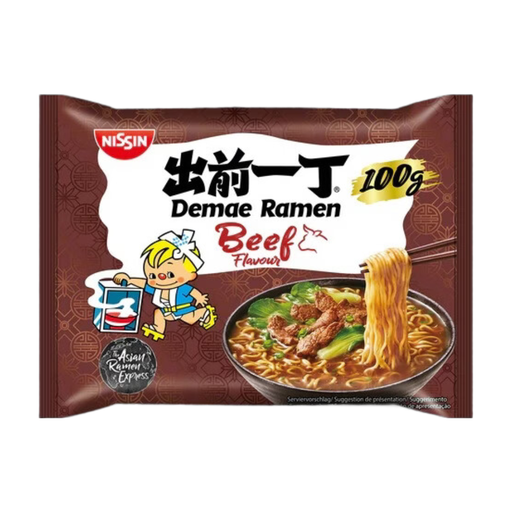
Why it suits this profile: A single 100-gram portion is a straightforward choice for anyone who wants to try Japanese instant noodles without ordering a large box straight away.
The portion size and nutritional values are clearly stated. The ingredients list includes gluten, celery, milk and soy.
100 grams per pack, beef flavour and a preparation method that takes very little time.
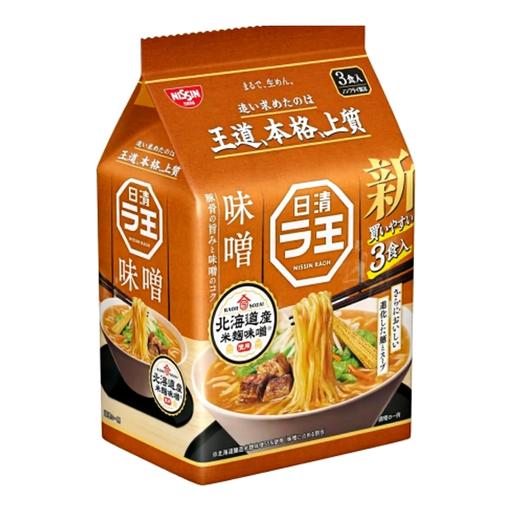
Why it suits this profile: This pack contains three portions and, according to the product description, combines miso, pork extract, vegetables and wholewheat noodles.
The product information details the portion breakdown, ingredients and allergens. It contains wheat, egg, milk, sesame, soy, chicken and pork.
Three portions, a miso base and 332 kcal per portion according to the stated nutritional information.
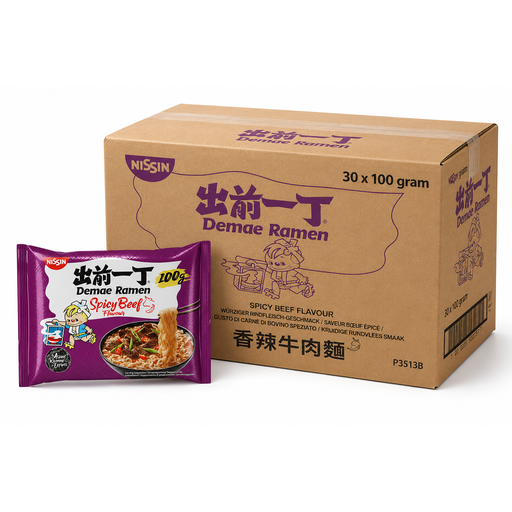
Why it suits this profile: The box containing 30 portions is practical for households, canteens, cupboards and regular use.
The packaging states that it contains 30 sachets of 100 grams and has a preparation time of three minutes. The heat comes partly from chilli powder and chilli extract.
Bulk pack, separate seasoning powder and oil, firm noodles and a spicy beef flavour.
For a full, savoury flavour, consider Japanese miso ramen, such as Hikari Miso Restaurant Style Ramen Miso Taste. The stated nutritional information gives 349 kcal and 10.9 grams of salt per 188 grams. This makes it important to count the entire portion rather than just the values per 100 grams.
If you are looking for tonkotsu ramen, take a look at ITSUKI Kyoto Miso Tonkotsu 12×182G or Hikari Miso Tonkotsu. For both products, check for soy, wheat and sesame; Hikari also lists pork extract.
Extra care is needed when choosing a vegetarian option. Igarashi Seimen’s product name states “Vegetarian”, but the supplied ingredient information also mentions shellfish. Always check the current packaging or ask the seller for confirmation before placing your order.
We have put together a complete, up-to-date list of products that fully meet these strict selection criteria and the applicable European safety regulations.
The exact best-before date is printed on the packaging. Store instant ramen in a cool, dry place away from direct sunlight. Do not use a pack if it is damaged. For a bulk pack, it is advisable to check the date on each sachet.
Yes, many varieties are ready in around three minutes. A meal will be more filling if you add toppings such as vegetables, egg, tofu, chicken or spring onion. Always follow the preparation instructions and pay attention to the temperature of the hot water.
Check the nutritional value for the entire pack. According to the label, konjac ramen may have a very low energy value, but it can still contain salt. Also check the fibre content, allergens and ingredients before making your choice.
