
Cook with limited worktop space
Wants to make porridge quickly, but is weighing up a worktop appliance against a reservoir under the sink.


Start by checking the porridge preparation instructions: a dispenser won’t replace a specified boiling or simmering step. For a single bowl, a freestanding dispenser can be handy if one of its portion settings is suitable; a compact kettle is an alternative if you prefer to measure the water yourself. A boiling water tap frees up worktop space, but you’ll need room and installation space under the sink.
Wants to make porridge quickly, but is weighing up a worktop appliance against a reservoir under the sink.
Usually makes one portion and wants to dispense the right amount of water rather than heating a full kettle every time. Milieu Centraal advises heating no more water than you need.
Wants to check first whether their instant porridge can be made with hot water. For example, Quaker Nederland gives cooking and simmering instructions for regular porridge oats.
A good fit if: you often make one bowl with water and want a suitable portion setting.
Bear in mind: the appliance, reservoir and any filters take up space and need maintenance.
A good fit if: you want to measure the amount yourself and don’t need portion settings. Milieu Centraal recommends a small kettle if you often make just one or two cups.
Bear in mind: you’ll need to lift and pour from the kettle, and find space to fill and put it down.
A good fit if: freeing up worktop space is a priority and there’s room under the sink for the reservoir and installation.
Bear in mind: the reservoir takes up cupboard space; Milieu Centraal also points out that it uses power on standby.
| What to consider | What to check before buying | Who might be more concerned? |
|---|---|---|
| Space and positioning | Measure the worktop or the space under the sink, and allow room for the bowl beneath the spout. | If my worktop is already full, I want to know where the appliance or reservoir will actually fit. Around 25% of consumers say space is their main consideration. |
| Amount per bowl | Compare the amount needed according to the porridge packaging with the appliance’s dispensing settings. | For one bowl, I’d rather dispense a suitable amount straight away than have to measure it afterwards. Around 25% of consumers pay particular attention to the portion dispensed each time. |
| Suitability for your porridge | Read the preparation instructions on the specific packaging before choosing the temperature and amount. | I want to make sure my porridge can be prepared with hot water and doesn’t need to be boiled. Around 20% of consumers make suitability their top priority. |
| Safe dispensing | Check the stability, position of the spout and operating instructions for the exact model. | If other people at home could use the appliance, I want to be able to dispense hot water safely. Around 15% of consumers put dispensing safety first. |
| Maintenance and energy use | Check the maintenance instructions and filter requirements; for a tap, also check its stated standby power consumption. | I want to know what maintenance is required and whether a reservoir is kept warm all the time. Around 15% of consumers focus mainly on running costs. |
A Quaker Nederland recipe for regular porridge oats says to cook them and then simmer for five minutes. A dispenser won’t do that for you.
Check the preparation instructions on the packaging of the porridge you actually use.
You’ll also need space for a bowl beneath the spout. With a boiling water tap, the reservoir needs to fit in the cupboard and installation must be possible.
Measure the full space for the appliance, the clearance beneath the spout and, for a tap, the usable space under the sink.
Milieu Centraal points out that a boiling water reservoir uses power on standby when switched on. Consumption also depends on the system you choose and how you use it.
Compare your usage habits with the stated standby power consumption; don’t treat a manufacturer’s energy-saving claim as an independent measurement.
ACM ConsuWijzer explains that your statutory rights exist alongside the manufacturer’s or retailer’s warranty terms.
Keep your proof of purchase and model details, and contact the retailer if you think the product may be faulty.
Freestanding hot water dispensers, including the KAWD100FBK.
The TWD2502B and TWD2503B offer different ways to dispense hot water.
The freestanding HW 600 is designed for people looking for a choice of volume and temperature settings.
The ADD5910M/10 is a freestanding dispenser with a filter and a choice of preset volumes.
The PRO3 is a boiling water reservoir fitted under the worktop, for anyone wanting to free up worktop space.
The Red Duo with M-Size boiler is a boiling water tap option for a kitchen with suitable space and connections.
This selection features freestanding hot water dispensers for anyone who wants to prepare a portion of water on the worktop.
 No image available
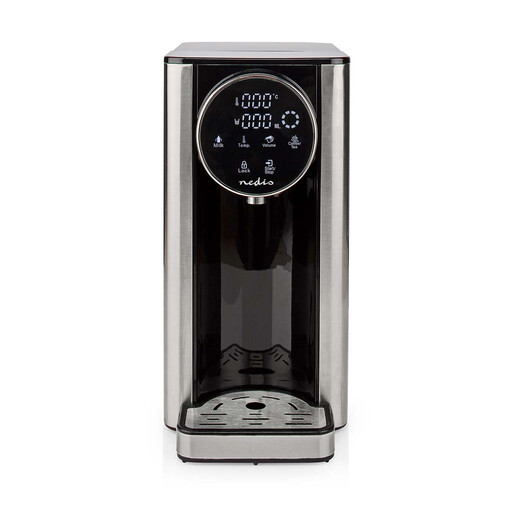
Suited to anyone who wants to adjust the amount and temperature for a bowl; check that the appliance fits on your available worktop first.
The product information lists five volume settings starting at 100 ml, seven temperature settings and a removable reservoir. The spout accommodates cups up to 16 cm tall; the stated dimensions are 205 × 355 × 320 mm.
 No image available
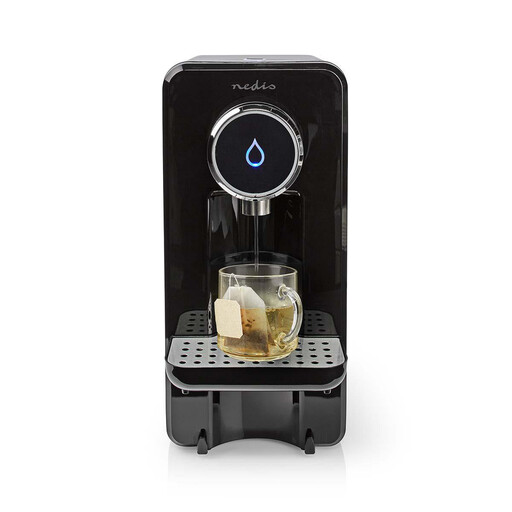
Suited to anyone who wants to dispense enough for one bowl with a short press, while also having the option of continuous dispensing.
The product information gives around 200 ml for a short press and continuous dispensing of up to 500 ml per use. It also lists an adjustable spout, removable drip tray and descaling reminder. The water is described as reaching around 98–100 °C; don’t touch the water stream or spout while dispensing or straight afterwards.
 No image available
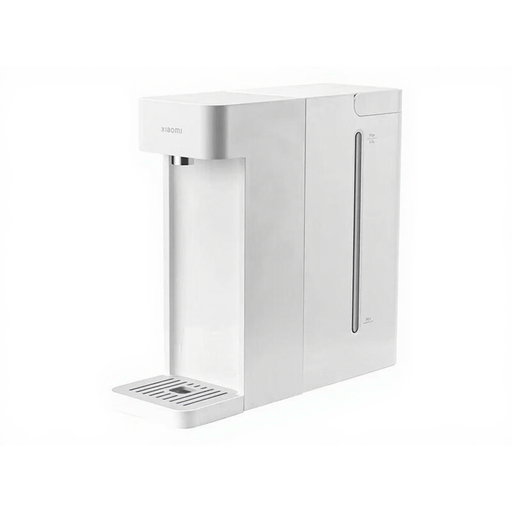
Suited to anyone who wants a measured amount of water at a chosen temperature; check that the available quantities work for your recipe.
The product information lists water volumes of 250, 500 and 750 ml, four preset temperatures and temperature adjustment in 1 °C increments.
 No image available
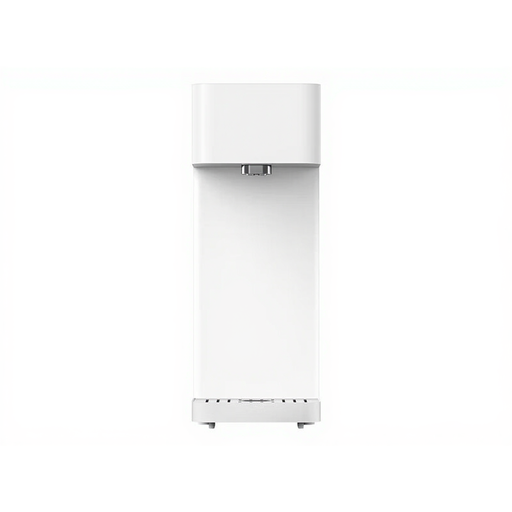
Suited to anyone who wants cold water as well as hot; check that the extra function is useful for the way you’ll use it.
The product information lists five temperature settings, four water volumes adjustable in 100 ml increments and app control.
 No image available
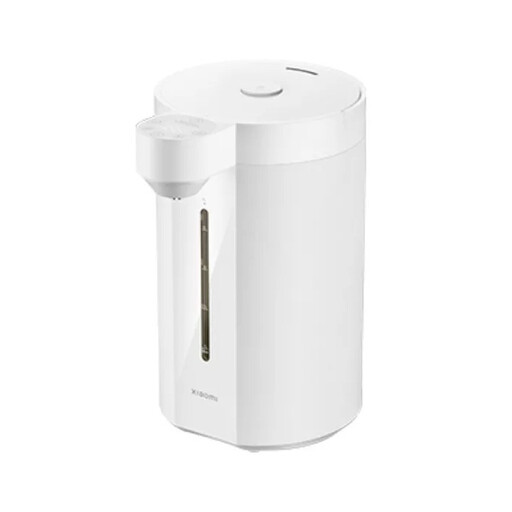
Suited to anyone looking for a water reservoir for several portions; check that the capacity and controls suit the space available.
The product information lists adjustable temperatures, touch controls, a digital display, child lock and automatic shut-off.
No, not every kind. A Quaker Nederland recipe for regular porridge oats says to bring the oats to the boil with milk or water, then simmer for five minutes. Follow the instructions for the specific instant porridge you use; hot water won’t replace a required cooking step.
The Tomado TWD2503B manual says to place it on a flat, heat-resistant surface indoors. It also warns about hot surfaces, water and steam. Follow the instructions for your own model if you have a different one.
Heat only as much water as you need; Milieu Centraal also recommends descaling regularly. Check how to maintain the reservoir, drip tray and any filters. A boiling water tap also uses power on standby, so check the stated power consumption for the model you choose.
Yes. Your statutory warranty rights exist alongside the manufacturer’s or retailer’s warranty. ACM ConsuWijzer explains that the retailer may be responsible for providing a suitable solution if a product breaks during normal use sooner than you could reasonably expect. There is no single fixed statutory warranty period for every dispenser.
New electrical household appliances sold in the Netherlands and the EU must meet the applicable requirements, including CE marking. The Dutch government lists this as a requirement for electrical appliances. Check the marking on the specific appliance being sold; it doesn’t replace safe operation or prevent scalds.