Choose a pre-measured sachet of instant porridge if you can prepare it at home or mix it with liquid in a bowl at school. If that isn’t possible, a ready-to-eat portion of porridge to go is a better fit for a lunchbox, but its ingredients are different from those of dry instant porridge. Whatever you choose, check the ingredients, allergens and amount per portion before packing it.
Which option is practical for whom?
Pupils without access to heating facilities
If there’s no microwave or school kitchen available at lunchtime, whether a product is ready to eat makes all the difference. Dry instant porridge still needs liquid; a portion to go, such as Bolletje’s, is intended to be eaten after shaking, according to the product information.
Parents who check ingredients carefully
If you need to avoid certain allergens or ingredients, check the label on the exact product variant. The products reviewed differ in their declarations of cereals containing gluten, soya, milk and sulphites.
Families who don’t want to weigh portions
Individual sachets mean there’s no need to weigh anything out. Still, compare the number of portions and the amount in each one: a dry sachet, a cup and a ready-to-eat portion to go aren’t used in the same way.
What should you look for when choosing?
First, decide whether the lunch can be prepared at school. Then check the label on the product you’ve chosen and compare how much is actually in each portion you pack.
| What to consider |
What to check |
Who it matters to |
| Allergens and ingredients |
Read the ingredients list and check the allergen or possible cross-contamination information on the exact pack. If necessary, ask about the school’s arrangements. |
If certain ingredients aren’t allowed in the lunchbox, I want to know whether this particular product is suitable. For around 31% of consumers, this is the top priority. |
| Preparing lunch at school |
Check whether liquid and a bowl are available, or choose a product that the packaging says is ready to eat. |
If I can’t mix or heat anything at school, lunch needs to be ready to eat without any extra preparation. This is the main concern for an estimated 25% of consumers. |
| Ingredients per portion |
Compare the ingredients and nutritional information per portion. Plain sachets, sweetened varieties and fruity snacks have different recipes. |
I want to know what’s in the portion I’m packing, not just what the product name suggests. Around 25% of consumers prioritise the ingredients. |
| Amount and portion convenience |
Check the number of individual portions and the weight of each one. For a mix, check whether the pack weight also includes separate additions. |
If weighing is inconvenient, I want an individual portion with a clearly stated amount. This matters most to around 19% of consumers. |
Common mistakes
-
Assuming a portion sachet is a ready-to-eat lunch
Quaker Oats Express Naturel comes in pre-measured portions, but you still need to add liquid. According to the product information, it can be prepared cold; for a hot version, a microwave or saucepan is recommended.
Prepare it at home, or check that your child can use liquid, a bowl and a spoon at school. If not, choose a portion that really is ready to eat.
-
Assuming every portion of porridge has the same recipe
Ingredients vary between products: according to Jumbo, Jumbo Havermout Porties Original contains sugar, while Quaker Oats Express Naturel is described as a portion of wholegrain porridge oats.
Read the ingredients list and compare the nutritional information for each portion you pack, even when the packaging suggests a plain flavour.
-
Checking only for oats when looking at allergens
The Quaker Protein variant reviewed contains soya. For Upfront Oats Cup Appel Kaneel, Jumbo lists milk, sulphites and cereals containing gluten, among other allergens.
Always check the exact flavour and packaging. If there are rules about food or sharing, ask the school what it expects children to bring in their lunchboxes.
Brands compared
Quaker
The Oats Express varieties reviewed are dry instant porridge in individual portions, including Naturel and a variety with added soya protein.
- Quaker Netherlands lists twelve portion sachets for Oats Express Naturel.
- The sachet still needs preparing; check the allergen information for each variety, especially the one with soya.
Jumbo
Jumbo Havermout Porties Original offers five individual 27 g portions as an alternative if you don’t want to weigh out your own.
- Jumbo’s product information states the number of sachets and the amount in each one.
- The ingredients list includes sugar; check the allergens on the packaging too.
Bolletje
Havermout To Go Banaan is a 200 g portion containing fruit and oats. It’s intended as a ready-to-eat alternative to dry instant porridge.
- According to the product information, you only need to shake the portion before eating.
- It isn’t a sachet of plain instant porridge, so compare its ingredients and nutritional information separately.
Upfront
The Oats Cup Appel Kaneel reviewed is a 75 g cup of instant porridge, with different packaging and a different recipe from a plain portion sachet.
- The cup contains a pre-measured 75 g portion.
- For this variety, Jumbo lists milk, sulphites and cereals containing gluten among the allergens.
Brinta
The Brinta Havermout reviewed comes in a 450 g pack and is included here for comparison with porridge oats that you weigh out yourself.
- Albert Heijn recommends a 40 g portion with 250 ml of milk and states that the pack contains eleven portions.
- The pack doesn’t contain individually measured sachets for lunchboxes.
Porridge products on Joybuy
These products include Quaker portions and two Family Whole mixes that need preparing. A dry sachet isn’t automatically a replacement for a ready-to-eat lunch portion; according to the product information, the Family Whole mixes need boiling water.
 Image unavailable
Quaker Express porridge oats, 324 g
An option if you can prepare a pre-measured sachet at home or mix it with liquid at lunchtime.
Quaker Netherlands describes the 324 g pack as containing twelve portions. The product information gives instructions for preparing this porridge both hot and cold; the dry sachet isn’t ready to eat as porridge.
Check the latest allergen information and any school arrangements before packing a portion.
View on Joybuy
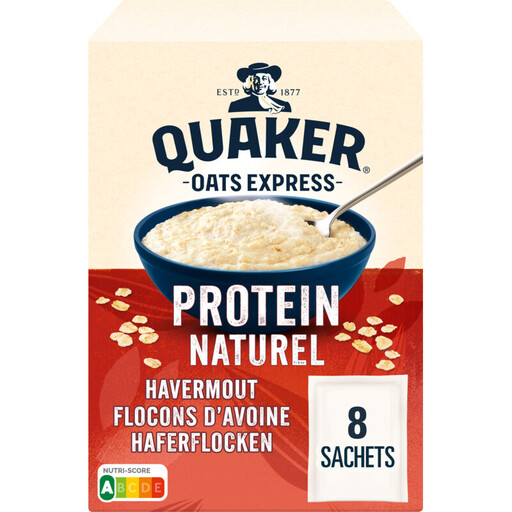 Image unavailable
Quaker Oats Express Protein, 302 g
A pre-measured instant porridge option to compare if the ingredients in a protein variety suit your child and preparation is possible.
The product information for this variety mentions added soya protein. The dry sachet isn’t ready to eat: check the preparation instructions and pack the liquid and utensils you’ll need.
Pay particular attention to soya and the declarations of cereals containing gluten on the label.
View on Joybuy
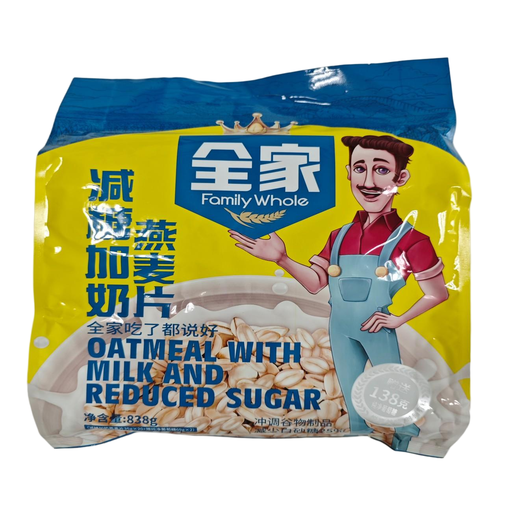 Image unavailable
Family Whole porridge mix with milk and glucose sachets, 838 g
This mix is only suitable for a lunch where it’s safe and practical to prepare it with boiling water.
The stated weight of 838 g also includes individual glucose sachets, so don’t treat the total pack weight as porridge mix alone.
Before packing, check the packaging for milk, soya, sesame and wheat, as well as any arrangements that apply to your child.
View on Joybuy
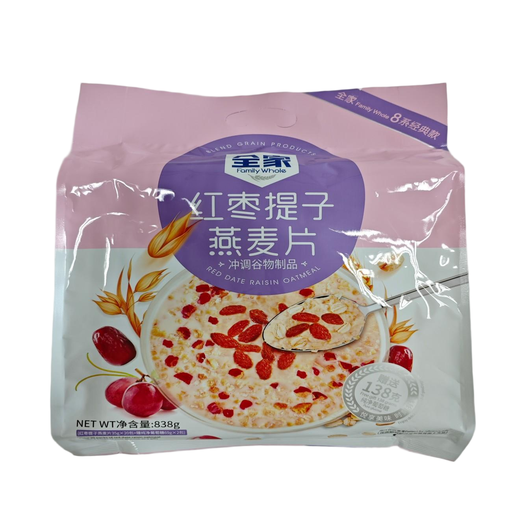 Image unavailable
Family Whole oat flake mix with red dates and raisins, 838 g
The portion pack means there’s no need to weigh anything out, but it’s only practical for a school lunch if you can prepare it with boiling water.
This is a mix with red dates and raisins. The stated 838 g also includes individual glucose sachets; compare the amount of mix and the nutritional information for the portion you’ll actually use.
Check the latest ingredients and allergen information, including declarations of wheat, barley and soya.
View on Joybuy
Frequently asked questions
Can you pack Quaker Oats Express Naturel for school without a microwave?
Yes, if preparing it cold with liquid or a suitable dairy product is practical. Quaker also gives instructions for preparing it hot, but a dry sachet isn’t ready-made porridge, so remember to pack a suitable bowl and spoon.
Is ordinary instant porridge automatically gluten-free?
No. Quaker Netherlands states that Oats Express Naturel may contain soya, barley and wheat. If you need to follow a gluten-free diet, check the information on the exact packaging rather than relying on the word ‘oats’.
Why is a ‘may contain’ warning important?
This warning is about the possible presence of allergens due to cross-contamination and is different from the ingredients list. The Netherlands Food and Consumer Product Safety Authority describes rules that have applied since 1 January 2026 for how and when these warnings are used on Dutch food labels. If you have a relevant allergy, check both declarations on the packaging.


