Who is this choice for?
This choice is useful if you usually make breakfast for one and want a quick, pre-measured serving, or if you prefer to portion out your oats from a larger pack. It’s also worth considering how much cupboard space you have, how quickly you’ll use an opened pack and whether the ingredients and allergen information suit your diet.
What should you look for when choosing?
First, decide whether pre-measured portions or measuring out your own servings suits your breakfast routine better. Then choose a pack size and check the label against what you’ll actually use and need.
| What to consider |
What to check before buying |
Who it matters to |
| A quick breakfast without measuring |
Check the number of sachets, the weight per sachet and the preparation instructions. |
If I’m making breakfast for one, I don’t want to weigh out a portion every time. Around 42% of consumers prioritise this convenience. |
| A pack size you can use up |
Choose a pack size to suit how much you use, and check how to store it once opened. |
A large pack might stay open for a long time in my cupboard; I want to use it before the quality starts to decline. For around 33% of consumers, planning how much to stock is the main priority. |
| Ingredients and allergens |
Read the ingredients and allergen information on the current packaging; if you have coeliac disease, check for a gluten-free label. |
I want to know what else is in the product besides oats and whether it suits my diet. Around 25% of consumers prioritise checking the label. |
Instant porridge oats on Joybuy
These products are designed for quick porridge preparation. Check each pack to see whether its portion sizes and ingredients suit breakfast for one or two people.
 Image unavailable
Quaker Express Oatmeal 324 g
Worth considering if you’re looking for pre-measured porridge for one breakfast at a time.
The product information lists 12 portions and a preparation time of two minutes. It may contain soya, barley and wheat; if you have coeliac disease, check the current packaging for a suitable gluten-free label.
View on Joybuy
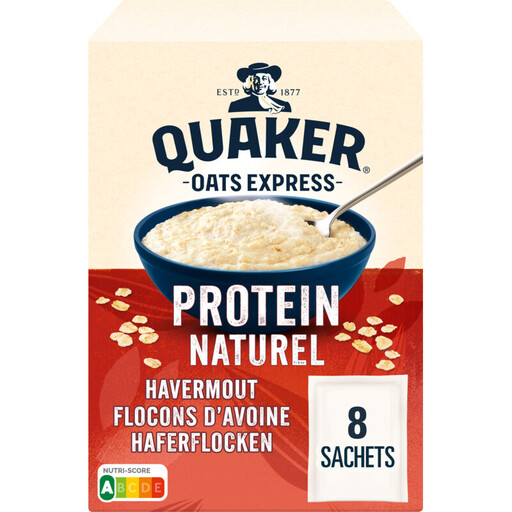 Image unavailable
Quaker Oats Express Protein 302 g
A quick-to-prepare variety to compare if you’re looking for porridge with added soya protein.
The product information lists a preparation time of two minutes. The product contains soya and may contain barley and wheat. Check the pack for portion sizes and, if you have coeliac disease, for a gluten-free label.
View on Joybuy
Frequently asked questions
How long can you keep opened porridge oats in the cupboard?
The Netherlands Nutrition Centre (Voedingscentrum) says opened porridge oats can be kept in a kitchen cupboard for one year. Store them in a cool, dry, dark place in a tightly sealed pack; for an unopened pack, follow the information on the packaging.
Does opened Brinta keep for the same length of time?
No. The Netherlands Nutrition Centre (Voedingscentrum) says opened Brinta can be kept in a kitchen cupboard for a few months. Choose a pack size that suits how often you eat it, and seal the pack tightly after use.
Are porridge oats automatically suitable for someone with coeliac disease?
No. According to the Netherlands Nutrition Centre (Voedingscentrum), oat products can be contaminated with gluten; if you have coeliac disease, look for the official Crossed Grain symbol on the packaging. Check the current allergen information even when buying the product again.
Where can I find allergen information on a pack of porridge oats?
Check the ingredients list and allergen information on the packaging, not just the front. The Netherlands Food and Consumer Product Safety Authority says that when ingredients come from cereals containing gluten, the type of cereal must be named in the ingredients list.


