For a busy morning with a new baby, plain single-serve sachets are a practical choice when preparation time is your main priority. Compare a high-protein option if protein content matters to you too. If you need a strictly gluten-free option, check the gluten-free label on the current packaging rather than relying on the word ‘oats’ alone. Whichever you choose, check the ingredients, allergens and sugars per 100 g: no added sugar does not mean the product contains no sugars at all.
Who is this for?
New parents short on time in the morning
If breakfast has to fit around everything else, the preparation instructions, serving size and amount of liquid needed are useful things to compare. Check whether you need a microwave or a pan to prepare your chosen option.
Parents who want to avoid added sugars
A ‘no added sugar’ claim is a good starting point. The ingredients list shows what’s in the product, while the nutritional information tells you how much sugar it contains per 100 g.
Households that need to consider gluten or allergens
Ordinary oats are not automatically suitable for a strictly gluten-free diet. Check the current gluten-free label and allergen information. An option with added soya protein also needs extra care if you have a soya allergy.
What should you look for when choosing?
When choosing instant porridge oats for a busy morning, first check whether the preparation method works for you. Then compare the sugar information and, if relevant, the allergens and gluten-free label.
| What to consider |
What to check when buying |
Who is it important for? |
| Quick preparation |
Check the preparation time and whether you need a pan, a microwave or just liquid. See if the oats are already packed into individual portions. |
When my morning is often interrupted, I don’t want to have to weigh out oats before I can have breakfast. For around 50% of consumers, quick, easy preparation comes first. |
| Added sugars |
Read the ingredients list and the added sugar information; compare the amount of sugars in similar products per 100 g. |
If you want to decide for yourself what goes into your porridge, look for a plain base and check which sugars are already in the product. Around 40% of consumers prioritise checking the ingredients. |
| Gluten and allergens |
If you follow a strictly gluten-free diet, check the label on the current packaging, preferably for the Crossed Grain Trademark. For high-protein options, read the allergen information too. |
If gluten or soya is a concern for my household, the packaging needs to confirm that the product is suitable, even if it’s quick to prepare. This is the first consideration for around 10% of consumers. |
Common mistakes
-
Treating ‘sugar-free’ and ‘no added sugar’ as the same thing
A product with no added sugar can still contain naturally occurring sugars. Sweetened milk, honey and other additions will also affect the amount of sugar in the finished bowl.
Read the exact claim on the packaging, check the ingredients and compare the ‘of which sugars’ figure per 100 g in the nutritional information.
-
Choosing a high-protein option without checking the allergens
Some of the extra protein in Quaker Oats Express Protein Naturel comes from soya protein. This option is therefore not suitable if you have a soya allergy.
Check the allergen information on the current packaging, and compare the protein content only if it’s relevant to your choice.
-
Assuming all oats are gluten-free
According to the Dutch Coeliac Society, oats can come into contact with gluten during harvesting, transport and processing. So the word ‘oats’ alone is not enough to guide your choice if you have coeliac disease.
Check the current packaging for a gluten-free label and, preferably, choose a product with the Crossed Grain Trademark.
-
Comparing serving sizes alone
A sachet and a bowl of oats you’ve weighed out yourself may not contain the same amount. Comparing them per serving could therefore highlight a difference in quantity rather than a difference between the products.
First, compare similar products per 100 g for the values that matter to you, such as sugars, fibre, protein and salt. Then decide which serving size is most practical.
Brands to consider
Quaker
The Oats Express range includes a plain single-serve option and a Protein Naturel option for anyone looking for porridge that’s quick to prepare.
- Albert Heijn says Oats Express Naturel takes two minutes to prepare and contains no added sugar.
- The Protein Naturel option contains soya protein and may contain wheat and barley. Its higher protein content does not automatically make it suitable if you have an allergy or follow a strictly gluten-free diet.
Elovena
Natural Instant Oatmeal is a plain, individually portioned option that Albert Heijn offers as gluten-free.
- The product information lists gluten-free oat flakes, no added sugar and preparation with hot or cold water or milk.
- If you follow a strictly gluten-free diet, always check the current packaging and any gluten-free certification.
Albert Heijn
AH Volkoren havermout fijne vlokken is a loose oat base for anyone who doesn’t necessarily need instant sachets.
- The product information lists wholegrain oat flakes as the ingredient and 0 g of added sugars per 100 g.
- You’ll need to measure out the flakes yourself. The product may contain barley, spelt, rye and wheat.
Porridge oats at Joybuy
This product selection is for high-protein porridge oats with no added sugar that are quick to prepare. If you’re looking for a plain or strictly gluten-free option, compare the relevant product labels separately.
 No image available
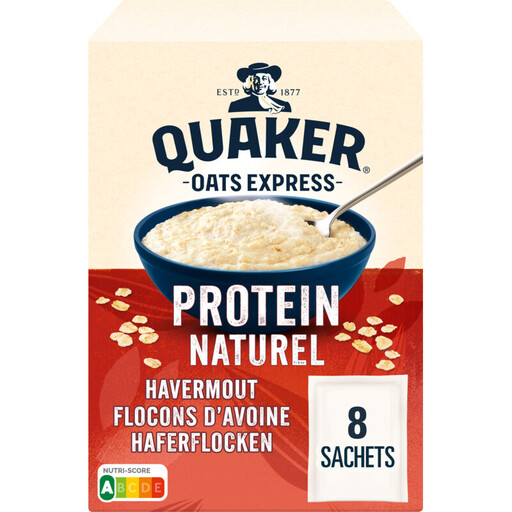
Quaker Oats Express Protein – 302 g
For anyone who wants to make porridge quickly on a busy, interrupted morning and compare protein content. Quaker says this option takes two minutes to prepare and contains 22 g of protein per 100 g.
The product information says it contains no added sugar and lists soya protein as an ingredient. The product may contain wheat and barley; if you have an allergy or follow a strictly gluten-free diet, check the current packaging.
View at Joybuy
Frequently asked questions
Does ‘no added sugar’ mean instant porridge oats contain no sugars at all?
No. Naturally occurring sugars may still appear in the nutritional information, even when no sugar has been added. So check both the ingredients list and the ‘of which sugars’ figure per 100 g. ‘Sugar-free’ is a different claim.
Which instant porridge oats should I choose if I only have a few minutes?
Choose based on the preparation instructions and the equipment you can use. Albert Heijn says Quaker Oats Express Naturel and Protein Naturel take two minutes to prepare. According to the product information, you can add hot or cold water or milk to Elovena Natural Instant Oatmeal.
Are ordinary oats suitable if you have coeliac disease?
Not automatically. According to the Dutch Coeliac Society, oats can come into contact with gluten during harvesting, transport and processing. If you follow a strictly gluten-free diet, check the current gluten-free label on the packaging and, preferably, choose a product with the Crossed Grain Trademark.
Is high-protein instant porridge always a better choice?
No. Protein content is just one thing to compare. Quaker Oats Express Protein Naturel lists 22 g of protein per 100 g and contains soya protein. If you need to avoid soya or want a plain oat base, check the ingredients and allergens in other options too.


