
Anyone who wants a quick breakfast and watches their fibre intake
You want to spend as little time as possible preparing breakfast, but you look beyond the fibre figure per 100 g: the amount in your own bowl matters, too.


When comparing instant porridge oats, look at more than just the fibre per 100 g: consider how much you actually eat, too. Sachets are handy for a quick breakfast with a fixed portion, while loose fine oats let you decide how much to serve yourself. If you need gluten-free oats because you have coeliac disease, check the gluten-free label and certification on the packaging.
You want to spend as little time as possible preparing breakfast, but you look beyond the fibre figure per 100 g: the amount in your own bowl matters, too.
You check the gluten-free label, certification and allergen information on the packaging rather than assuming that regular oats are suitable.
Now that you’re making breakfast for a smaller household, you may want to decide how much porridge oats to use each time. That’s when the difference between loose oats and portion sachets matters.
Start with a portion that suits your breakfast. Then compare the nutritional information, preparation and packaging. If you need gluten-free oats, check their suitability separately.
| What to consider | What to check before buying | Who is this most important for? |
|---|---|---|
| Fibre per portion | Compare the fibre per 100 g with the amount you actually eat. | If I eat a small sachet, I want to know how much fibre I’ll get from that breakfast. Around 33% of consumers prioritise fibre per portion eaten. |
| A quick, fixed portion | Check the portion size and preparation instructions on the packaging. | On a busy morning, I don’t want to weigh anything, so I’d rather choose a pre-measured sachet. For around 25% of consumers, convenience matters most. |
| Gluten-free suitability | Read the gluten-free label, certification and allergen information. | If I need gluten-free oats, the packaging must make that clear. This is the top priority for around 17% of consumers. |
| Choosing your own portion | Check whether the product contains loose oats or portion sachets, and look at the preparation instructions. | I don’t eat the same amount every morning and want to measure out my own portion. Around 25% of consumers give this flexibility top priority. |
The amount in a sachet can paint a different picture. Jumbo lists 9 g of fibre per 100 g for Quaker Oats Express Naturel, but 2.4 g per 27 g sachet.
Check both the figure per 100 g and the amount in the portion you plan to eat.
According to the Voedingscentrum, oats can be contaminated with gluten. An oat product without an appropriate gluten-free label is therefore not automatically suitable for someone with coeliac disease.
When buying, check for the official Crossed Grain certification and read the ingredients and allergen information on the packaging.
Both can be quick to prepare, but with loose oats you measure out the amount yourself. A sachet contains a pre-set portion.
Check the type of oats, preparation instructions and portion size for the specific product before choosing.
Oats Express Naturel is an option if you want a pre-measured portion of porridge oats that’s quick to prepare.
Natural Instant Oatmeal combines individual portions with a gluten-free product label.
Brinta Porridge Oats offers loose oats for anyone who wants to choose how much to have for breakfast.
Jumbo’s porridge oat range includes different types of oats and portion products to compare individually.
This ALDI own brand includes fine wholegrain porridge oats, among other products, for anyone looking for a loose oat base.
These products may suit you if you want to measure out loose fine oats or are considering a Quaker Express variety for a quick breakfast. Compare the nutritional information for each product individually: the product name alone won’t tell you how much fibre you’ll get per portion.
 No image available
Loose porridge oats are a good choice if you want to measure out the amount for your breakfast yourself. Joybuy’s product information lists 9.7 g of fibre per 100 g; use your own portion size to work out how much that is per breakfast.
The product information says these oats may contain rye and wheat. Check the packaging if you need gluten-free oats.
 No image available
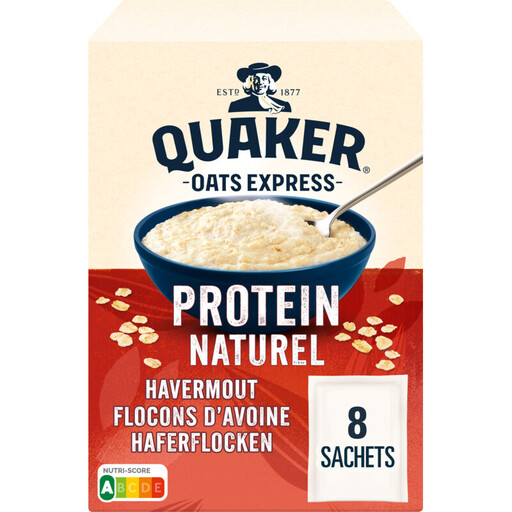
This Express Protein variety is a separate option if you’re considering Quaker portion packs. Compare the nutritional information per 100 g and per portion eaten on the packaging; don’t assume the fibre figures for Oats Express Naturel apply to this variety.
Also check the ingredients and allergen information if soya or grains containing gluten are important to your choice.
 No image available
This Express pack may suit you if you’d rather make up a measured portion than weigh out loose porridge oats. Joybuy says Quaker Express Porridge Oats take 2 minutes to prepare.
To compare fibre, check the figures per 100 g and per sachet on the packaging. Check the allergen information there, too, if you need gluten-free oats.
First compare the fibre per 100 g, then check how many grams you actually eat. Jumbo lists 2.4 g of fibre per 27 g sachet for Quaker Oats Express Naturel; Albert Heijn lists 11 g per 100 g for Elovena Natural Instant Oatmeal, in 40 g sachets. Also check the ingredients for the specific variety you choose.
Regular porridge oats aren’t automatically suitable. The Voedingscentrum points out that oats can be contaminated with gluten and recommends checking the official Crossed Grain certification on the packaging if you have coeliac disease. Also check the product’s ingredients and allergen information.