What should you look for when choosing?
First decide whether your main priority is avoiding sources of added sugar, finding a portion that’s quick to measure out or getting extra protein. Then compare similar dry porridge products on the same basis: per 100 g, alongside their ingredients lists and preparation methods.
| What to consider |
What to check before buying |
Who it matters to |
| Added sugars |
Check the ingredients list for sugar, syrup, honey and fruit concentrate, among other things. Compare ‘sugars’ per 100 g in similar products too; this figure includes all sugars. |
If I want to avoid sources of added sugar, the sugar figure alone doesn’t tell me everything. Around 42% of consumers would make this their first priority when shopping. |
| Preparation and portions |
Check the preparation time, what preparation is required and whether the product comes in pre-measured portions. |
On a short lunch break, I don’t want to weigh out a portion first, and I want to know how to prepare the porridge. For around 33% of consumers, this convenience would be the top priority. |
| Protein and allergens |
Compare protein per 100 g if that matters to you. For a protein version, check the ingredients and allergen information, including warnings about possible traces. |
If I’m looking for extra protein, the version I choose must also suit the ingredients I want or need to avoid. This combination would come first for around 25% of consumers. |
Brands to consider
These brands offer different portion packs, protein versions and regular porridge oats. So assess the specific product, not just the brand name.
Quaker
The Quaker product ranges described here include plain Express porridge and an Express Protein version for quick preparation.
- For Quaker Express Oatmeal 324 g, the Joybuy product page lists wholegrain oats as an ingredient, 1 g sugars per 100 g and a two-minute preparation time.
- The Protein version described here contains added soya protein. Compare its ingredients and allergens separately with those of plain porridge oats.
Brinta
Brinta Porridge Oats are an option if you want to put together your own porridge lunch.
- The ingredients list for Brinta Porridge Oats provided by Albert Heijn lists 100% oat flakes.
- This product doesn’t come in individual instant sachets; you’ll need to measure out a portion yourself and check the preparation instructions.
Jumbo
Jumbo is a supermarket own-brand option for anyone looking at regular wholegrain porridge oats as well as portioned products.
- The Jumbo range described here includes fine wholegrain porridge oats as a base for a lunch you can put together yourself.
- An own-brand name doesn’t tell you whether a particular version contains added sugars; check the label of the product you choose.
Golden Bridge
Golden Bridge is the ALDI own-brand option described here for regular fine wholegrain porridge oats.
- The ALDI product listing describes fine wholegrain porridge oats, which you can compare as a simple porridge base.
- If you’re choosing based on sugar content, ingredients or allergens, check the nutritional information on the specific pack.
Porridge products on Joybuy
The two Quaker Express versions are designed for a quick lunch; Leev Dutch Oatmeal is a porridge base for anyone who wants to put together their own lunch. For all three, check the latest packaging for the features that matter to you.
 Image unavailable
Quaker Express Oatmeal 324 g
For a short lunch break when you want to prepare plain porridge quickly. The Joybuy product information for this version lists a two-minute preparation time, wholegrain oats as an ingredient and 1 g sugars per 100 g.
Check the latest packaging for the ingredients and possible traces of soya, barley and wheat if these are relevant to you.
View on Joybuy
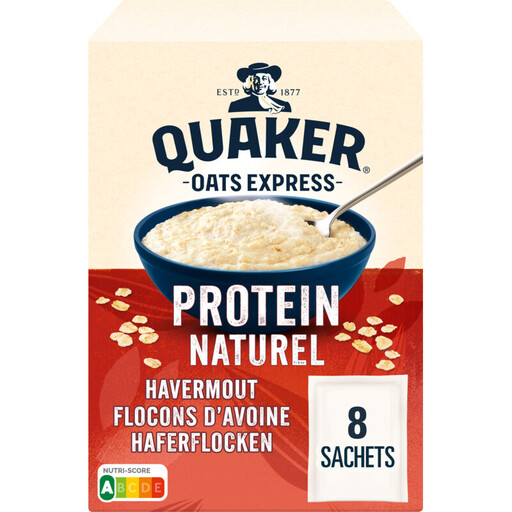 Image unavailable
Quaker Oats Express Protein 302 g
Worth considering if both quick preparation and extra protein matter for your lunch. The Quaker version described here contains soya protein; the product information states that it has no added sugars and contains 1.2 g sugars per 100 g.
Check the latest packaging for soya and other allergens. Compare the protein content only once you’ve confirmed whether the stated figure is per 100 g or per portion.
View on Joybuy
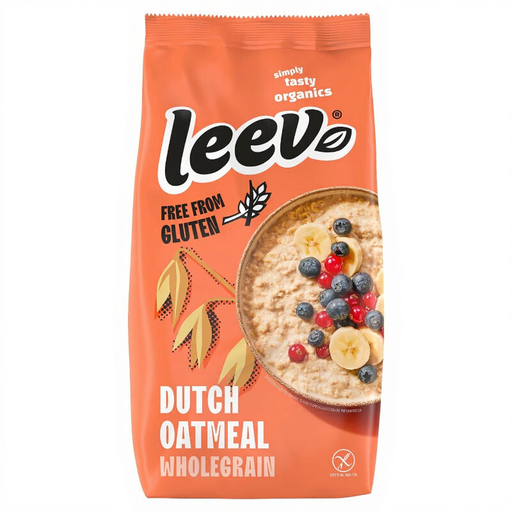 Image unavailable
Leev Dutch Oatmeal 450 g
A 450 g pack of porridge oats for anyone who wants to put together their own lunch. Check the preparation instructions if you’re short on time during your lunch break.
Read the latest allergen information on the packaging if gluten is relevant to you.
View on Joybuy
Frequently asked questions
Does ‘no added sugars’ mean that porridge is sugar-free?
No. A product with no added sugars may still contain sugars. So as well as looking for that claim, check the ingredients list and the sugars figure per 100 g.
How do I compare instant porridge with regular porridge oats?
Compare similar dry products per 100 g and check their preparation methods separately. The Netherlands Nutrition Centre recommends comparing labels per 100 g, as portion sizes can vary. For your choice, also check the ingredients, allergens and whether the product comes in individual portions.
What should I look for in protein porridge?
Check the protein content using a clearly stated basis for comparison, and read the ingredients and allergen information. The Quaker Oats Express Protein described here contains soya protein; check the latest packaging to see whether it suits your needs.
What does a sugar or health claim on packaging tell me?
A claim doesn’t replace the ingredients list or nutrition table. The Netherlands Food and Consumer Product Safety Authority describes European rules designed to protect consumers from misleading nutrition and health claims. So assess the product you choose using the full packaging, not just the claim.
How should I store instant porridge?
Follow the storage instructions on your product’s packaging. For the Quaker Protein version described here, the advice is to store it in a cool, dry place.


