
The quick evening cook
You want to make a warm bowl quickly after a busy day, and choose between savoury and sweet toppings. A plain oat base and preparation instructions that suit your kitchen matter more than a fixed flavour.


If you want to decide whether your warm evening bowl is savoury or sweet, plain wholegrain oats make a versatile base. Brinta Whole Wheat Cereal Breakfast is a wheat alternative, not instant oats: the figure listed by Albert Heijn is 10 g of fibre per 100 g of dry product, slightly more than the 9 g per 100 g listed by Quaker for Oats Express Naturel. Alongside these figures, check the serving size, preparation instructions and ingredients. If you choose a protein-enriched option, pay particular attention to the source of the protein.
You want to make a warm bowl quickly after a busy day, and choose between savoury and sweet toppings. A plain oat base and preparation instructions that suit your kitchen matter more than a fixed flavour.
You compare fibre per 100 g and also consider how much you’ll actually use. This lets you compare an oat product with wheat porridge without confusing the nutritional value of a small serving with that of 100 g.
You’re looking for a quick-to-prepare portion with extra protein and want to know where that protein comes from. Soya protein is an ingredient in the Quaker Protein variant described by Jumbo, so checking the label is an important part of your choice.
First decide whether you want oats or wheat porridge. Then compare fibre on the same nutritional basis and check that the portion size and preparation suit your evening meal.
| What to consider | What to check when buying | Who it matters to |
|---|---|---|
| Fibre | Compare fibre per 100 g on the same dry or prepared basis, then consider your portion size. | I want to assess the fibre content of my evening bowl without relying on a claim alone. Fibre content would be the top priority for around 36% of consumers. |
| Preparation | Check the required liquid, preparation time and method on the packaging. | After a busy day, I want to be able to make a warm bowl in a way that suits my home routine. Quick, convenient preparation would come first for around 29% of consumers. |
| Flavour and sugars | Read the ingredients and the ‘of which sugars’ value if you’re choosing between plain and flavoured options. | For a savoury bowl, I don’t want to be tied to a sweet flavour; for a sweet bowl, I’d rather add something myself. The freedom to choose the flavour would be the main consideration for around 21% of consumers. |
| Protein source | As well as protein and fibre per 100 g, check the ingredients and allergens. | If I specifically choose a protein-enriched portion, I want to know which ingredients have been added. Extra protein would be the main reason for choosing a product for around 14% of consumers. |
A figure per 100 g doesn’t tell you how much fibre is in the amount you use for one bowl. Quaker lists 9 g of fibre per 100 g for Oats Express Naturel, but the amount per serving is lower.
Check both figures on the label. Then consider which other ingredients you want to add to your meal, without counting their nutritional value in advance.
A flavoured option is less neutral. Quaker Oats Express Cinnamon, as listed by Jumbo, contains sugar as an ingredient and 19 g of sugars per 100 g.
Choose a plain option if you want to decide for yourself whether your bowl is savoury or sweet.
Quaker Oats Express Protein, as described by Jumbo, contains 15% soya protein. This is a significant difference from an oat product with no added soya protein, especially if you need to avoid soya.
Check the protein source and allergens on the current packaging, and compare protein and fibre separately.
According to the Dutch Coeliac Society, oats that aren’t specifically grown to be gluten-free may become contaminated with wheat and gluten. So a product containing oats isn’t automatically suitable for someone who needs to avoid gluten.
Check the gluten-free claim and allergen information on the packaging of the product you buy.
Oats Express Naturel is a plain oat option for anyone who wants to choose the flavour of their warm bowl. Oats Express Protein is a separate variant with added soya protein.
Whole Wheat Cereal Breakfast is an option for anyone who wants warm wheat porridge rather than a bowl of oats.
The Vitality variant is a flavoured instant oat option. Check the ingredients if you’d prefer to make a plain evening bowl.
ALDI lists fine wholegrain oats from this brand in a 500 g pack. It’s an option if you’d rather measure out the amount yourself than use a portion sachet.
These products offer two different bases for a warm bowl: Brinta made with wholegrain wheat and Quaker Express made with oats. If you’re specifically looking for instant oats, bear in mind that Brinta isn’t an oat product. Compare the current nutritional information and preparation instructions for both products.
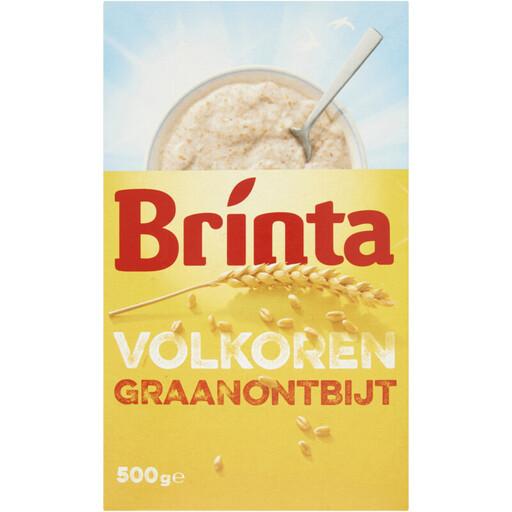 Image unavailable
An option if you want warm wholegrain wheat porridge instead of oats. Albert Heijn lists 10 g of fibre per 100 g for Brinta Whole Wheat Cereal Breakfast. This product contains wheat and isn’t suitable if you need to avoid wheat or gluten.
 Image unavailable
An oat option for anyone looking for a base for a warm bowl. Before comparing it with other products, check the packaging for preparation instructions, serving size and whether the stated fibre value is per 100 g or per serving.
Under European Union Regulation (EC) No 1924/2006, one of the conditions for the ‘high fibre’ claim is that a product contains at least 6 g of fibre per 100 g. When comparing products, also check whether the nutritional values apply to the dry or prepared product.
No. A fibre value per 100 g doesn’t automatically apply to a smaller portion. For Oats Express Naturel, Quaker lists a value per 100 g and a lower value per serving, so check the serving size alongside the nutritional information.
No. The Dutch Coeliac Society points out that oats not specifically grown to be gluten-free may become contaminated with wheat and gluten. If you need to avoid gluten, check the gluten-free claim and allergen information on the current packaging.
It varies by product. For Oats Express Naturel, Quaker lists oats and the possible presence of soya, barley and wheat; Brinta Whole Wheat Cereal Breakfast contains wheat. The Quaker Protein variant described by Jumbo also contains soya protein. Check the label for the exact variant before you buy.