
Time-poor solo eater
You don’t want to weigh out oats for a single breakfast. A portion sachet can help, as long as the preparation method suits what you have available at home.


For a small Easter shop, individual portions of instant oats are handy if you want to make breakfast for one without weighing anything out. Choose an unflavoured option if you want to decide what to add yourself; if you’re considering a high-protein option, check the ingredients and allergens too. A larger bag of plain oats gives you more flexibility over portion size, but you’ll need to weigh them out yourself and store the rest.
You don’t want to weigh out oats for a single breakfast. A portion sachet can help, as long as the preparation method suits what you have available at home.
You compare ingredients, nutritional information and allergens, perhaps because a high-protein option has a different recipe from unflavoured oats. If you have an allergy or coeliac disease, it’s especially important to check the information on the packaging.
You want to shop for yourself without having lots left over. In that case, the number of portions and whether you can use up a larger pack matter more than the pack size alone.
First decide whether you want individual portions or would rather weigh out your own oats. Then check the preparation instructions and label: an unflavoured sachet, a high-protein option and a large bag of plain oats each call for different considerations.
| What to consider | What to check before buying | Who should consider this most? |
|---|---|---|
| Portion and preparation | Check the number of sachets, the amount in each sachet and the preparation instructions. Make sure you have the kitchen equipment you’ll need. | If I want to make one portion in the morning without weighing it out, the packaging and preparation method need to fit my routine. For around 42% of consumers, this convenience is the top priority. |
| Ingredients and allergens | Read the ingredients, nutritional information and allergen details on the current label, especially for options with added ingredients. | A different recipe could affect my choice, for example if I need to avoid soya or want to choose my own additions. Around 33% of consumers prioritise the ingredients. |
| Amount for home | Compare the total weight and number of portions. Consider whether you can use up a larger bag and are happy to weigh out your own portions. | For a small shop, I don’t want to come home with more breakfast supplies than I’ll use. This is the most important consideration for around 25% of consumers. |
A large bag of plain oats and a box of individual portions solve different practical needs. For a small shop, the number of breakfasts you’ll get from the pack may matter most.
Check the amount per portion, and choose a larger pack only if you can store and use the rest.
According to the Voedingscentrum, oats can become contaminated through contact with gluten-containing cereals. So seeing ‘oats’ on the front of the pack isn’t enough to judge whether they’re suitable.
Check the allergen information and look for the official Crossed Grain symbol if you need gluten-free oats.
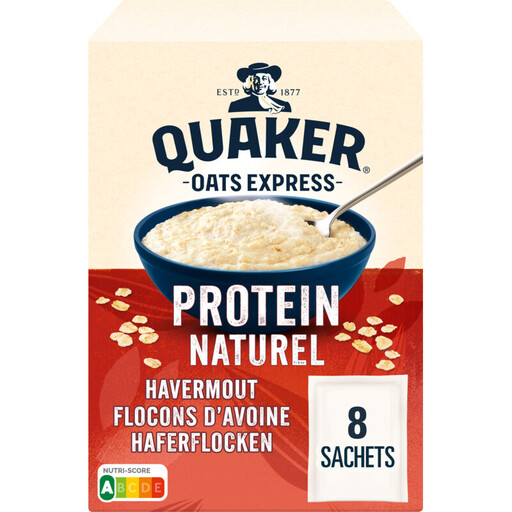
According to the product information, Quaker Oats Express Protein contains added soya protein. This means its ingredients differ from those of an unflavoured oat option.
Read the full ingredients and allergen information before deciding whether this option suits your needs.
A product description may not show all the information you need to make your choice, particularly if allergens or preparation instructions are important to you.
Check the packaging before use and follow the instructions for the option you’ve bought.
Quaker is worth considering if you’re looking for pre-measured oats. Albert Heijn lists Oats Express Naturel as a pack of 12 individual portions; the Protein option has a different recipe.
Jumbo Havermout Porties Original is a supermarket own-brand option to compare if you’re looking for individual portions.
Brinta Havermout is an alternative if you’d rather weigh out your own portions from a larger pack than buy individual instant portions.
These products are relevant if you’re looking for single portions for breakfast. The Quaker options are oat products; if you’re considering the Family Whole products, check the ingredients to see whether they suit you if you’re looking for an oat mix rather than an unflavoured base.
 No image available
Worth considering if you want to prepare oats for one. The pack contains 324 g; check the portion size and preparation instructions on the pack before use.
 No image available
Worth comparing with other oat options if added protein is one of your selection criteria. This pack contains 302 g; the product information states that it contains added soya protein. Check the allergens on the pack.
 No image available
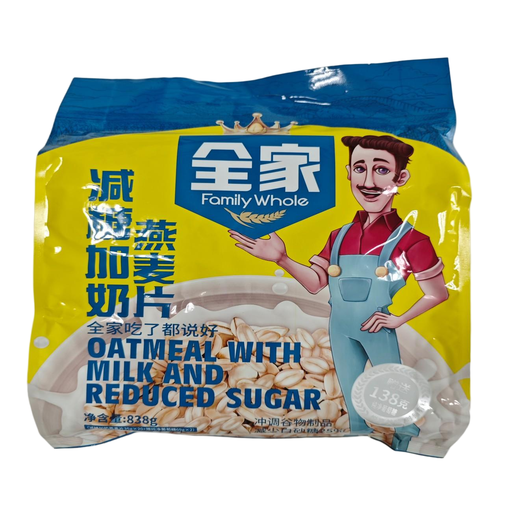
Worth considering if you’d rather buy an oat mix than unflavoured oats. The pack contains 838 g; read the ingredients and allergen information to see whether the mix suits your needs.
 No image available
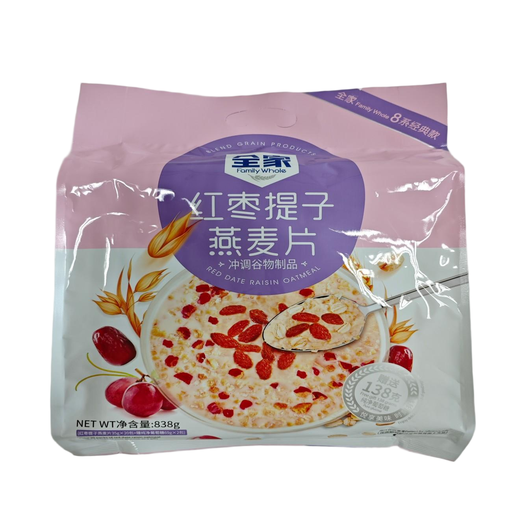
Worth comparing if you’re looking for oat flakes with dates and raisins rather than an unflavoured base. The pack contains 838 g; check the full ingredients and pack contents.
Portion sachets are handy if you want to prepare a set amount without weighing it out yourself. If you can use up the rest of a larger pack and don’t mind weighing portions, a large bag lets you choose your own portion size.
Check the ingredients, allergens, nutritional information, net weight and preparation instructions. This will help you decide which option and portion size suit your breakfast.
No. The presence of oats alone doesn’t tell you that. The Voedingscentrum notes that oats may be contaminated with gluten and recommends looking for the official Crossed Grain symbol on oat products suitable for people with coeliac disease; check the current allergen information too.
Yes, if you’re happy to weigh out a portion and can store the rest. Brinta lists 40 g portions for its 450 g pack. This gives you a useful point of comparison, but it isn’t as convenient as individual sachets.
Quaker Oats Express Protein has a different recipe: the product information states that it contains added soya protein. So don’t compare just the name on the front; read the ingredients and allergen information on the pack too.