
Stock-up shoppers who measure their own portions
If you eat porridge oats regularly, a larger pack may be worth considering. Check that the quantity suits how much you use and that you can seal the pack securely after opening.


Choose instant oats in portion sachets if you want a fixed serving size and less measuring. If you eat porridge oats regularly and prefer to measure them yourself, a larger pack of regular oats may be a better fit for your cupboard; they aren’t automatically instant. A storage tin is only useful if you can keep the contents well sealed and retain the product information.
If you eat porridge oats regularly, a larger pack may be worth considering. Check that the quantity suits how much you use and that you can seal the pack securely after opening.
If you don’t want to weigh out oats every time, individual sachets are practical. According to Albert Heijn’s product information, Quaker Oats Express Naturel is sold as 12 sachets of 27 g; check the contents of the version you choose when buying.
Before buying, read the ingredients and allergen information on the current pack, especially if you’re buying several at once. For a strict gluten-free diet, Voedingscentrum advises looking for a gluten-free label or the Crossed Grain symbol; the word ‘oats’ alone isn’t enough.
First decide whether you want pre-measured instant oats or prefer to portion out regular oats yourself. Then check that the packaging, ingredients and storage options suit the way you’ll use them.
| What to consider | What to check when buying | Who it matters to |
|---|---|---|
| Quantity | Compare the net weight with how much you use and the space in your cupboard. Regular oats in a large pack aren’t automatically instant. | If you eat porridge oats regularly, you’ll want enough in the cupboard without buying more than you can use. For around 31% of consumers, the quantity available is the top priority. |
| Preparation and portions | Check the number of sachets, the weight per portion and the preparation instructions for the version you’ve chosen. | For a rushed breakfast, you may want to grab a portion without weighing it out. Around 25% of consumers prioritise fixed portions and easy preparation. |
| Ingredients and allergens | Read the current ingredients list and allergen information. If you follow a strict gluten-free diet, specifically check for a gluten-free label or the Crossed Grain symbol. | If gluten or soya is a concern for you, check that the product suits your diet before buying a larger quantity. This is a top priority for around 25% of consumers. |
| Storage and sealing | Check the best-before date, the condition of the packaging and whether you can seal the contents securely after opening. | If you’ll be using a pack over a longer period, you’ll want to keep the contents and product information organised. For around 19% of consumers, good stock management is the main concern. |
Several boxes of portion sachets give you more servings to keep at home, but they’re still pre-portioned. A large bag of regular oats, on the other hand, means measuring your own portions and may require a different preparation method.
Before buying, check the net weight, the number of individual portions and the preparation method.
A storage tin is only helpful if it seals well and you can still identify what’s inside. Without the original packaging, you may lose track of the best-before date and allergen information.
Voedingscentrum recommends storing porridge oats in a cool, dry, dark place in a well-sealed container. Keep the packaging with the tin or note down the product name, best-before date and any relevant allergens.
Seeing oats on an ingredients list doesn’t confirm that a product is gluten-free. Some varieties also contain soya or warn that other cereals may be present.
For a strict gluten-free diet, check for a gluten-free label or the Crossed Grain symbol, as advised by Voedingscentrum, and read the rest of the allergen information on the current label too.
Quaker’s Dutch product pages show both regular porridge oats and individual Oats Express portions.
Jumbo lists fine wholegrain porridge oats in a 1 kg value pack for anyone who prefers to measure out their own portions.
ALDI lists Golden Bridge fine wholegrain porridge oats as regular oats to measure out yourself.
Lidl lists a Healthy Fit Protein porridge oats product that, according to its product page, is only available in store.
These products are suited to anyone looking for instant oats in a 302 g or 324 g pack. Check the current packaging to see whether the portions, ingredients and preparation method suit what you’re looking for to stock your cupboard.
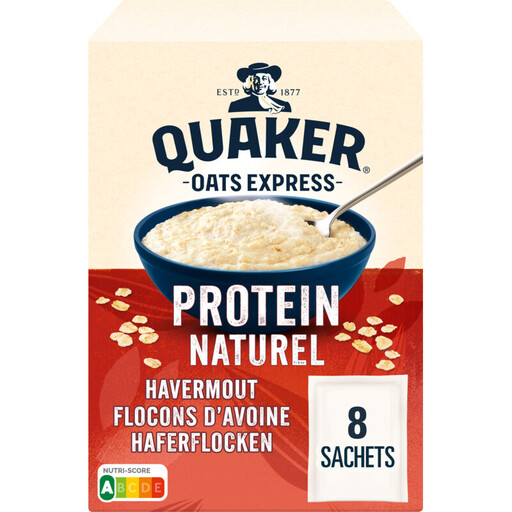 No image available
This instant variety is worth considering if you’re specifically looking for protein porridge oats for a quick breakfast. The pack contains 302 g; check the current label for serving size, nutritional values and ingredients, including soya if that’s relevant to you.
 No image available
If you’re looking for instant porridge oats in fixed portions, check how many sachets are in this pack and how to prepare them. The listed pack size is 324 g; also read the current label if gluten or other allergens are a concern for you.
No, a tin isn’t essential. Only choose a tin or storage container if it seals well and you can keep the product name, best-before date and allergen information with the contents. Voedingscentrum recommends storing porridge oats in a cool, dry, dark place in a well-sealed container.
Store opened porridge oats in a cool, dry, dark place in a well-sealed container, as recommended by Voedingscentrum. Follow any extra instructions on the packaging and check the contents if they smell musty or change in texture.
A past best-before date doesn’t automatically mean unopened porridge oats are unusable: according to Voedingscentrum, this date relates to quality. If the packaging is intact, you can assess the contents by looking, smelling and tasting them; storage instructions still matter after opening.
Read the ingredients list and allergen information on the current packaging before buying several packs. The Netherlands Food and Consumer Product Safety Authority explains how allergens must be labelled; for a strict gluten-free diet, Voedingscentrum advises looking for a gluten-free label or the Crossed Grain symbol.