
Older adults keeping an eye on fibre
If you want to include wholegrains at breakfast, compare the fibre content per 100 g and per serving eaten. Also consider the rest of your diet and how much someone drinks throughout the day.


Start with wholegrain oats that clearly state the fibre content per 100 g and per serving, then choose a format that’s easy to prepare independently. A drinkable breakfast can be practical if you prefer drinking to eating porridge, but it won’t necessarily have the same ingredients as oats. When choosing breakfast for an older adult, also consider protein, other nutrients and any relevant allergens.
If you want to include wholegrains at breakfast, compare the fibre content per 100 g and per serving eaten. Also consider the rest of your diet and how much someone drinks throughout the day.
If you’d like to keep preparation to a minimum, an individual sachet can be handy. Fine oats from a larger pack can also be ready quickly, but you’ll need to measure them out yourself.
If appetite is limited, it’s worth looking at protein, ingredients and the nutritional value of the whole breakfast, as well as fibre. The Netherlands Nutrition Centre also highlights protein, vitamins and minerals as important in the diet after the age of 70.
First decide whether you’d prefer oat porridge or a drinkable breakfast. Then, within that choice, compare the nutritional information for the same quantity and for the serving you’ll actually use.
| What to consider | What to check when buying | Who is this important for? |
|---|---|---|
| Fibre and oat content | Check the fibre content per 100 g and per serving; make sure wholegrain oats are the main ingredient. | If fibre is my main reason for choosing oats, I want to know how much I get from my usual serving. Around 42% of consumers prioritise this need. |
| Quick, independent preparation | Check the preparation time, liquid needed, serving size and method of preparation. | If measuring ingredients or standing at the hob for a long time is difficult, I want to be able to make breakfast with as few steps as possible. Independent preparation is the most important factor for around 33% of consumers. |
| Nutritional value and ingredients | Compare the protein per serving used and read the ingredients and allergen information. | If I have a limited appetite or a food allergy, I want to assess how this breakfast fits into my overall diet. This broader consideration is the main priority for around 25% of consumers. |
‘Instant’ describes how it’s prepared, not how much fibre a serving contains. For example, Jumbo lists 2.4 g of fibre per 27 g serving of Quaker Oats Express Naturel. That’s a different basis for comparison from the 10 g per 100 g shown on the label of AH fine oats.
Compare products per 100 g first, then check how many grams someone usually uses.
A drinkable option can be convenient, but Brinta lists rice, barley, wheat and sugar among the ingredients in Wake Up! Naturel.
Choose a drinkable option if it suits you better, and check the ingredients and allergens before buying.
The fibre content doesn’t tell you how much protein or how many other nutrients the whole breakfast provides. The Netherlands Nutrition Centre stresses the importance of getting enough protein, vitamins and minerals after the age of 70.
Check the nutritional information for the whole meal. Speak to a doctor or dietitian about unintentional weight loss, swallowing difficulties or a medically prescribed diet.
The ingredients, allergens and nutritional values on the current packaging are what matter when deciding what to buy.
Check these details again, especially if a particular allergen or serving value is a deciding factor.
Oats Express Naturel is a portioned oat product for quick preparation.
Wake Up! Naturel is a drinkable breakfast, not a like-for-like substitute for pure instant oats.
AH Wholegrain fine oats are a basic product for making porridge.
The range includes different types of oats, including fine oats and individual varieties.
These products include two oat options and a drinkable breakfast for anyone who prefers drinking to eating porridge. Compare the nutritional information per 100 g and per serving you use before choosing based on fibre or protein.
 Image unavailable
An oat option to consider if a quick breakfast with minimal measuring is important to you. Check the current packaging for fibre per 100 g and per serving eaten, and check the allergens.
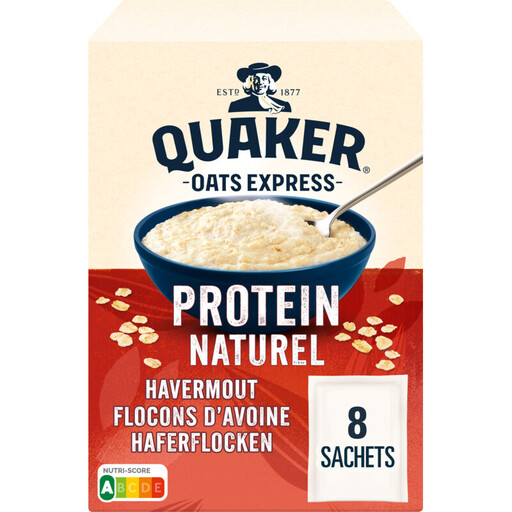 Image unavailable
An oat option to compare if protein is also a consideration. For a meaningful comparison, check the packaging for fibre and protein per 100 g and per serving used; if you have allergies, check the ingredients too.
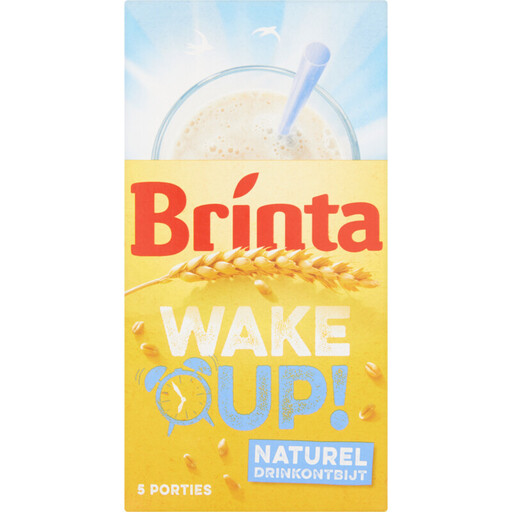 Image unavailable
A drinkable alternative to consider if a bowl of porridge doesn’t suit you as well; it isn’t pure oatmeal. Check the current packaging for the grains, sugars and allergens, as well as the nutritional values per serving.
Compare the fibre content per 100 g, then per serving actually eaten. Also check whether wholegrain oats are the main ingredient; a short preparation time doesn’t tell you how much fibre the product contains.
No. According to Brinta, Wake Up! Naturel can be prepared as a quick drink, but its ingredients also include other grains and sugar. Choose it for its drinkable format, not as an automatic alternative with the same oat base.
Always check the label on the specific pack. Jumbo notes that Quaker Oats Express Naturel may contain barley, soya and wheat. If you have coeliac disease or a relevant allergy, the current ingredients and allergen information should guide your choice.
Consider oats as part of the whole meal and your daily diet. The Netherlands Nutrition Centre stresses that getting enough protein, vitamins and minerals remains important after the age of 70.