
Anyone who wants to put their own lunch together
A plain oat base leaves you free to choose your own fruit, dairy or other additions. The ingredients in the whole meal matter when you’re having oats for lunch, too.


If you want to put together a lunch from your store cupboard, choose a wholegrain oat base whose ingredients and portion size you can check. Individual sachets save you measuring; varieties with added protein or a gluten-free label are mainly worth considering if that feature matters to you. What you add to the oats also helps determine what your finished lunch looks like.
A plain oat base leaves you free to choose your own fruit, dairy or other additions. The ingredients in the whole meal matter when you’re having oats for lunch, too.
Individual portions save you having to measure. Check what liquid and equipment your chosen variety needs, particularly if you’re making lunch at work.
If you have coeliac disease or avoid soya, the exact variety matters more than the word ‘oats’ on the front of the pack. Check the current ingredients list and allergen information.
Start with what you need your lunch base to do: leave room for your own additions, save time or meet a specific ingredient requirement. Then compare the pack size with how often you actually eat oats.
| What to consider | What to check before buying | Who this matters to |
|---|---|---|
| Simple oat base | Read the ingredients list: are wholegrain oats the main ingredient? Compare the nutritional information per 100 g, including sugars and salt. | If I’m deciding what goes in my lunch, I want to know what’s already in the base. For around 25% of consumers, this simple ingredient list comes first. |
| Quick to prepare and easy to take with you | Check the portion size, preparation instructions and liquid needed; one sachet isn’t necessarily a whole lunch. | On a busy working day, I want to avoid measuring, but still be able to add to my lunch. For around 20% of consumers, convenience is the main reason for choosing a product. |
| Storing and keeping | Choose a pack size that suits how often you use it, and follow the storage instructions on the pack. | If I open a pack, I want to use it regularly and be able to seal it properly. For around 20% of consumers, storage is the deciding factor. |
| Extra protein | Compare the protein per 100 g and per portion, and check which ingredients have been added to the variety. | If extra protein is my main reason for choosing something other than a plain oat base, I look beyond the name on the pack. Around 20% of consumers prioritise this. |
| Gluten and other allergens | If you have coeliac disease, check the current gluten-free labelling; if you avoid soya, also read the ingredients and allergen warnings. | If I need to avoid gluten or soya, the variety I choose must meet my requirements. For around 15% of consumers, checking the ingredients is the top priority. |
A quick preparation time tells you nothing about the other ingredients or what you add to the oats. For example, Jumbo lists sugar as an ingredient in its Havermout Porties Original.
Read the ingredients list and compare the nutritional information per 100 g before choosing a flavour or portion-size option.
A measured portion makes preparation easy, but whether it’s enough for lunch also depends on what you add and the rest of your meal.
Think in advance about what you’d like to eat with it, and whether you’ll have everything you need where you’re having lunch.
The Netherlands Nutrition Centre points out that oats often come into contact with gluten. This means a regular pack of oats isn’t automatically suitable for someone with coeliac disease.
Choose a product with clear gluten-free labelling and check the current label every time you buy it.
Oats can be a useful store-cupboard staple, but an opened pack needs to be sealed properly. A pack size is most practical when it suits how often you use it.
Store the product in a cool, dry, dark place, seal it after use and keep an eye on the date on the pack.
Its Oats Express range includes both a plain variety and a Protein Naturel variety.
Offers both oats and a separate wholegrain wheat breakfast cereal.
Offers both fine wholegrain oats and a separate protein variety.
Offers measured portions of oats and a separate variety labelled gluten-free.
ALDI lists Golden Bridge fine wholegrain oats as a 500 g product.
These products show two different lunch bases: a Quaker Oats Express Protein variety for anyone specifically looking for a protein option, and Brinta cereal for anyone considering wheat porridge rather than oats. Brinta isn’t instant oatmeal, so don’t choose it if oats are a requirement for you.
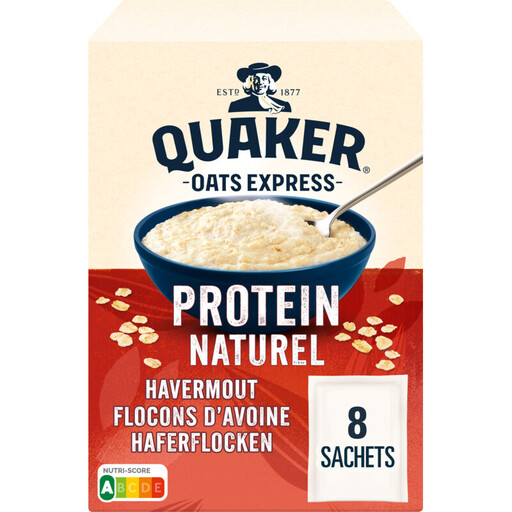 Image unavailable
An option if you’re specifically looking for a protein variety of instant oats. The pack contains 302 g; compare the nutritional information per 100 g and per portion, and check the ingredients for soya and possible traces of gluten.
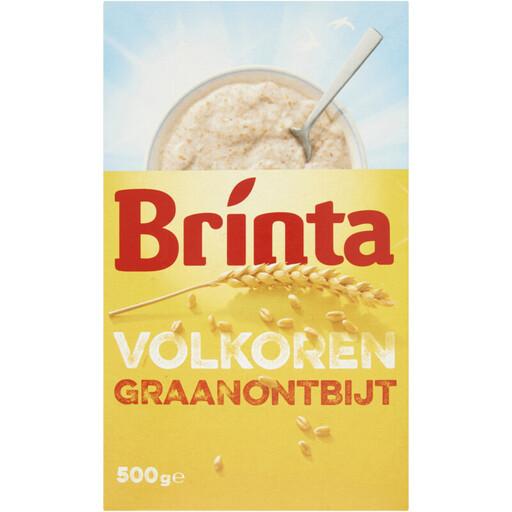 Image unavailable
A wholegrain wheat porridge if you want a cereal base and aren’t specifically looking for oats. According to Albert Heijn’s product information, Brinta Volkoren Graanontbijt contains wholemeal wheat flour and salt. This product contains wheat and isn’t a gluten-free oat option.
Yes, the Netherlands Nutrition Centre says oats can be part of lunch, too. If you’d otherwise be replacing bread regularly, make sure you eat a varied diet: iodine is added to bread, but not to oats. Also think about what you combine with your oats.
The Netherlands Nutrition Centre says opened oats can be kept in a kitchen cupboard for around a year. Store the pack in a cool, dry, dark place and seal it well. When you use it, check the packaging, smell and texture, too.
Not automatically: according to the Netherlands Nutrition Centre, oats often come into contact with gluten. If you have coeliac disease, choose a product with clear gluten-free labelling, such as a suitable certification mark, and check the current label.
No. A Protein variety is mainly worth choosing if extra protein in your oat base is a priority. You can also combine a plain oat base with ingredients that suit your meal; if you choose a Protein variety, check the portion, ingredients and allergens separately.