Who is this choice relevant to?

Sportspeople looking to get protein from breakfast

If you want the oats themselves to contribute to your protein intake, compare the amount of protein per 100 g. Also check where that protein comes from: for example, the protein versions reviewed contain added soya or wheat protein.

Breakfast lovers looking for fibre and quick preparation

A plain oat base gives you the flexibility to choose your own milk, yoghurt, quark or plant-based alternative. A portion pack can be convenient to prepare, but it doesn’t tell you how much fibre or protein it contains.

Shoppers who check ingredients and allergens carefully

If you have an allergy or need to follow a gluten-free diet, the information on the specific pack is what matters. Don’t assume that all oats have the same ingredients or allergen information.

What should you look for when choosing?

Choose between plain oats and a protein version based on how much protein you expect from the dry mix. Then compare fibre on the same basis and check that the ingredients suit you.

What to considerWhat to check when buyingWho it matters to
Protein in the oats Compare protein per 100 g of dry mix, then calculate it for the portion you use. If I want the oats themselves to contribute to my high-protein breakfast, I look beyond just the milk or yoghurt I add. This is the main priority for an estimated 36% of consumers.
Fibre and wholegrain oats Check fibre per 100 g and read the ingredients in the mix. If fibre is my main consideration, I want to know how much the dry oats add to my chosen portion. This matters most to around 29% of consumers.
Preparation and portion size Check the preparation time, the amount of liquid required and the weight of a portion. On a busy morning, I want to be able to prepare a portion that suits my breakfast. Around 21% of consumers say convenience is their main priority.
Ingredients and allergens Read the current ingredients and allergen list; look for an explicit gluten-free label if needed. If I need to avoid soya, wheat or ingredients containing gluten, choosing a suitable pack comes before other considerations. This is the main concern for an estimated 14% of consumers.

Common mistakes

  • Assuming a protein claim represents the nutritional value of the whole breakfast

    The protein content of the dry mix and that of a prepared bowl are not the same. Your portion size and choice of milk, yoghurt, quark or plant-based alternative also make a difference.

    First compare products per 100 g of dry mix, then calculate the nutritional value of the amount you use.

  • Reading only the front of the pack

    A claim such as ‘high in fibre’ doesn’t tell you how much protein, sugar or salt a product contains. The Netherlands Nutrition Centre recommends using the nutritional information per 100 g to compare products.

    Read the nutrition table and ingredients list together, rather than relying on a single claim to compare the whole product.

  • Comparing values for prepared portions with dry oats

    The Brinta portion shown by Albert Heijn includes 250 ml of semi-skimmed milk. Those portion values therefore don’t apply to the dry flakes alone.

    Compare dry products using values per 100 g, or make sure you take the liquid used into account when comparing prepared portions.

  • Assuming oats are always gluten-free

    The oat products reviewed have different ingredients and allergen statements, including information about possible traces. The product category alone therefore doesn’t tell you what’s in the pack you’re buying.

    Check the current allergen information. If you need a gluten-free product, choose only a version explicitly labelled gluten-free.

Brands to consider

Quaker

Quaker Oats Express Naturel is a plain wholegrain oat product in portion packs for quick preparation.

  • Albert Heijn lists 9 g of fibre and 11 g of protein per 100 g for this Naturel version; according to the product information, it takes two minutes to prepare.
  • The allergen information lists oats and possible traces of soya, barley and wheat. Don’t assume the values for this version are the same as those for other Quaker products.

Brinta

According to its Albert Heijn product page, Brinta Havermout consists of extra-fine oat flakes for a hot breakfast.

  • The fine flakes are designed for quick preparation with milk or water.
  • The nutritional values shown for a prepared portion include 250 ml of semi-skimmed milk. The allergen information lists oats and possible traces of wheat and rye.

Albert Heijn

AH Volkoren havermout proteïne combines wholegrain oat flakes with soya protein, linseed and sunflower seeds.

  • Albert Heijn lists 20 g of protein and 9.1 g of fibre per 100 g for this mix.
  • Check the pack if soya or grains containing gluten are a concern for you; product recipes and label information can change.

Jumbo

Jumbo sells regular oat products as well as a protein version described as containing wheat protein and seeds, among other ingredients.

  • Jumbo listed 19.7 g of protein and 9.7 g of fibre per 100 g for Jumbo Havermout Proteïne.
  • According to Jumbo, this particular protein version is no longer in its online range. Check availability if this is the product you’re looking for.

Instant oats on Joybuy

These two Quaker products let you choose between regular express oats and a Protein version. Check the pack for nutritional values per 100 g and per portion before deciding which one suits your breakfast.

Quaker Express Oatmeal 324 g

Quaker Express Oatmeal 324 g

An option if you want to use regular oats as a base and choose how to prepare them yourself. Check the nutrition table for the fibre and protein in your portion, and check the current allergen information if oats, soya, wheat or barley are a concern for you.

View on Joybuy
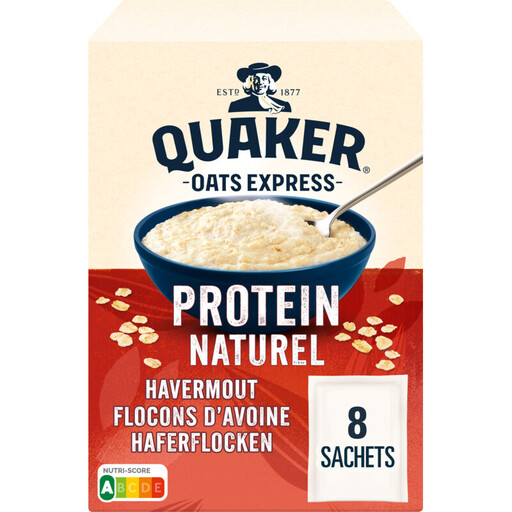
Quaker Oats Express Protein 302 g

Quaker Oats Express Protein 302 g

An option if you’re considering oats with added protein. Check how much protein and fibre your portion contains, and read the current ingredients and allergen list; soya and grains containing gluten are worth checking.

View on Joybuy

Frequently asked questions

How do I compare instant oats for a high-protein diet?

First compare protein and fibre per 100 g of the dry product, then consider your own portion and how you prepare it. For example, Albert Heijn lists 20 g of protein per 100 g for AH Volkoren havermout proteïne and 11 g per 100 g for Quaker Oats Express Naturel. These are values for different products, not for a complete prepared breakfast.

Can regular instant oats be part of a high-protein breakfast?

Yes, if you consider the contribution of the whole meal rather than just the oats. You can combine a plain base with milk, yoghurt, quark or a plant-based alternative that suits your diet; the nutritional value depends on what you use and how much.

Is a fibre claim enough to help me choose oats?

No. A fibre claim doesn’t tell you everything about the other nutritional values or ingredients. The Netherlands Nutrition Centre recommends comparing products per 100 g; also check the protein, sugar and salt content, and the ingredients list.

Is all instant oatmeal suitable if I need to eat gluten-free?

No. In that case, choose only a product explicitly labelled gluten-free and check the current packaging. Albert Heijn lists Elovena Natural Instant Oatmeal as a gluten-free option, while warnings about grains containing gluten appear on other oat products reviewed.
