
Weekly shopper stocking up
Buys oats for several breakfasts and considers pack size, the best-before date and a suitable place to store an opened pack.


A pack of regular or fine oat flakes is a practical choice for your weekly shop if you want to measure out your own portions and can seal the pack properly after opening. Choose pre-measured Express portions if convenience matters more to you. If you have coeliac disease, always check the current pack for a gluten-free label and allergen warnings.
Buys oats for several breakfasts and considers pack size, the best-before date and a suitable place to store an opened pack.
Wants a pre-measured portion on busy mornings, so checks the preparation instructions and the number of servings per pack.
Checks the ingredients and allergens on each pack. For people with coeliac disease, a gluten-free label and warnings about possible cross-contamination are especially important, as the Dutch Coeliac Association explains.
First, work out how much porridge you use and whether you have a container that seals well after opening. Then consider whether measuring your own portions, ready-portioned servings or a specific label claim matters most to you.
| What to consider | What to check when buying | Who it matters to |
|---|---|---|
| Storage after opening | Check the best-before date and consider whether you can store the pack in a cool, dry, dark place and keep it properly sealed, as advised by the Netherlands Nutrition Centre. | When I buy enough for several breakfasts, I want to stop an opened pack getting damp or attracting pests. That’s why storage is the top priority for around 36% of consumers. |
| Pack size | Compare the pack size with how much you regularly use; a larger pack also needs enough storage space once opened. | If you eat porridge often, you’ll want to stock up without being left with an opened pack for too long. Pack size is the first consideration for around 29% of consumers. |
| Portions and preparation | Check the number of servings and the preparation instructions for the option you’ve chosen. | On busy mornings, I don’t want to measure everything out each time, and I want to know how to make my breakfast. Around 21% of consumers prioritise this portioning convenience. |
| Ingredients and allergens | Read the current ingredients list and allergen warnings, and check for a gluten-free label if needed. | If I need to avoid gluten, an ingredients list showing only oats isn’t enough. For around 14% of consumers, checking the label is their main concern. |
An opened pack can absorb moisture or attract pests if it isn’t sealed properly.
Choose an amount you use regularly. The Netherlands Nutrition Centre advises storing oats in a cool, dry, dark place and keeping them well sealed, ideally in an airtight container once opened.
A product with oats as its only ingredient can still carry a warning about possible cross-contamination. For example, Albert Heijn’s listing for Brinta Oatmeal warns that it may contain traces of wheat and rye.
If you have coeliac disease, check that the current pack is explicitly labelled gluten-free every time you buy it, and read the allergen warnings.
Regular flakes, individual portions and options with flavourings or added ingredients can differ in their ingredients and preparation.
For each option, check the ingredients, preparation instructions and nutrition information on the pack, both per 100 g and per serving where provided.
Offers both a larger pack of regular oats and Oats Express portions.
Brinta Oatmeal is made with fine oat flakes.
Offers own-brand oats in fine and coarse wholegrain flakes.
ALDI lists fine wholegrain oats under this own-brand name.
These two Quaker Express options are worth considering if you’re mainly looking for oats that are quick to prepare for your weekly shop. Compare the pack sizes and check the portions, preparation instructions and label information for the option you choose.
 Image unavailable
An Express option to consider if you want to prepare oats on busy mornings. The pack contains 324 g; check the number of servings, preparation instructions and allergens on the current label.
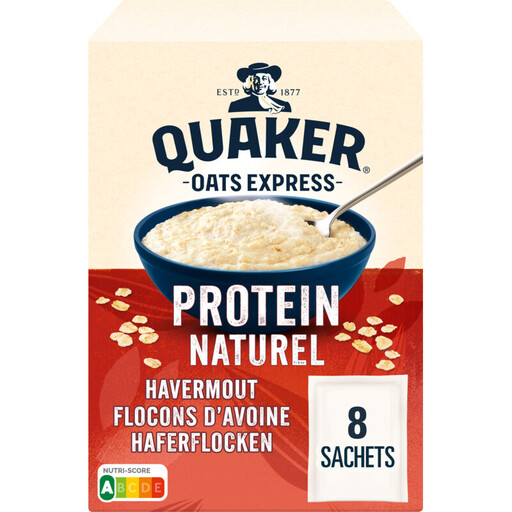 Image unavailable
An Express option for anyone considering this particular recipe. The pack contains 302 g; read the ingredients, allergens, serving information and preparation instructions on the current label.
For oats with a best-before date, the Netherlands Nutrition Centre advises checking, smelling and tasting them after that date, provided the pack and product still look in good condition. According to the Dutch Food and Consumer Product Safety Authority, a best-before date indicates the minimum shelf life; follow the storage instructions on the pack.
Keep it in a cool, dry, dark place and seal it well. The Netherlands Nutrition Centre advises keeping an opened pack in an airtight container or tin to help prevent pests in the kitchen.
No. Having oats as the only ingredient doesn’t guarantee that a product is gluten-free. The Dutch Coeliac Association highlights the importance of oats that haven’t been contaminated with wheat, rye or barley. If you have coeliac disease, check the gluten-free label and warnings on the specific pack. For example, Albert Heijn’s listing for Brinta Oatmeal warns that it may contain traces of wheat and rye.
Read the ingredients, allergens, preparation instructions, best-before date and nutrition information for the option you choose. The Dutch Food and Consumer Product Safety Authority says that information about the contents, use and shelf life of prepacked foods must be easy to read. Check the current pack if the ingredients or suitability for your diet will affect your choice.