
Vandaag of morgen in huis

Kwaliteit gegarandeerd

Welkomstaanbiedingen ontgrendelen: GRATIS bezorging | Tot 80% korting | Gratis 30 dagen JoyPlus-proefperiode
Download de app
Prawn instant noodles are handy for a quick lunch, a well-stocked cupboard or a late-night meal. But choosing online can sometimes seem simpler than it really is. A pack with a large bowl or a distinctive seafood flavour doesn’t automatically tell you about the portion size, ingredients or preparation.
Before you buy instant noodles with prawns, watch out for these common pitfalls:
Individual portions of 55 to 70 grams are suitable as a snack or light meal. For something more filling, look for packs weighing 90 to 127 grams. A bowl version, such as a big bowl, is handy when you don’t want to use a pan. With sachets, you’ll often need a heatproof bowl and sometimes a saucepan.
Check the instructions:
Don’t just look at the front of the pack. The ingredients list can help you distinguish between:
For example, according to the product specification, Indomie Instant Noodle Shrimp contains 0.3% artificial prawn flavouring. MAMA Shrimp Tom Yum lists prawn powder and dried prawns among its ingredients. According to its ingredients list, Nongshim Seafood Ramyun contains a combination of ingredients including squid, crab, prawns and fish.
Almost all the varieties in this selection contain wheat or gluten. They may also contain prawns, other crustaceans, fish, soya, milk and sesame. If you have a food allergy, always check the label on the product you receive. Online product information can change, so the packaging is the most up-to-date source.
Also compare the nutritional information per 100 grams and per portion. Instant noodles can be relatively high in salt. The exact amount varies by recipe and sometimes by market version. You can use only some of the seasoning sachets if you’d prefer a milder flavour, but if you have an allergy, always check the full ingredients information.
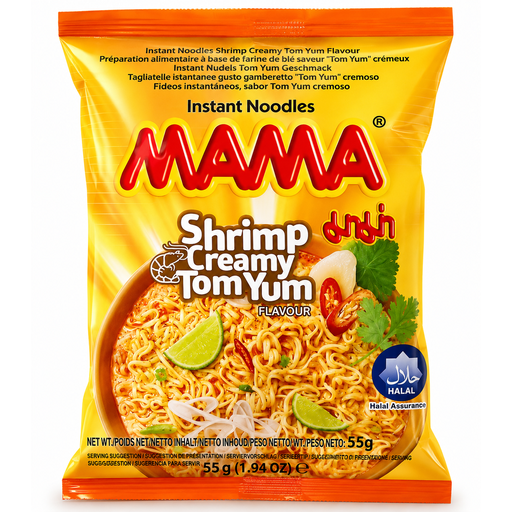
Why it suits this profile: An individual 55-gram portion is an easy option for students or anyone who wants to try a Thai prawn flavour before buying a multipack.
The portion size and 3 to 4-minute preparation time are clearly stated. The ingredients include prawn powder, milk and soya, so you don’t have to guess at the flavour from the product name alone.
55 grams per sachet; prepared with hot water; a creamy, aromatic variety in the Thai tom yum style.
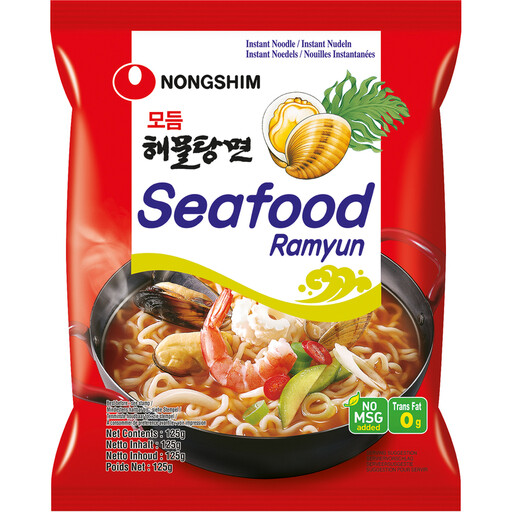
Why it suits this profile: This Korean seafood ramyun is for anyone looking for a larger portion and a distinctive soup base with several seafood ingredients.
The product specification lists fish, prawns, squid and crab separately in the seasoning base. This makes the term “seafood” more specific than a pack labelled only with a “flavour”.
125 grams per pack; seafood mix; dried vegetables and noodles in one portion.
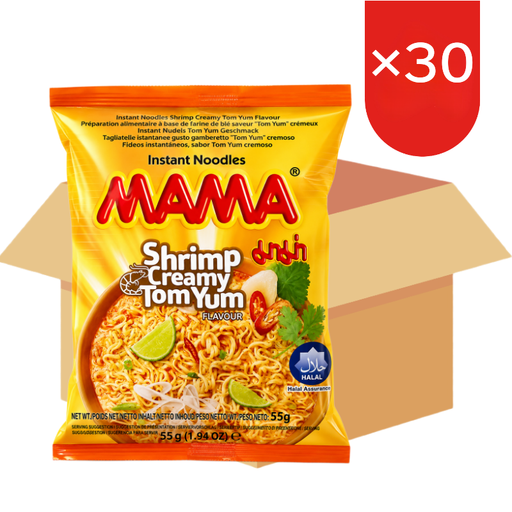
Why it suits this profile: A box of 30 individual sachets suits families, offices, food service businesses or retail buyers looking to keep a regular supply of Asian instant noodles in stock.
The multipack contains 30 individual 55-gram portions. This makes it easy to keep track of your stock, and you won’t have to store an opened bulk bag.
30 individual sachets; 1.65 kg in total; suitable for stock management and regular consumption.
We’ve put together a complete, up-to-date list of products that meet these strict selection criteria and current European safety regulations.
You can add spring onions, pak choi, bean sprouts or a boiled egg to a basic portion. Only add fresh prawns if you cook them thoroughly, and store leftovers according to the instructions on the pack. Fried vegetables go well with dry varieties such as mie goreng, while a soup version is better suited to stock, seaweed or mushrooms.
Store unopened noodles in a cool, dry place away from direct sunlight. Check the pack for damage and look for the best-before date on the product itself. This is especially important with multipacks that are stored in the cupboard for a long time.
It depends on the portion size and what you add. A 55-gram sachet is often a light meal or snack. A 90 to 127-gram portion contains more noodles, but that doesn’t automatically mean it has plenty of vegetables or fresh protein. Add vegetables, egg or other ingredients as you like.
Follow the date on the pack and store the product in a dry place away from heat. If you have a multipack, it’s a good idea to use the oldest sachets first. Always check the packaging for dents, tears or moisture before preparing the noodles.
Thai varieties, such as MAMA Tom Yum, usually focus on sour, aromatic and spicy flavours. Korean seafood ramyun often has a fuller soup base with chilli, garlic and several types of seafood. The ingredients list and preparation method give you the clearest indication of the finished flavour.
