
Vandaag of morgen in huis

Kwaliteit gegarandeerd

Welkomstaanbiedingen ontgrendelen: GRATIS bezorging | Tot 80% korting | Gratis 30 dagen JoyPlus-proefperiode
Download de app
Are you looking for instant noodles with pork flavour for a quick lunch, a store-cupboard staple, or a late-night meal? You’ll soon come across terms like pork ramen, tonkotsu ramen and “rich broth”. These descriptions don’t always tell you what you’re actually getting. One packet contains a loose seasoning mix, while another has several sachets of oil, sauce and vegetables.
With this buying guide, you can compare flavour profile, portion size, packaging and ease of use without relying solely on marketing claims.
“Pork flavour” can refer to a flavouring, whereas “pork bone broth” or “tonkotsu” indicates a different taste direction. So always check the ingredients list. There you might see pork extract, pork bone flavouring, pork powder or just artificial pork flavour.
A product with a tonkotsu flavour doesn’t automatically have the same rich taste as a noodle soup with multiple broth and oil sachets. According to the product description, Lamianfan contains pork flavouring and a pork bone flavour seasoning powder. With Oyakata, pork extract is listed in the soup seasoning.
An instant noodles multipack looks appealing, but the gram weight per portion varies. So compare:
A 5-pack can be handy for a student or a small household. A box of 12 or 30 portions is better suited to a shared store cupboard, but it needs more storage space and a flavour you’ll still enjoy over a longer period.
Many ramen noodles are quick to prepare, but the method differs. A pot usually only needs boiling water and a few minutes’ resting time. Sachets may require cooking on the hob. With some varieties, you add the soup base only after steeping, so the flavour is distributed differently.
Also note the difference between fried and non-fried noodles. According to the product description, Wugu Daochang uses non-fried wheat noodles. That’s a verifiable product feature, but not a general health claim.
For on-the-go or at the office, instant noodles in a pot are practical: you don’t need a pan and the packaging doubles as a bowl. Bai Xiang Pork Bone Soup Bowl is 108g and needs to stand for 5 to 6 minutes according to the instructions. Oyakata Pork Ramen Cup contains 62g and is aimed at a smaller portion.
For home use, sachets are often more flexible. You can add your own toppings, such as spring onion, egg or vegetables. An instant noodles 5-pack is a straightforward choice if you want to keep several portions without buying a large box straight away.
Check whether the packet contains just a powder sachet or also sauce, oil and vegetables. More sachets often mean more steps, but they also give you control over the intensity.
According to the product information, Wugu Daochang contains a seaweed packet, a vegetable packet and pork rib seasoning sauce. Lamianfan includes a soup base, oil, seasoned plant-based slices and vegetables, among other things.
Most of the Asian instant noodles mentioned here contain wheat and often soya. Some products also list sesame, celery or fish. Always check the label on the packet you receive, especially if you have an allergy or food intolerance.
The salt content also deserves attention. The stated values vary by product and are often given per 100g. Uni-President Braised Pork Rib Noodles, for example, lists 3.8g of salt per 100g, while Jin Mai Lang lists 7g. That makes a direct comparison per portion important. If you want a less intense flavour, you can use less of the seasoning or sauce.
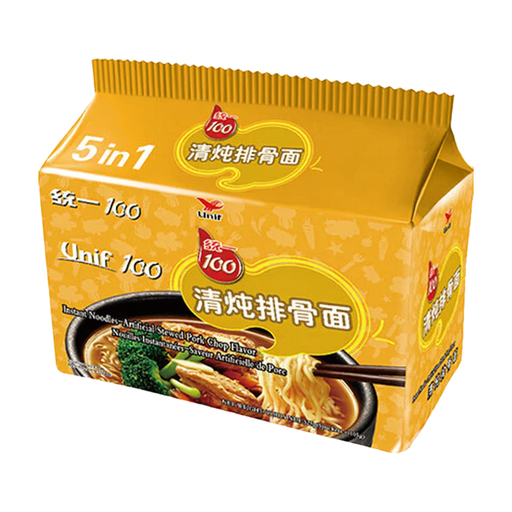
Why this fits the profile: This 5-pack offers five separate portions of 105g each. It’s a straightforward choice for a student, a small household, or a first taste of Chinese instant noodles.
The number of portions and total weight are clearly stated. The ingredients list mentions pork flavouring, so you can distinguish the flavour description from a broth claim.
5 portions, ready in a few minutes and a stated salt value of 3.8g per 100g.
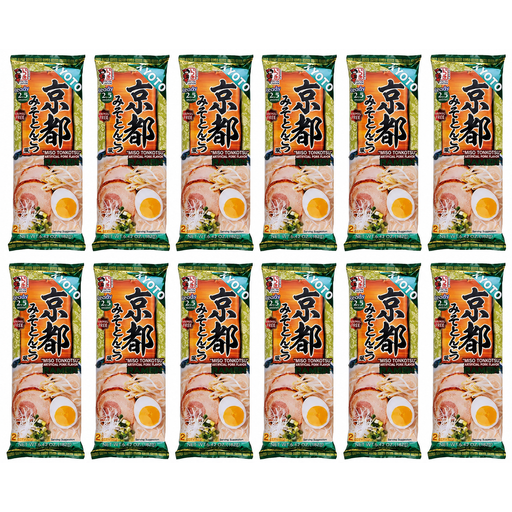
Why this fits the profile: According to the product description, these Japanese instant noodles combine miso with a pork bone flavour and have a stated preparation time of 2.5 minutes.
The flavour is described more specifically than just “pork”. The allergens wheat, soya and sesame are listed, so you can check in advance.
12 packets of 182g and a preparation time of around 2.5 minutes according to the product information.
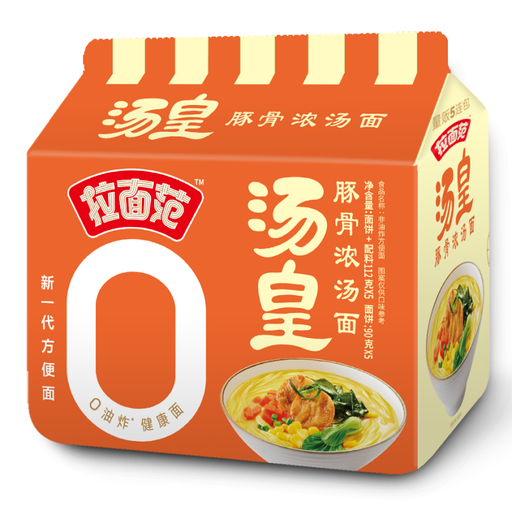
Why this fits the profile: Ideal for tonkotsu ramen lovers who want to use multiple flavour components. The pack contains five portions and several sachets.
The product description specifies non-fried noodles, a soup base, oil, vegetables and plant-based slices. So you know in advance what’s in the set.
5 portions of 112g, non-fried noodles according to the product information and a complete set with soup, oil and vegetables.
We’ve put together a full, up-to-date list of products that fully meet these strict selection criteria and comply with current European safety regulations.
Always follow the preparation instructions on the packet. With a pot, you usually add boiling water up to the indicated line and wait a few minutes. With sachets, cooking in a pan may be required. Add sauce or oil at the specified time for the intended flavour distribution.
Store unopened instant noodles in a cool, dry place away from direct sunlight. Check the best-before date and do not use a packet if it is damaged. Once opened, it’s best to prepare the individual sachets straight away.
Yes, the varieties mentioned are designed to be ready in a few minutes. The exact time ranges from around 2.5 to 6 minutes. Also check whether you need a pan, a bowl or just a kettle.
Look at the date on the packet. The shelf life depends on the product and how it’s stored. Keep the noodles dry and away from direct sunlight. Once opened, it’s advisable to use the contents straight away.
Not necessarily. Tonkotsu generally refers to a Japanese flavour style based on pork bone broth, whereas instant noodles with pork broth can contain various flavourings, extracts or powders. So compare the ingredients and the preparation method rather than just the name on the front.
