
Vandaag of morgen in huis

Kwaliteit gegarandeerd

Welkomstaanbiedingen ontgrendelen: GRATIS bezorging | Tot 80% korting | Gratis 30 dagen JoyPlus-proefperiode
Download de app
Instant noodles are handy for a quick lunch, an easy evening meal or a store-cupboard staple for busy days. Yet Korean ramen, Japanese udon noodles and other Asian noodles differ greatly in preparation, portion size, ingredients and packaging. If you only go by flavour or an eye-catching packet, you could end up with an overly salty meal, an awkward bowl or a product that doesn't suit your kitchen.
As Joybuy Product Recommendation Officer, I filter the most important product information so you can compare marketing claims against verifiable specifications.
An instant noodle bowl can be prepared with boiling water, in the microwave or with a short cooking step. Always check the preparation method on the packaging. The Nongshim Korean Hot & Spicy Bowl, for example, requires boiling water and around 4 to 5 minutes of resting time. The Obento Sweet & Sour Udon Noodle Bowl is prepared with water and around 2 minutes in the microwave, according to the product information.
A microwave product isn’t automatically suitable for every type of packaging. Always follow the instructions on the label and never heat a sealed container unless it is expressly permitted.
Spicy noodles can contain chilli, garlic, pepper, sesame or several flavour enhancers. When checking for allergens, don’t just rely on the flavour name. Nongshim Kimchi Ramyun lists wheat and soya among its allergens. Obento Spicy Sesame Ramen lists wheat, sesame and soya, and may contain traces of egg and peanut.
Also check the current packaging. Ingredients, nutritional values and shelf-life information can vary by market or product version.
A pasta bowl, noodle bowl or ceramic ramen bowl might look the part, but you should also pay attention to capacity, diameter, stackability and heat resistance. A shallow 29 oz bowl is different to use from a deep 1.2 litre bowl. For noodle soup, sufficient depth is important to prevent spills. For stir-fried noodles, a wider, shallower bowl can be more comfortable.
For an individual instant noodle bowl, a bowl of around 700 to 1,200 ml is practical, depending on the amount of broth and toppings. The YumiPLUS Japanese ceramic bowls have a capacity of 1,200 ml per bowl, according to the product information. That gives you room for ramen, extra vegetables, egg or other toppings.
The Dafuceramic 29 oz bowls are more compact and suitable for smaller portions, soup, salad or noodles. A set of four can be handy for families or shared use.
Ceramic retains heat well and is suitable for everyday serving, but can break if dropped or subjected to sudden temperature changes. Check whether the bowl is suitable for the microwave, dishwasher, oven or freezer. These features are not standard on every ceramic bowl.
The Dafuceramic 8.5-inch bowls are described in the product description as suitable for the microwave, fridge, dishwasher and oven. The YumiPLUS Japanese ceramic bowls are suitable for the microwave and dishwasher, but according to the information provided, not for oven or hob use. Do not use a ceramic bowl on a hob unless the manufacturer explicitly states it is safe to do so.
Instant noodles often contain wheat and soya. Some varieties also contain sesame, peanut, fish, shellfish, milk or egg. Uni-President Shrimp Fish Flavour, for example, lists shellfish, fish, soya, wheat, sesame, molluscs and milk as allergens.
Nutritional values vary by variant. Nongshim Hot & Spicy Bowl lists 5.7 grams of salt per 100 grams, while Obento Sweet & Sour Udon lists 0.8 grams of salt per 100 grams. Compare these figures based on the full portion and check the packaging for the most up-to-date information.
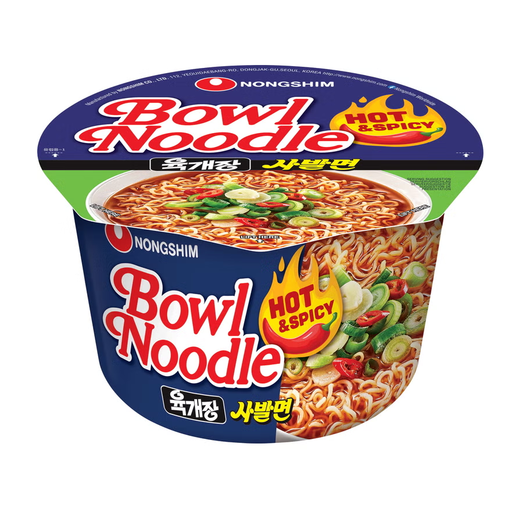
Why this fits: An individual Korean ramen bowl that is prepared with boiling water and a resting time of around 4 to 5 minutes.
The preparation steps and allergens are clearly stated. Do check the salt content and the current packaging.
Individual 100 g bowl, containing noodles, soup base and dried vegetables.
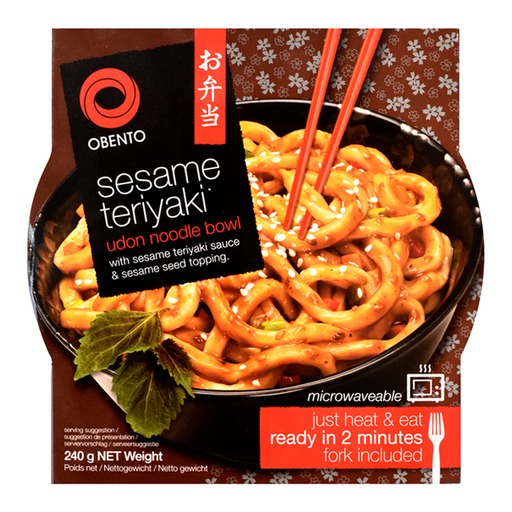
Why this fits: For those looking for thicker Japanese udon noodles and a sauce based on sesame and teriyaki.
The product information explicitly mentions wheat, soya and sesame. This stops you from relying solely on the flavour name.
240 g portion with dried vegetables and toasted sesame as a topping.
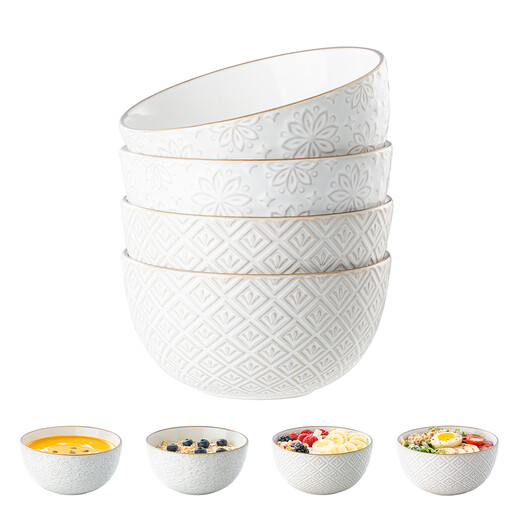
Why this fits: A set of four for ramen, soup, salad, fruit and everyday meals in a household.
The size is clearly specified and the bowls are described as stackable in the product description.
According to the product specifications, the bowls are suitable for the microwave, oven, freezer and dishwasher.
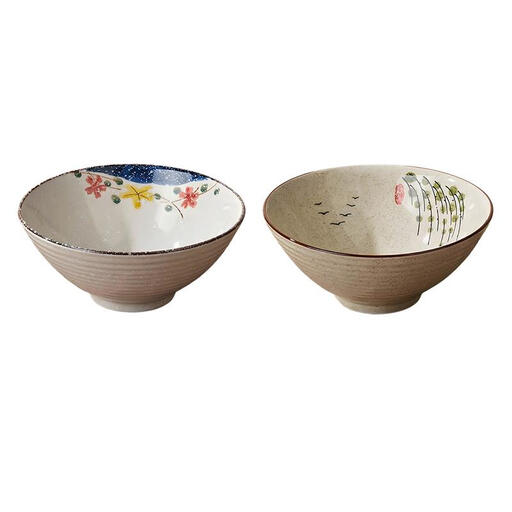
Why this fits: For generous portions of ramen, noodle soup, pasta or rice dishes in a 1,200 ml bowl.
The product specifications state that the bowls are not intended for oven or hob use.
Set of two, microwave-safe according to the information provided and suitable for generous portions.
Browse a current selection of noodle bowls and compare capacity, material, size and care before you order.
Use these points before you add a product to your basket:
Use exactly the amount of water and the resting time stated on the packaging. Add toppings such as spring onion, egg or vegetables only when the noodles are nearly ready. This gives you more control over the texture. With an instant noodle bowl that has a sauce, you often need less water than with noodle soup.
Dry instant noodles can generally be kept until the stated date when stored in a cool, dry place away from direct sunlight. Fresh udon and meal bowls may have a shorter shelf life. Always check the date and do not use a packet if it is damaged.
That depends on the product specifications. The Dafuceramic bowls are listed as microwave-safe according to the product information. The YumiPLUS bowls are suitable for the microwave according to the data provided, but not for the oven or hob. Do not heat a cold bowl too quickly and follow the manufacturer's instructions.
