
Vandaag of morgen in huis

Kwaliteit gegarandeerd

Welkomstaanbiedingen ontgrendelen: GRATIS bezorging | Tot 80% korting | Gratis 30 dagen JoyPlus-proefperiode
Download de app
A cup of instant noodles seems simple enough: add hot water, wait a few minutes and eat. Yet Asian instant noodles vary considerably in flavour, portion size, preparation method and ingredients. If you rely only on the picture or a label such as “authentic”, you could end up with a portion that is too small, a flavour that is far too spicy or a product that is unsuitable for the preparation method available to you.
This guide helps you compare your options carefully before ordering instant noodles for home, the office, when travelling or as a quick meal.
“Chicken”, “ramen”, “kimchi” or “BBQ” does not always indicate how much of the named ingredient is actually included. Check the ingredients list and product description. For example, the Uni-President bowl states that dried prawns and fish cake are included, but only in small quantities. The flavour also comes from the seasoning, flavourings and stock composition.
When choosing chicken noodles, kimchi noodles and Chinese instant noodles, it is therefore worth checking:
A cup weighing 62 to 80 grams is usually suitable as a snack, light lunch or accompaniment. A bowl weighing 104 to 108 grams, or a multipack containing several bowls, generally provides more food per serving. Also pay attention to the difference between net weight and the volume after preparation.
A 66-gram product, such as a Japanese miso ramen cup, is well suited to a smaller appetite or as a quick snack. For a more filling option, a larger bowl or a box containing twelve servings may be more practical.
Many ramen cups are designed for hot water and must not be placed in the microwave. This is explicitly stated for the Mama Chicken Cup Noodles. Other products, such as the Jinba Wei udon bowls, are specifically intended for microwave preparation. Always follow the instructions on the packaging and check whether a microwave symbol is present.
Also pay attention to the amount of water required. A cup may need to be filled up to a marked line, while a bowl may require approximately 500 ml of boiling water. Too little water can leave the noodles unevenly softened; too much water will dilute the flavour.
First decide between noodles in soup and noodles with sauce. Japanese ramen and Korean instant noodles are often served in broth. Nissin Soba Classic is a different type: after preparation, the noodles are mixed with yakisoba sauce rather than eaten as soup.
For choosing a flavour, you can broadly think in terms of:
Spiciness is a personal preference. Product names such as “Hot Chicken”, “Red” and “Super Spicy” suggest a bold flavour, but the exact intensity may be experienced differently by each person. If you are unsure, start with a miso, chicken or udon variety.
Most instant noodles in a cup are ready in around 3 to 5 minutes. The Mama Chicken cup states 3 to 5 minutes; the Oyakata miso ramen cup is also intended to be prepared with hot water in just a few minutes. Nissin Soba Classic specifies 3 minutes. Always check the packaging, as noodles with a thicker texture or several sachets may require a different method.
Before ordering, check:
Wheat and soya are found in many instant noodles. Some varieties also contain milk, egg, fish, shellfish, sesame or peanuts. Always read the current packaging, particularly if you have an allergy or intolerance. Online product information may change; the label on the packaging takes priority.
Also compare the salt content per 100 grams and per serving. A salty broth can work out differently from a sauce-based variety, while a larger bowl may contain more product overall. Nutritional values are intended to help you compare products, not to pass judgement on an individual eating pattern.
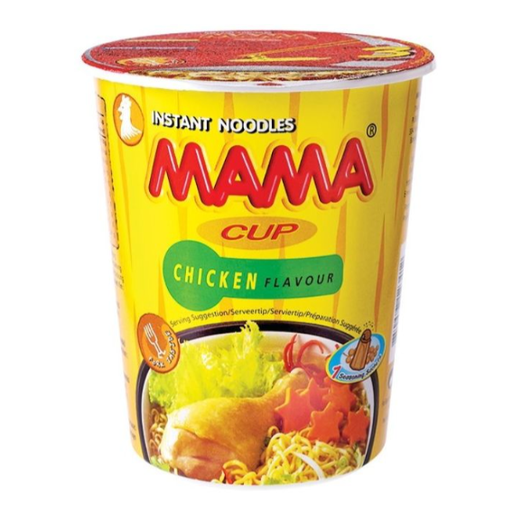
Why it suits this profile: A straightforward single cup with chicken flavour and hot-water preparation. A convenient way to try Thai instant noodles without immediately buying a large pack.
The product information clearly states 70 g, a preparation time of 3–5 minutes and that the cup must not be placed in the microwave.
Thai origin, dried vegetables and simple preparation with boiling water.
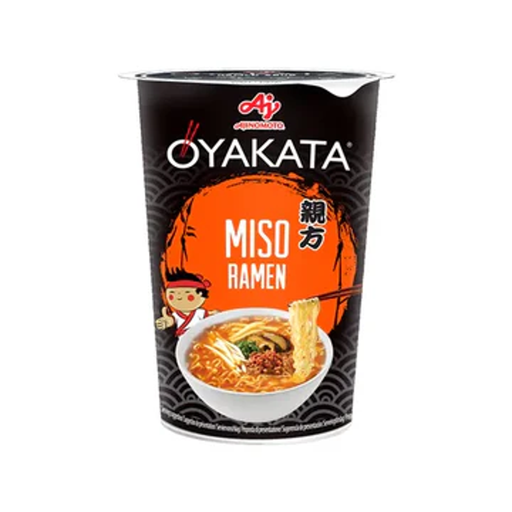
Why it suits this profile: For anyone looking for Japanese-style ramen with a miso base and springy noodles for lunch or the office.
The flavour profile, 66 g portion and preparation method are described clearly, so you know exactly what you are buying.
A clear miso flavour base and, according to the product description, no artificial colourings.
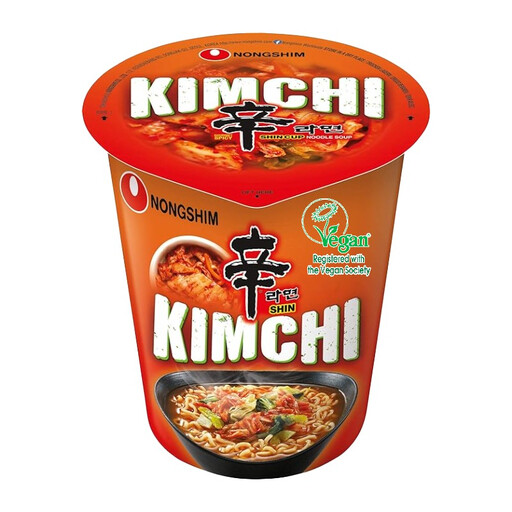
Why it suits this profile: A choice for fans of Korean instant noodles who want a spicy, fermented kimchi flavour with dried vegetables.
The product description mentions kimchi, kimchi flakes, cabbage and red pepper, making the flavour expectation clearer than with a general “spicy” label.
75 g per cup, Korean ramen style and a distinctive kimchi and chilli profile.
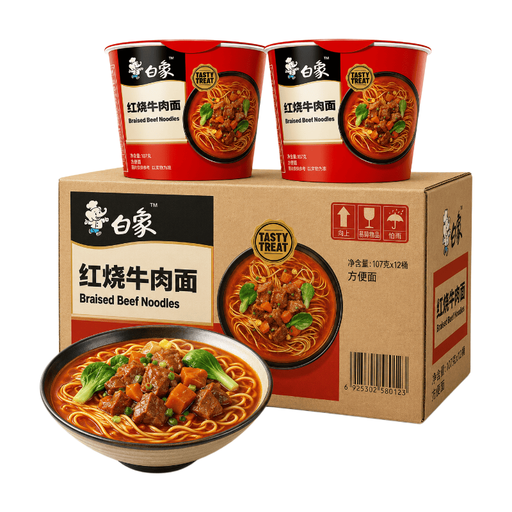
Why it suits this profile: The box of 12 107 g bowls is practical for a cupboard, student house, family or shared office space.
The portion size and pack contents are clear from the outset: 12 individual 107 g bowls, prepared with boiling water.
A generous supply, 107 g per bowl and a classic braised beef flavour with separate sauce, seasoning and vegetable sachets.
We have put together a complete, up-to-date list of products that fully meet these strict selection criteria and the applicable European safety regulations.
An udon cup or microwaveable bowl may sometimes require a different method. Only use a microwave when the packaging explicitly permits it.
That depends on the portion and when you plan to eat it. Cups of around 62 to 80 grams are often used as a snack or light meal. A bowl of approximately 100 grams or more may be more filling. You can add vegetables, egg or a source of protein, but check the allergens on the packaging first.
Check the best-before date on the packaging. Store the cups in a dry, cool place away from direct sunlight. Do not use the packaging if it is damaged. Once opened, prepare and consume the product according to the instructions.
The price varies by brand, flavour, weight and number of items. A single cup is ideal for trying a flavour. A box of 12 may be more convenient if you regularly need a quick meal, but compare the price per serving and check the shelf life. This helps you avoid buying a large pack that seems good value, only to find that you rarely eat the flavour.
