
Vandaag of morgen in huis

Kwaliteit gegarandeerd

Welkomstaanbiedingen ontgrendelen: GRATIS bezorging | Tot 80% korting | Gratis 30 dagen JoyPlus-proefperiode
Download de app
Instant noodles are handy for a quick lunch, a late-night snack, a student kitchen or your store cupboard. Yet many packets look more alike than they actually are to use. A noodle soup that takes 3 minutes to prepare is not the same as dry mi goreng, fresh udon or extremely spicy Korean ramen.
If you only look at the brand name, a discount or a striking flavour description, you could end up with a box that's too big, a taste that doesn't suit you, or a product with allergens you've overlooked. This buying guide compares Asian instant noodles on practical points: preparation, portion size, flavour type, ingredients and packaging.
A multipack of 20, 30 or 40 instant noodle sachets may seem good value per portion. That's only practical if you eat that flavour regularly and have enough storage space. For someone who wants to try different Asian flavours, a box with just one flavour can actually be inconvenient.
So pay attention to:
A pack of 5 sachets is ideal for trying a flavour first. A box of 20 or 30 portions is better suited to heavy use, catering, a student house or a family that eats noodles regularly.
Spicy noodles can vary enormously. Korean ramen often uses chilli, garlic and a robust broth. Thai MAMA noodles combine tom yum flavours with lime, chilli and a creamy seasoning in some varieties. Samyang Buldak is known for a concentrated sauce that you usually mix through the drained noodles.
What's more, the term "creamy" doesn't automatically mean the flavour is mild. Check the preparation method and consider adding only part of the chilli sauce or seasoning sachet. That way you can adjust the intensity without having to buy a different pack.
Instant noodles often contain wheat and gluten, but also soya, milk, sesame, celery, mustard, egg, fish or shellfish. This varies by flavour and production site. Always check the current ingredients list on the packaging, especially when buying an imported variety.
Nutritional values can be shown in different ways: per 100 grams, per sachet or per prepared portion. So compare products on the same basis. The information on the product page is intended as a guide; if there are any differences, the physical label takes precedence.
The preparation method determines how much time and kitchen equipment you need.
The instructions differ by brand. For example, the product information for MAMA Creamy Shrimp Tom Yum states 400 ml of water and around 3 minutes of boiling. Nongshim Shin Ramyun uses 550 ml of water and around 4.5 minutes of preparation, according to the product description.
A sachet of 60 to 75 grams is usually a smaller meal or snack. Varieties of 100 to 140 grams are more suitable when you want a larger portion. Bear in mind that a heavier pack doesn't automatically mean more seasoning sachets or toppings.
For stocking up, you can calculate the total quantity:
number of sachets × weight per sachet = total net weight
A box of MAMA with 20 × 90 grams, for example, contains 1,800 grams of product. A pack of Indomie with 5 × 75 grams is considerably smaller at 375 grams and therefore more convenient for trying out or limited storage.
Don't just look at the front of the sachet. Check whether the product:
Claims such as "authentic", "traditional" or "extra creamy" are the brand's descriptions and not a guarantee of your personal taste. According to Samyang's own product description, Buldak Carbonara combines a spicy sauce with a creamy powder mix. The ingredients list includes milk and soya among others. So check the label if you want to avoid allergens.
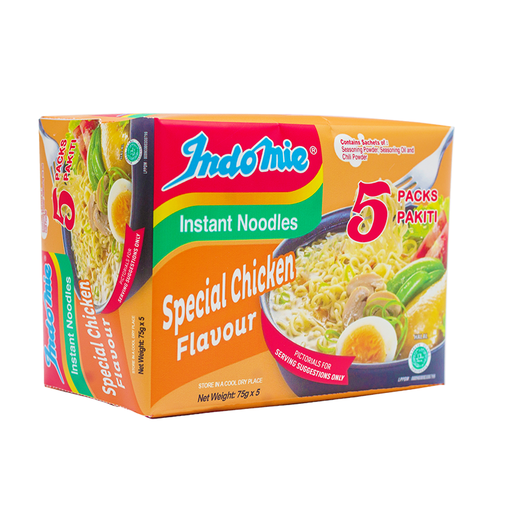
Why this fits: A small pack with 5 sachets is manageable for students, a first taste of Indomie or a stock for a few quick meals.
You're not committed to a large pack when you don't yet know the chicken flavour.
5 sachets of 75 grams; the product information lists wheat and celery as allergens.
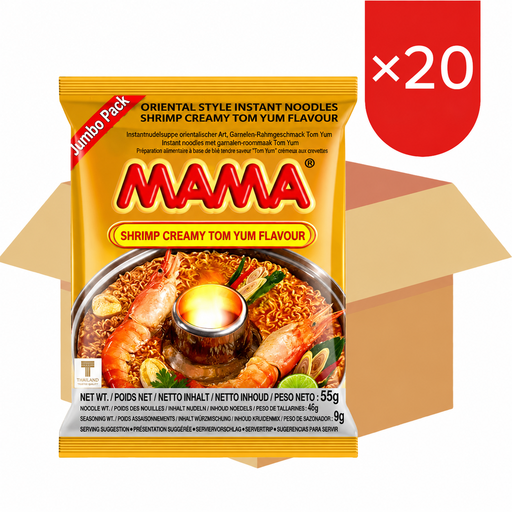
Why this fits: A large pack for households, fans of Thai noodle soup and anyone wanting to build a regular stock.
The box clearly states 20 portions of 90 grams, so you can estimate your stock in advance.
According to the product description, ready in around 3 minutes; contains wheat, soya, milk and shellfish among others.
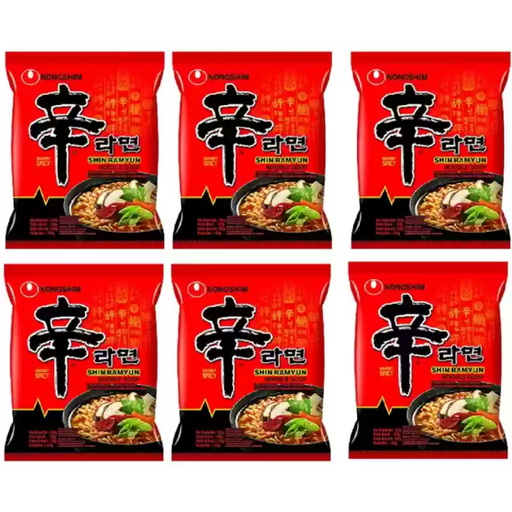
Why this fits: A hearty Korean ramen portion for anyone looking for a spicy broth and a larger sachet size.
The preparation instructions mention 550 ml of water and around 4.5 minutes; this isn't a product for just hot water in a mug.
6 sachets of 120 grams; the product information lists gluten, soya, celery and mustard among others.

Why this fits: For fans of Samyang Buldak who want a larger stock and a creamy, spicy sauce variety.
It comes as 10 individual portions of 130 grams; plus you can measure out the sauce rather than adding it all at once.
The product information mentions a sauce and powder mix containing chilli, soya, wheat and milk among others.
Browse a current selection of noodle packs and compare flavours, portion sizes, brands and pack formats based on the product information.
Instant noodles become more versatile with simple additions. Think of an egg, pak choi, spring onion, sweetcorn, tofu or leftover chicken. Only add fresh ingredients after you've checked the cooking time of the noodles. With dry mi goreng, cucumber, fried shallots or an extra squeeze of lime go well with the sweet-savoury sauce.
If you mainly want a neutral base, look at Japanese udon noodles. Products like SUKI Udon are supplied without a complete seasoning base and are therefore suitable for your own broth, stir-fry sauce or hotpot. So they can't be compared one-to-one with ramen noodles or a ready-made noodle soup.
The best-before date is on the packaging. Store unopened sachets in a cool, dry place away from moisture, heat and direct sunlight. Don't use any product where the inner packaging is damaged or leaking. With large packs, it's a good idea to put the oldest sachets at the front of the cupboard.
No. Korean ramen ranges from mild vegetable and noodle soups to very spicy varieties. Check the flavour description, ingredients list and preparation method. With a sauce variety, you can often decide how much of the sauce to add, but always follow the instructions on the label.
A large pack can be better value per portion, but only if you actually finish the flavour before the best-before date. Compare the price per 100 grams, check the total number of portions and take your storage space into account. For a first purchase, 5 or 6 sachets are usually more manageable than a box of 20 or 30.
