
Vandaag of morgen in huis

Kwaliteit gegarandeerd

Welkomstaanbiedingen ontgrendelen: GRATIS bezorging | Tot 80% korting | Gratis 30 dagen JoyPlus-proefperiode
Download de app
Instant noodles are ideal for a quick lunch, evening meal or snack. However, Asian instant noodles can vary considerably in flavour, preparation method, portion size and ingredients. A value multipack is not automatically suitable for your household, and eye-catching spicy packaging says little about the product’s actual ingredients.
As a Joybuy Product Recommendation Officer, I filter product information based on practical considerations. This helps you quickly find Korean ramen, Indonesian noodles or halal instant noodles that suit the way you plan to use them.
A box containing 20 or 30 portions may seem attractively priced per portion. But if the flavour is too spicy, too salty or simply not to your taste, much of it may go unused. So first check whether you are buying soup noodles, stir-fry noodles or noodle cups.
A flavour name does not always mean that the product contains large quantities of chicken or prawns. For example, Indomie Instant Noodle Shrimp lists artificial prawn flavouring in its ingredients. Other products use fish sauce or soy sauce as part of the flavour profile.
When buying chicken noodles or prawn noodles, always check:
A product that is ready in three minutes is convenient, but the preparation method and amount of water affect the texture. For example, OMACHI Shrimp Flavour requires approximately 400 ml of boiling water and three minutes of standing time. According to the product information, Nongshim Shin Ramyun is boiled for approximately 4 to 5 minutes.
Always follow the instructions on the packaging. The product page may contain outdated or different packaging information. Before buying and consuming the product, check the physical label, best-before date and any warnings.
For fans of spicy instant noodles, Nongshim Shin Ramyun, Ottogi Yeul Ramen and Samyang Sweet & Spicy Fried Chicken Ramen are possible choices. The product descriptions mention a seasoned or spicy flavour, but spice levels are not always indicated using a consistent scale. If you are unsure, buy a five-pack first rather than a box.
If you prefer a milder profile, consider chicken, beef or prawn flavours. The ingredients list remains the deciding factor here too. “Mild” or “original” is not a legally defined flavour category.
Instant noodles often contain wheat and gluten. Soya, sesame, fish, shellfish, egg, milk and celery are also common ingredients. Some products may also state that they can contain traces of other allergens.
Products with “halal” in the name, such as Baixiang Original Chicken Soup and Baixiang Braised Beef Flavor, are aimed at consumers looking for halal instant noodles. Even so, always check the current packaging and any certification information. A product name alone is not a substitute for the label or a valid certification mark.
For one person or occasional use, five-portion packs are often easy to manage. For an office, catering business, student house or Asian supermarket, a bulk pack of instant noodles may be more practical.
Pay attention to the total weight, not just the number of packs:
Compare products based on energy, fat, carbohydrates, protein and salt per 100 grams. The values shown on product pages sometimes apply to the uncooked product. The total salt content can vary considerably between flavours. For example, Nongshim Kimchi’s product information states 4.8 grams of salt per 100 grams, while Indomie Mi Goreng lists 2.0 grams.
This does not automatically make a product suitable or unsuitable. It does, however, help you make a more informed choice and adjust the portion to suit your meal. For example, add vegetables, egg or tofu if you want to turn a snack into a more substantial meal.
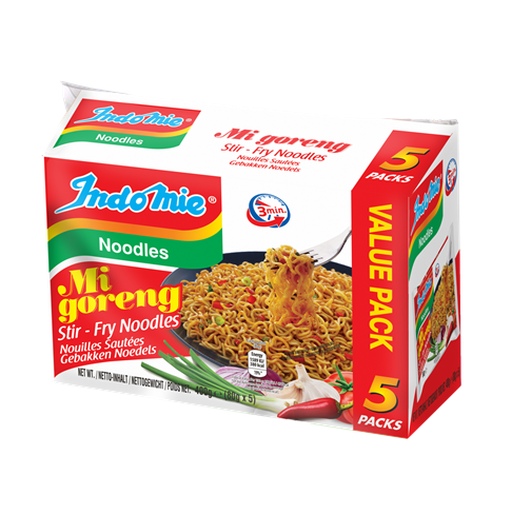
Why this suits the profile: A five-pack is a manageable option for anyone who wants to try Indonesian noodles first. The dry Mi Goreng preparation differs from noodle soup and is ready in just a few minutes.
The smaller size reduces the risk of being left with a large quantity of a flavour you do not enjoy. However, check the listed allergens: wheat, soya and sesame.
Five 80-gram portions, with seasoned oil, sweet soya sauce and chilli powder for a stir-fry preparation.
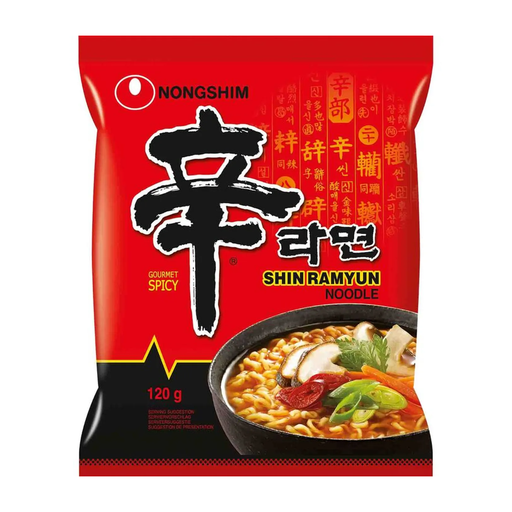
Why this suits the profile: A good choice for anyone looking for Korean ramen with a seasoned broth and firm wheat noodles, without ordering a large number of portions straight away.
The product information gives a preparation time of approximately 4.5 minutes and makes the spicy flavour clear. This tells you in advance that it is not a mild snack.
120 grams per pack; flavour notes include mushroom, carrot, red chilli and onion.
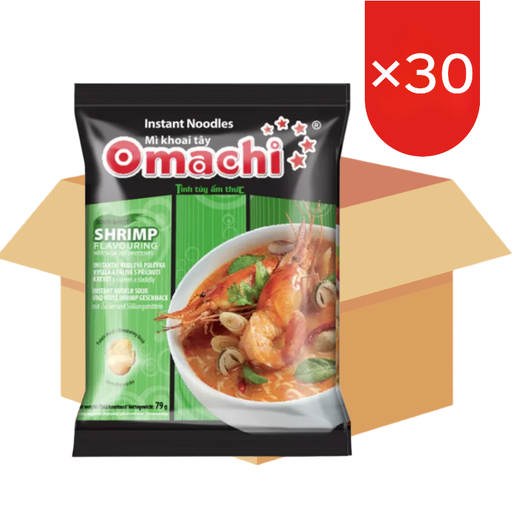
Why this suits the profile: The box containing 30 individual portions is practical for offices, catering businesses, families or shops that buy instant noodles regularly.
The size makes your stock levels predictable: 30 packs of 79 grams. However, check for wheat, fish and soya if you are buying for several users.
30 portions of 79 grams; according to the product information, ready in approximately three minutes with around 400 ml of boiling water.
We have compiled a complete, up-to-date list of products that fully meet these strict selection criteria and the applicable European safety regulations.
Follow the instructions on the packaging. Usually, you boil the noodles in water for a few minutes or pour boiling water into a bowl or cup. With Mi Goreng, you generally drain the water and then mix the noodles with the sauce and seasoning.
The exact best-before date is shown on the packaging. Store instant noodles in a cool, dry place, away from direct sunlight and moisture. Do not use damaged packaging, and when buying a multipack, check the date on both the outer packaging and the individual sachets.
A five-pack usually costs less overall than a bulk pack, but the price per portion can vary. Divide the price by the number of packs, then also compare the weight per portion. A bulk pack can be practical for offices and catering businesses; for occasional use, a smaller pack prevents unnecessary stock.
