
Vandaag of morgen in huis

Kwaliteit gegarandeerd

Welkomstaanbiedingen ontgrendelen: GRATIS bezorging | Tot 80% korting | Gratis 30 dagen JoyPlus-proefperiode
Download de app
An instant hot water dispenser can come in handy for tea, coffee, baby formula or a quick mug of soup. Rather than heating a full kettle, you can often select your preferred temperature and amount straight away. However, many models look much the same online. A low price or a promise of “instant hot water” doesn’t tell you the whole story.
Keep an eye out for these three common pitfalls:
An electric hot water dispenser works differently from a traditional kettle. Its heating element often heats only the water you dispense at that moment. So check not only the stated heating time, but also the available temperature settings.
For everyday use, several preset settings are useful, for example:
A temperature setting doesn’t guarantee that the water will be exactly the same temperature every time. The actual temperature can depend on the starting temperature, the amount of water and how well the appliance is maintained. When preparing baby formula, always follow the instructions on the packaging and from the manufacturer. A hot water dispenser for baby formula is not a substitute for that guidance.
A 2.5 to 3-litre hot water dispenser may be enough for one person or a small home office. A family or small workplace might benefit from a 5-litre hot water dispenser, as it will need refilling less often.
Bear in mind the difference between tank capacity and usable capacity. An appliance may have a minimum-fill safety limit below which it won’t work. A transparent water tank or clear water-level indicator makes it easier to check.
Also look at the amount dispensed each time. Models with options such as 100, 200, 250, 500 or 750 ml are better suited to different cups, mugs and jugs. An adjustable spout is useful if you use tall cups.
Hot water can cause scalds. Check whether a model has features such as:
A stainless steel or plastic casing doesn’t tell you enough about the overall construction on its own. Check which parts can be removed and whether the manual explains how to descale the appliance. In hard water areas, limescale can affect water flow and heating performance. A descaling alert or optional water filter can be useful.
Before buying, also check that the plug is suitable for Dutch sockets and that the appliance is designed for 220–240 V. Only use the dispenser with clean water unless the manual says otherwise.
The selection below matches specific features to different needs. The information is based on the available product descriptions, rather than general marketing claims.
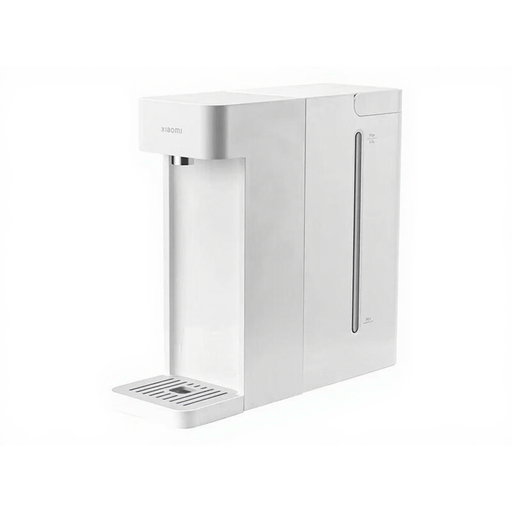
Why it suits this need: This compact model is well suited to a kitchen worktop, student room or home office where space is limited. Its 3-litre tank is visible and easy to check.
The dispenser has four presets and temperature selection in 1 °C increments between 45 and 90 °C. The listed volume options are 250, 500 and 750 ml.
3-litre capacity, four temperature settings and a stated heating time of 3 seconds.
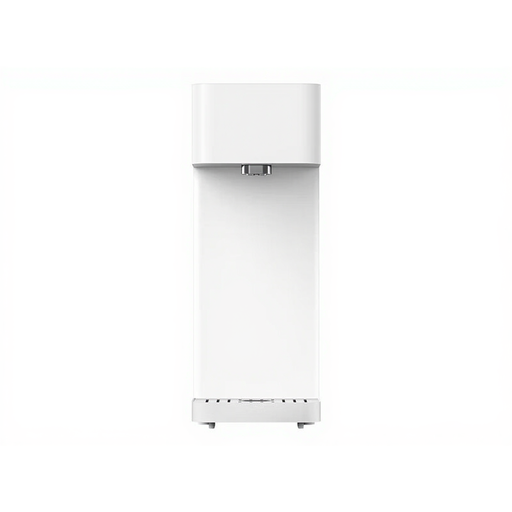
Why it suits this need: This model is a good fit for households or offices that want both hot and chilled water, with settings managed through an app.
As well as hot water, this model offers a cooling setting from 7 to 15 °C and temperature control in 1 °C increments. That makes it useful for more than just one occasion.
3-litre capacity, four listed presets and control via the Xiaomi Home app.
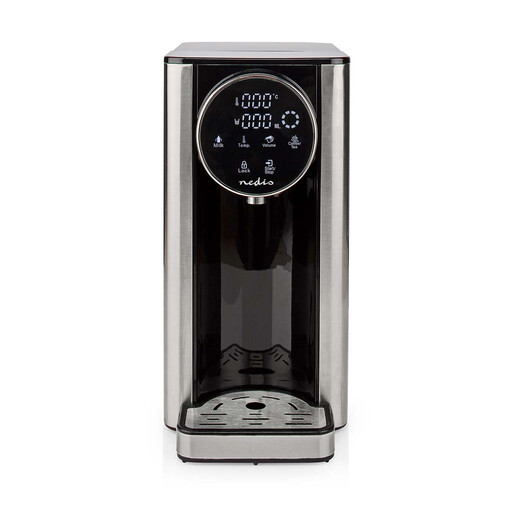
Why it suits this need: This model is designed for people who make several cups a day and value volume, temperature and maintenance features.
The description lists seven temperature settings, five volume options, a removable tank and a descaling reminder.
2.7-litre capacity, 2600 W power, child lock, boil-dry and overheat protection.
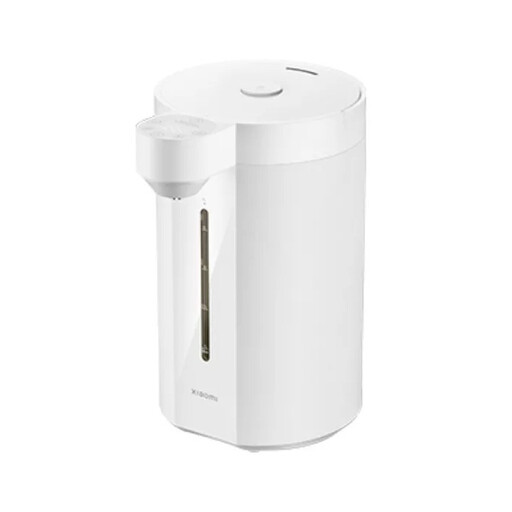
Why it suits this need: The 5-litre tank is designed for situations where several people use hot water throughout the day, such as at home or in the office.
The product description mentions a digital touchscreen, temperature settings, automatic shut-off and a child lock.
5-litre capacity, adjustable temperature and listed safety features for everyday use.
We’ve put together a complete, up-to-date list of products that meet these strict selection criteria and the applicable European safety regulations.
Energy use depends on the appliance’s power, the amount of water and the temperature selected. An appliance rated at 2000 or 2600 W uses that amount of power mainly while heating; the total cost depends on how long it’s used and how many cups you make. Some brands claim that heating water per serving can be more efficient than boiling a full kettle, but these savings figures are product-specific claims, not a general guarantee.
That depends on the hardness of your water and how often you use the appliance. Check the manual and use the descaling alert if your model has one. Reduced water flow, visible limescale or a longer heating time can all be signs that it needs descaling. Use only a suitable product and unplug the appliance before you start cleaning.
If you have young children, it’s best to choose a model with a child lock, automatic shut-off and boil-dry protection. Bear in mind that the water coming out can be hot and the spout may stay warm after use. A child lock reduces the risk of accidental operation, but it doesn’t replace supervision.
