
Vandaag of morgen in huis

Kwaliteit gegarandeerd

Welkomstaanbiedingen ontgrendelen: GRATIS bezorging | Tot 80% korting | Gratis 30 dagen JoyPlus-proefperiode
Download de app
Instant chicken noodles are handy for a quick lunch, a late-night snack, or a store cupboard that’s regularly topped up. Yet chicken ramen, Korean instant noodles and Asian noodles can differ quite a bit in flavour, portion size, spiciness and preparation. A striking packet doesn’t always tell you what you need to know.
With this practical buying guide, you can avoid disappointing purchases and compare everything from spicy ramen and carbonara ramen to Indomie chicken noodles and cup noodles using reliable product information.
The term chicken can refer to chicken flavouring, chicken powder or a seasoned sauce with a chicken-like taste. With spicy chicken noodles, the emphasis is often on chilli and spices, while the chicken flavour takes a back seat. So always check the ingredients list and preparation method before you order.
For example, Samyang Buldak Original warns that the variant is very spicy. That’s quite different from a classic chicken broth like Nissin Chicken Ramen or Indomie Special Chicken.
An instant noodles multipack is practical if you eat noodles regularly, but do look at the weight per sachet. A box of 30 portions at 74g each will affect your cupboard differently to a pack of five sachets at 140g each. So compare the price per portion or per 100g, not just per box.
Also check the best-before date. With larger packs, the stock may sit around for longer. The product information and the actual date on the packaging you receive are what matter.
Not every packet is meant to be prepared the same way. Some noodles are eaten as a soup, whereas with Korean instant noodles you drain most of the cooking water and stir the sauce through the noodles. A cup noodle version is usually simpler: just add boiling water, wait a few minutes and stir.
Always follow the instructions on the packet. Don’t use damaged sachets or cups, and be careful with boiling water.
First, choose between these main categories:
Spiciness isn’t standardised on a single European scale. Words like “hot”, “fire” or “volcano” are product descriptions; use the ingredients, warnings and user preferences as your guide. You can always add the sauce gradually, if the packaging allows.
An individual sachet of 70 to 75g is suitable for a smaller meal or snack. Variants of 130 to 140g contain more noodles and sauce, but that doesn’t automatically make them right for everyone.
For regular use, these formats are available:
Wheat or gluten is common in many instant noodles. Other frequent allergens include soya, milk, celery and sesame. According to the product information, Samyang Carbonara contains gluten, soya, milk and celery. Indomie Special Chicken lists wheat and may, depending on the pack, contain traces of soya, milk or egg.
Salt, fat and energy content can also vary from product to product. For example, Acecook HaoHao Chicken states 4.5g of salt per 100g, while the values for other variants differ. Always compare the same reference, for instance per 100g, and check the packaging for the most up-to-date information.
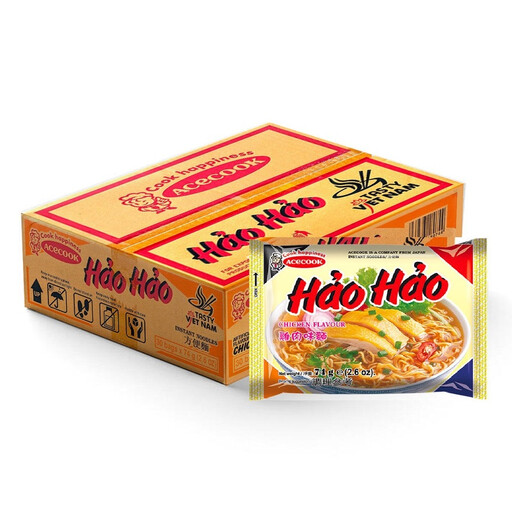
Why this fits the profile: The box contains 30 individually wrapped portions of 74g each, making it ideal for anyone who wants to stock up on a simple chicken noodle.
The large number of identical portions makes the price per portion clear. Do check the best-before date before ordering a bulk pack.
30 portions, 74g per pack and a classic chicken variant. Contains wheat and soya according to the product information.
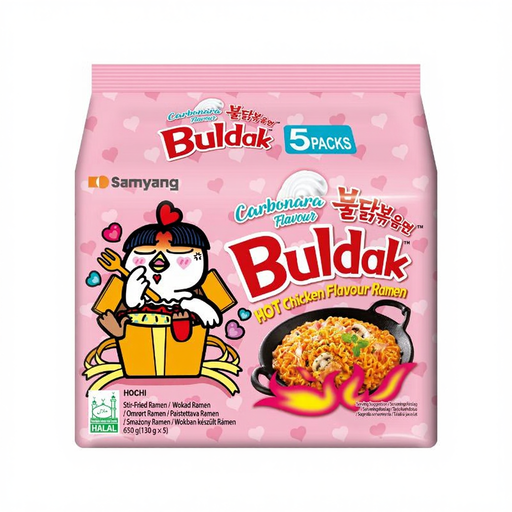
Why this fits the profile: These Korean ramen combine a spicy chicken style with carbonara and cheese powder for anyone looking for more than a simple broth.
The product information mentions both the spicy sauce and the creamy powder mix, so you know in advance this isn’t a mild chicken soup.
Five sachets of 130g, hearty noodles and a separate sauce and powder mix. Contains gluten, soya, milk and celery according to the listed ingredients.
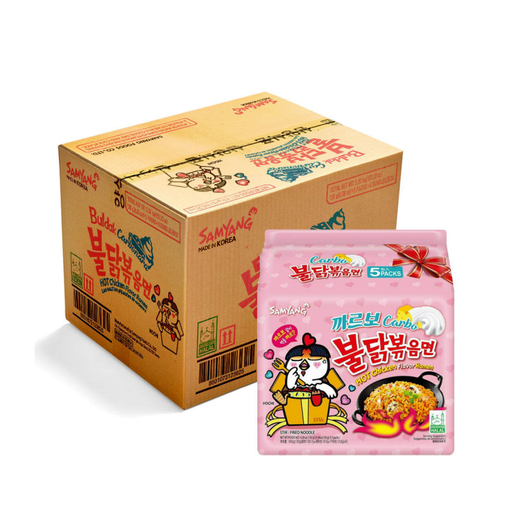
Why this fits the profile: The box of 40 sachets is aimed at heavy use, for example a shared stock, student house or office.
The format is clearly specified as 40 packs of 130g. Check beforehand that you have enough dry, cool storage space.
Bulk pack, portions of 130g and a preparation method where you leave about 120ml of water for the sauce.
We’ve put together a full, up-to-date list of products that fully meet these strict selection criteria and comply with current European safety regulations.
It varies by product. For soup noodles, you usually add boiling water or cook the noodles for a few minutes. For stir-fry variants, you drain most of the water and then stir the sauce through. With cup noodles, follow the fill line and waiting time on the cup. Always read the label, especially if using a microwave.
Check the best-before date on the packaging. Store unopened noodles in a dry, cool place away from direct sunlight. Once opened, it’s best to prepare a sachet straight away. Don’t use the product if the packaging is damaged or if an inner sachet is leaking.
Not necessarily. Here, carbonara refers to the creamy flavour component, but the sauce can be heavily spiced at the same time. With Samyang Buldak variants, the spiciness is clearly stated in the product description. If you prefer less heat, it’s better to start with a classic chicken variant or a cup noodle product and add the seasoning gradually when possible.
