
Vandaag of morgen in huis

Kwaliteit gegarandeerd

Welkomstaanbiedingen ontgrendelen: GRATIS bezorging | Tot 80% korting | Gratis 30 dagen JoyPlus-proefperiode
Download de app
The action camera market is flooded with new models promising impressive specifications. If you're considering buying an Insta360 Ace Pro 2 in 2026, it's easy to get lost in marketing jargon. Many users invest in a high-end camera only to find it doesn't meet their expectations. Before you make a decision, it's crucial to know what to look for. We'll discuss three common pitfalls and how to avoid them.
Manufacturers often use technical specifications to promote their products, but not every spec is equally relevant to your needs. Here are the points where things often go wrong.
A common mistake is misinterpreting the term 'waterproof'. A waterproof action camera can mean one of two things: waterproof without an additional housing, or only waterproof with a special case. A camera that is waterproof down to 10 metres without a case, like the Ace Pro 2, is practical for snorkelling or a rainstorm. However, for deeper dives, you often still need a dive housing. Always check the IP rating and the maximum depth specified by the manufacturer, both with and without a case, to prevent water damage.
An 8K action camera sounds like the ultimate upgrade, but is it really? 8K videos require a very powerful computer to edit and consume an enormous amount of storage space. For most users, who share their videos on social media or watch them on a standard 4K screen, a stable 4K recording with a high framerate (like 60 or 120 fps) is far more practical. Image quality is determined more by the sensor, lens, and image processing than by resolution alone.
Every brand has its own name for image stabilisation: FlowState, RockSteady, HyperSmooth. While an action camera with stabilisation is essential for smooth footage during sports, the marketing name says little about the actual performance. The effectiveness of the stabilisation can vary greatly, especially in low light or during very shaky movements. Good stabilisation makes your footage look as if it were shot with a gimbal, even while mountain biking or skiing.
To avoid buyer's remorse, focus on the specifications that matter in practice. These are the three most important factors for a good action camera.
The size of the image sensor is one of the most critical factors for image quality. A larger sensor, like the 1/1.3-inch sensor in the Insta360 Ace Pro 2, can capture more light. This results in better low-light performance, less noise, and a wider dynamic range (more detail in bright and dark areas of the image). A partnership with a renowned brand, as with a Leica action cam, can also indicate a high-quality lens that ensures sharp and clear images.
Look beyond the maximum resolution. A high framerate, such as 4K at 120 fps, is essential for creating smooth slow-motion footage. Active HDR (High Dynamic Range) is another useful feature. It combines multiple exposures to create a balanced image where both the bright sky and dark shadows are well-lit. This is especially useful for a vlogging camera used in varying light conditions.
A good action camera must not only be technically strong but also practical to use. A flip-out touchscreen makes it easier to film yourself. Magnetic mounts speed up the process of swapping accessories. For a camera for extreme sports, it's also crucial that it can withstand cold temperatures and survive a fall. Check the specifications for the operational temperature and the waterproof rating without a case.
Based on these objective criteria, we have selected a few models that suit different user profiles.
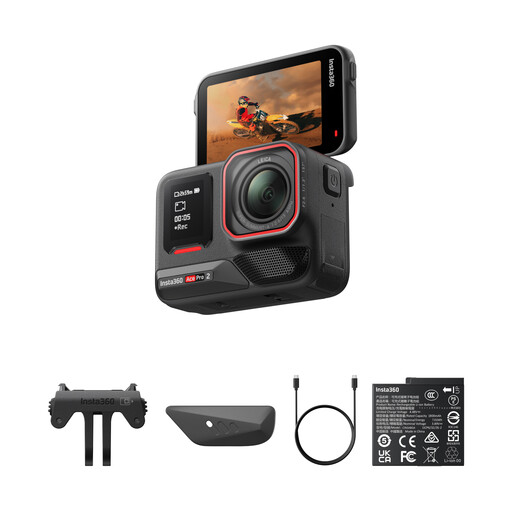
Why This Fits Their Persona: For the content creator seeking the highest possible image quality. The combination of a large sensor, 8K resolution, and the Leica lens makes this model suitable for professional productions and users who refuse to compromise.
The 8K resolution is backed by a large 1/1.3-inch sensor and a Leica lens, making the image quality genuinely superior. The camera is waterproof down to 12 metres without a case, a clear and practical specification.
The collaboration with Leica for the lens and the dual AI chips for image processing ensure excellent performance, especially in low light, thanks to the PureVideo mode.
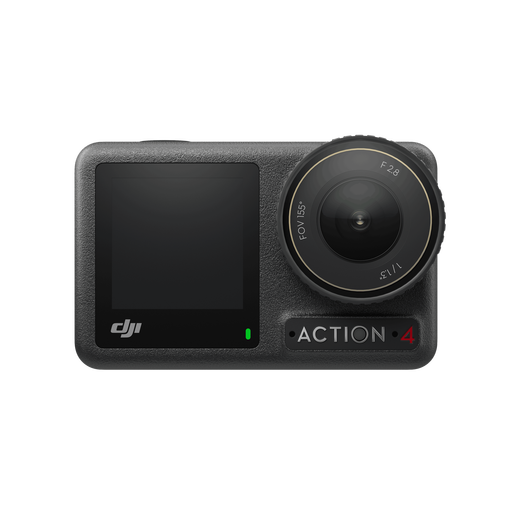
Why This Fits Their Persona: Ideal for athletes who need a robust and reliable camera for various conditions, from skiing in freezing temperatures to diving. The focus is on durability and stable performance.
DJI is transparent about its performance: the camera is cold-resistant down to -20°C and has a long battery life. The 360° HorizonSteady stabilisation is a proven feature that makes vague marketing claims unnecessary.
The combination of a large 1/1.3-inch sensor, excellent cold resistance, and the advanced 360° HorizonSteady stabilisation makes this a highly reliable choice for extreme sports.
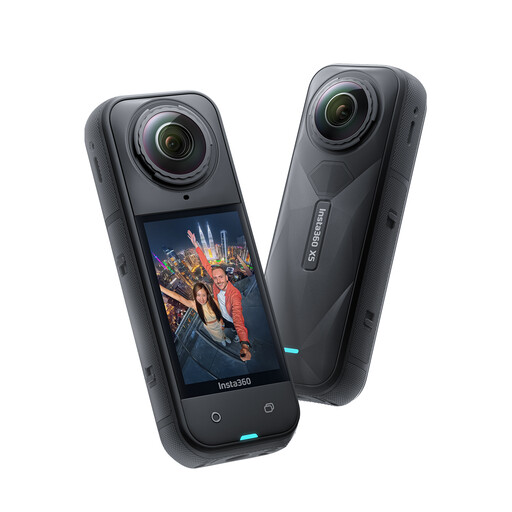
Why This Fits Their Persona: For the vlogger or traveller who wants to create unique content. With 360° recording, you'll never miss a shot and can choose the perfect camera angle in post-production. The 'invisible selfie stick' effect is ideal for solo creators.
This camera bypasses the 'resolution trap' because its 8K resolution is functional: it allows you to reframe a 360° video into a sharp, flat 4K video. You shoot first and frame later, which removes the need for perfect framing during recording.
The ability to film in 8K 360° and the AI-powered editing features in the app offer unprecedented creative freedom. The FlowState stabilisation and 360° Horizon Lock ensure extremely stable footage.
We have compiled a complete, up-to-date list of products that fully meet these strict selection criteria and local safety regulations.
That depends on your use case. For professional content creators who want to crop or reframe their footage without losing quality, 8K can be a major advantage. For most users who share videos on social media or watch them on a 4K screen, a high-quality 4K recording at 60 or 120 fps is often more practical and easier to edit.
It is essential. Without good electronic image stabilisation (EIS), recordings of activities like mountain biking, skiing, or motorcycling are virtually unusable. The shocks and vibrations make the image shaky and difficult to watch. Modern systems like FlowState are designed to produce gimbal-like, smooth footage, which is an absolute necessity for this type of recording.
The Insta360 Ace Pro 2 is a traditional action camera with a fixed wide-angle lens, focused on delivering the highest possible image quality in a 'flat' video format. The Insta360 X5 is a 360-degree camera that captures everything around it. This gives you the creative freedom to decide on the camera angle in post-production. The Ace Pro 2 is for targeted shots, while the X5 is ideal for capturing the entire environment and creating unique perspectives.
