
Making raffle tickets on your own paper
You want to create clear, possibly double-sided raffle tickets. First, choose a size and type of paper the printer can feed, then check the requirements for two-sided printing.


For a small, occasional print run, you can compare compact cartridge models. If you regularly print larger quantities, consider an ink tank printer too. Don’t just look at the purchase price and ink costs: above all, check that the exact model supports your paper size, type and weight. For example, Canon lists automatic two-sided printing on plain A4 or Letter paper for the PIXMA TR4755i; that doesn’t automatically mean it can handle thick ticket paper.
You want to create clear, possibly double-sided raffle tickets. First, choose a size and type of paper the printer can feed, then check the requirements for two-sided printing.
You expect to print study documents as well as raffle tickets. Compare the purchase price and replacement ink costs against your expected use. Consumentenbond highlights ink used during cleaning as something to bear in mind if you print infrequently.
You rarely print, may share a workspace and want a printer that’s easy to position and connect. Also consider whether you need a printer for just one event, or whether a print service would suit your plans better.
Start with the paper and layout of your raffle tickets. Then compare the expected ink costs and decide whether home printing makes sense for the quantity you need.
Best for: printing raffle tickets occasionally, along with everyday study documents.
Consider: compare the purchase price with the cost and expected usage of replacement cartridges.
Best for: anyone expecting to print larger quantities regularly or produce other colour work.
Consider: compare the purchase price with your expected ink usage. Manufacturer yield figures don’t tell you how much your raffle tickets will cost to print.
Best for: a one-off event after which you’re unlikely to print much yourself.
Consider: you won’t need to make space for a printer at home, but agree the file, paper, finish and schedule with the print service in advance.
| What to consider | What should you check? | Who should pay particular attention? |
|---|---|---|
| Paper and layout | Check the exact size, type and permitted weight of the paper. Also confirm whether two-sided printing is supported with your chosen paper. | I want my raffle tickets to fit the paper I’ve chosen and be easy to read. Around 36% of consumers say paper and ticket layout are their main buying requirements. |
| Costs for print runs | Estimate how much you’ll print and compare the purchase price and replacement ink costs over the same period of use. | If I regularly print raffle tickets or study work, I want to keep track of ongoing ink costs. Around 29% of consumers put these costs first. |
| Shared use and space | Measure the space, including room to load paper, and check that you can connect the devices you use. | I may share the printer with housemates, so I want to know whether it will fit and connect easily. Around 21% of consumers give shared use and placement top priority. |
| Very little printing | Consider whether you’ll keep printing after this event, then compare a print service with the total cost of owning a printer. | If I only need a printer for one event, I want to know whether buying one makes sense. Around 14% of consumers put this consideration first. |
A stated paper weight may apply to a specific type of paper or the manufacturer’s own paper. That doesn’t automatically mean other ticket card is suitable.
Check the media category and feed limits for the exact model. First, print a test on the paper you plan to use for your raffle tickets.
Unsuitable ticket paper or failed test prints can waste paper.
If you print regularly, factor in replacement cartridges or ink bottles. If you print infrequently, cleaning may use extra ink, according to Consumentenbond.
Compare models based on the same expected number of prints and the same period of use.
HP says the DeskJet 2920 has dynamic security that may block cartridges with modified or non-HP circuits.
Before buying, read the cartridge requirements for the exact model and check which replacement cartridges are compatible.
This may limit your choice of cartridges.
Whether a draw must comply with rules depends, among other things, on how it is organised, whether entry is paid and its purpose. The way you print the tickets doesn’t determine this.
Check the draw separately using information from the Dutch Gambling Authority and, where applicable, your local council.
The PIXMA TR4755i is a cartridge model worth comparing for standard A4 raffle tickets and custom sizes.
The DCP-J1260W is a cartridge model worth comparing if printing and scanning in a shared home are important.
The EcoTank ET-2950 represents a refillable ink tank option for anyone who expects to keep printing regularly after making their raffle tickets.
The DeskJet 2920 is a compact cartridge option; the Smart Tank 5105 is a separate tank model.
This selection of Joybuy products related to the topic includes A3 and A4 inkjet printers. Before buying, check that the type and weight of paper, and the layout you want for your raffle tickets, are compatible with the exact model.
 No image available
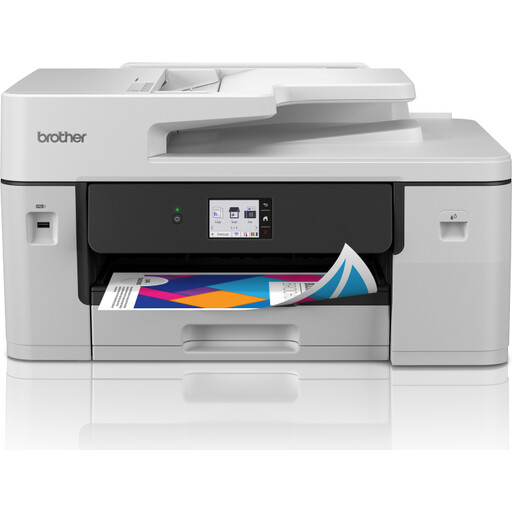
This A3 model may be worth comparing if you want to make raffle tickets on larger paper. Check that your paper type and weight are suitable.
A3; 1200 x 4800 DPI; 31 ppm; Wi-Fi.
 No image available
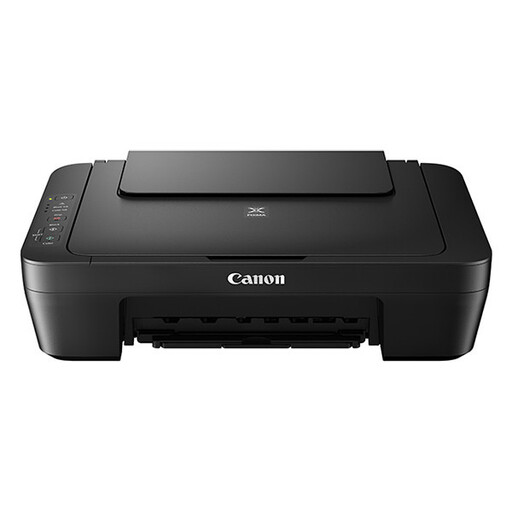
This A4 model may suit A4-sized raffle tickets. Check that the exact paper you want to use is supported by the printer.
A4; 4800 x 600 DPI.
 No image available
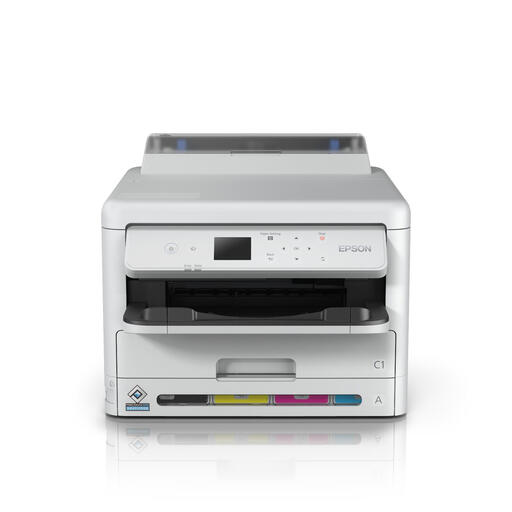
Compare this A4 model if two-sided printing or use by several people is important. Check paper compatibility and the space available for the printer.
A4; 4800 x 1200 DPI; Wi-Fi.
You can’t tell from the words ‘automatic two-sided printing’ alone. Canon lists this feature for the PIXMA TR4755i on plain A4 or Letter paper. For other paper, check the manual and print a test page. A maximum weight for Canon photo paper isn’t a general limit for card.
Compare the purchase price and running costs, and first work out how much you’re likely to print after this event. Consumentenbond highlights the extra ink used during cleaning as something to consider if you print infrequently.
According to the Dutch Gambling Authority, a one-off lottery with paid tickets requires a permit if it is for a charitable cause; this guidance excludes lotteries for an individual or commercial interest. If the total prize value is less than € 4.500, apply for a permit from the local council where the draw takes place. For prizes worth € 4.500 or more, apply through the Dutch Gambling Authority. Check how your draw is organised before issuing tickets.
No, not automatically. The Dutch Gambling Authority describes a permit-free option for a promotion that genuinely promotes a product, service or organisation, provided it complies with the Code of Conduct for Promotional Games of Chance and entry is free. This option isn’t intended for a standalone lottery or as a way to raise money.