
Organiser of regular group sessions
If you regularly print several sets, the cost of refills matters as well as the purchase price. The Consumentenbond recommends taking print volume and ink costs into account when comparing printers.


If you regularly print sets for a group, compare ink tank models and cartridge printers based on the total cost of ink, paper capacity and automatic double-sided printing. For small or occasional print runs, the purchase price may carry more weight. Bear in mind, too, that infrequent use increases the risk of dried ink clogging the print head on inkjet printers, as the Consumentenbond explains.
If you regularly print several sets, the cost of refills matters as well as the purchase price. The Consumentenbond recommends taking print volume and ink costs into account when comparing printers.
If you print several sets in a row, automatic double-sided printing and sufficient paper capacity are practical considerations. An automatic document feeder is particularly useful if you want to scan or copy paper originals.
If your sheets include a mix of text and colour, compare text and colour printing separately. Maintenance matters if you only print occasionally, too: the Consumentenbond highlights the risk of ink drying out when a printer is used infrequently.
Best for: regularly printing larger quantities of group sheets, if you can spread the higher purchase price over enough prints.
The trade-off: compare costs based on your expected black-and-white and colour print volumes; automatic double-sided printing varies by model. The Consumentenbond notes that infrequent use can mean extra maintenance risks with inkjet printers.
Best for: smaller print runs, where a lower purchase price matters more than the cost of printing in high volumes.
The trade-off: check the capacity and cost of compatible replacement cartridges. Ink can dry out in cartridge-based inkjet printers, too, if they are used infrequently.
| What to consider | What should you check? | Who is this important for? |
|---|---|---|
| Ink costs for regular sets | Estimate your monthly black-and-white and colour print volumes, then compare the printer, compatible refills and stated capacity on the same basis. | I want to compare the cost of the printer and refills for repeat sets. This is the top priority for around 36% of consumers. |
| Printing sets and double-sided printing | Check automatic duplex printing and the paper tray separately. An automatic document feeder is for paper originals, not for automatic double-sided printing. | If I print several sets in a row, I want to know whether turning over the paper and refilling the tray will interrupt my work. Around 29% of consumers prioritise being able to print sets efficiently. |
| Clear text and colour | Compare text and colour prints separately and, if possible, assess a representative sheet of your own. | For sheets with text boxes and coloured elements, I want to know that both will print clearly. Around 21% of consumers give readability and usable colour top priority. |
| Infrequent or irregular printing | Take your actual printing frequency, refill costs and maintenance instructions into account. | If I only print small quantities occasionally, I don’t want to pay a higher purchase price without weighing it against how much I use the printer. Around 14% of consumers prioritise occasional use. |
For repeat group sets, the cost of compatible replacement ink matters too. The lowest purchase price may not be the most economical choice over time.
Compare the printer and refills based on your own monthly black-and-white and colour printing.
An automatic document feeder handles paper originals for scanning or copying. The Canon PIXMA G4570 prints double-sided manually, even though it has an ADF that holds up to 35 sheets.
Check the double-sided printing specification separately from the scanning or document-feeder specifications.
The Consumentenbond notes that infrequent use of inkjet printers increases the risk of ink drying out and clogging the print head.
Consider how often you expect to print when choosing a model, and check its maintenance instructions.
EcoTank ink tank models are worth comparing if you regularly print several sets. The Epson EcoTank ET-2950 is an A4 model with automatic double-sided printing.
The Smart Tank range includes models worth comparing if refillable ink is important to you; features vary by model.
The Brother DCP-J1360DW is a cartridge-based option with print, scan and copy functions, plus automatic double-sided printing.
The Canon PIXMA G4570 is an ink tank model worth comparing if you need an automatic document feeder.
This selection includes inkjet printers with ink tanks and cartridges for group sheets. Compare the ink type, automatic duplex printing and paper capacity of each model against your print volume.
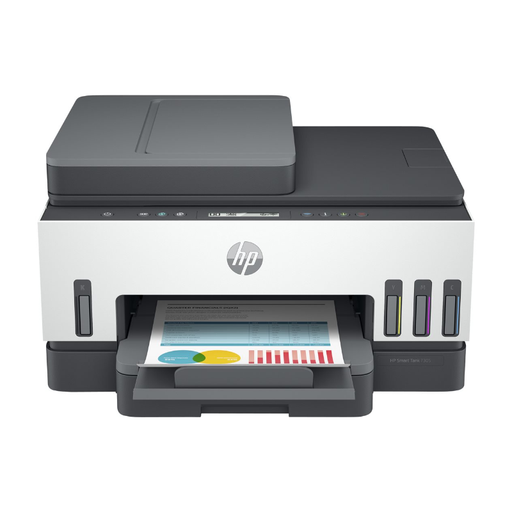 No image available
The refillable ink tank and automatic double-sided printing are useful for regular group sets.
Colour printer with print, scan and copy functions.
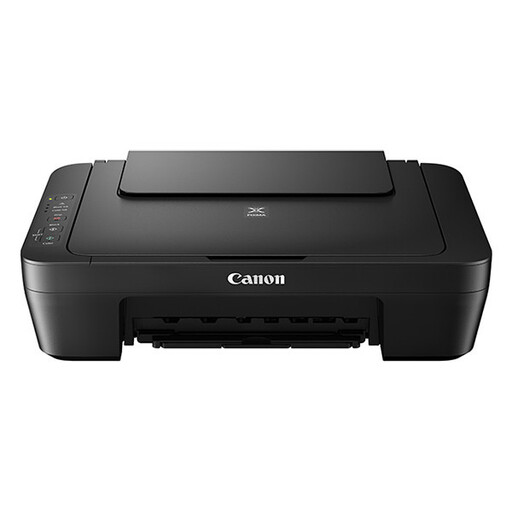 No image available
A cartridge-based inkjet printer worth comparing for smaller sets when you also need print, scan and copy functions.
A4; 4800 × 600 dpi; 60-sheet paper input. Larger sets may mean more frequent refills.
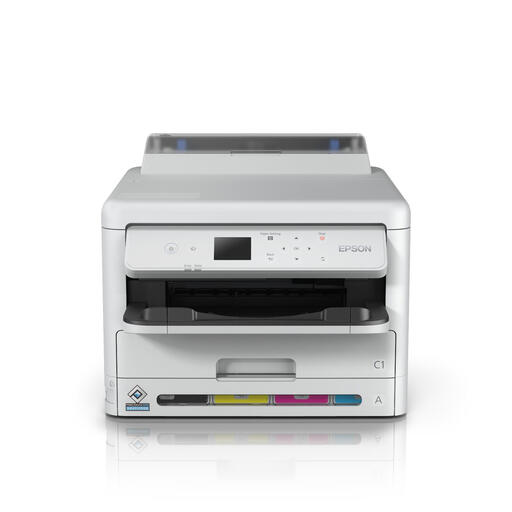 No image available
Automatic double-sided printing is worth considering if you print several sheets in a row.
A4 colour inkjet printer with Wi-Fi; 4800 × 1200 dpi. The stated weight is over 15 kg; the product information recommends lifting it with two people.
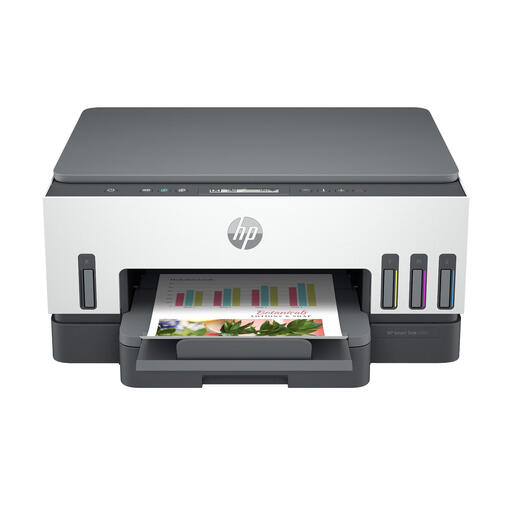 No image available
The refillable ink tank and automatic double-sided printing are useful for regular sets.
Colour printer with print, scan and copy functions.
No. An ADF feeds paper originals into the printer for scanning or copying; duplex refers to printing on both sides. The Canon PIXMA G4570 has an ADF with a capacity of up to 35 sheets, but requires manual double-sided printing.
According to the Consumentenbond, infrequent printing increases the risk of ink drying out and clogging the print head. Check the maintenance instructions for your chosen model; a large ink supply doesn’t mean maintenance is unnecessary.
Compare the purchase price with the cost and stated capacity of compatible black and colour ink, based on the number of prints you expect to make. An ink tank printer generally costs more upfront; whether it’s right for you depends on your actual print volume.
For a consumer purchase, the seller must offer a solution if a product doesn’t meet what you could reasonably expect, according to the Dutch government. There is no fixed statutory two-year warranty period in the Netherlands. A manufacturer’s warranty is additional; if an association or organisation buys the printer, check which rules apply to that specific purchase.
In many cases, consumers who buy from a business at a distance have 14 days to change their mind, as the Dutch government explains. This doesn’t necessarily apply to every transaction, such as a purchase made on behalf of an organisation. Check who the buyer is and which terms apply to the sale.