
Vandaag of morgen in huis

Kwaliteit gegarandeerd

Welkomstaanbiedingen ontgrendelen: GRATIS bezorging | Tot 80% korting | Gratis 30 dagen JoyPlus-proefperiode
Download de app
The sun is shining, the water is calling. More and more people are discovering stand-up paddleboarding (SUP) as the ideal way to enjoy our lakes, canals, and waterways. An inflatable SUP board seems like the perfect choice: easy to transport and store. But when it comes to buying a stand-up paddle board, a few costly mistakes are lurking. Many beginners fall for marketing traps and end up with a board that's relegated to the shed after just a few uses.
Before you spend your money, it's wise to know what to look for. We've listed the most common pitfalls so you can make a purchase you'll enjoy for summers to come.
Many inflatable SUPs are sold as a SUP board set. This sounds convenient, but the quality of the accessories often leaves much to be desired. A common problem is an included pump that isn't powerful enough, preventing you from ever achieving the proper rigidity in your board. Or a paddle that is heavy and consists of multiple loose parts, which compromises efficiency on the water.
The dimensions of an inflatable paddleboard are crucial for stability and enjoyment. Cheaper models are often only 10 or 12 cm thick. Such boards easily bow in the middle, especially for adults. This not only feels unstable but also makes paddling more strenuous. A board that is too narrow (less than 76 cm) is also wobbly and a source of frustration, particularly for beginners.
Not every inflatable SUP board is built the same. The rigidity and durability depend on the internal construction and the materials used. The core technology is called drop-stitch, where thousands of threads connect the top and bottom of the board. A board with a low density of these threads will feel flimsier. There is also a difference between single-layer and double-layer PVC. A single-layer board is lighter but also more vulnerable to leaks.
To avoid the pitfalls above, focus on a few objective specifications. These directly determine how the board performs on the water.
Based on these objective criteria, we have selected a number of models that suit different user profiles.
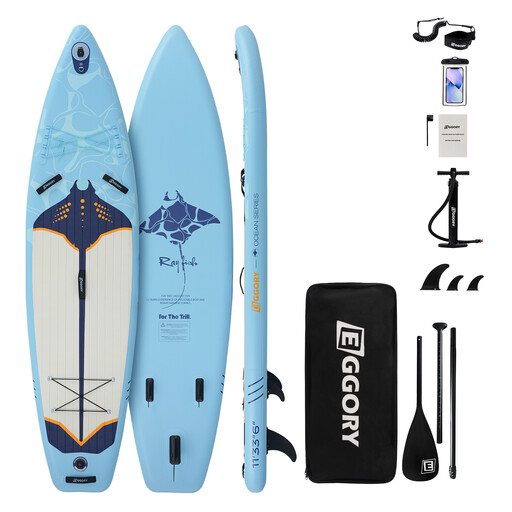
Why This Fits Their Persona: With its 84 cm width and 15 cm thickness, this board is a stable and predictable choice. Perfect for your first time on the water, whether you're on a calm lake or a city canal. The all-around shape makes it suitable for short trips and recreational use.
The 15 cm thickness prevents the bowing you see in cheaper, thinner boards. The 84 cm width provides the stability beginners need to avoid constantly falling into the water.
High stability due to its generous width. Comes as a complete set with the necessary accessories to get started right away.
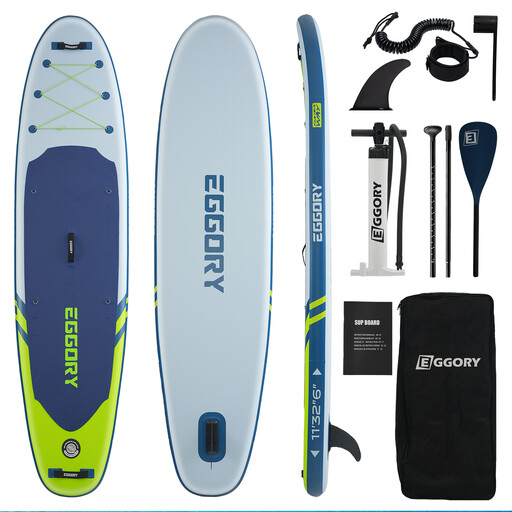
Why This Fits Their Persona: For those who are more confident on the board and enjoy longer tours. At 83 cm, this EGGORY SUP board is slightly narrower, which provides better glide and a bit more speed without sacrificing much stability. Ideal for a day out on the lakes or exploring a national park.
It maintains the crucial 15 cm thickness for rigidity and weight capacity. The 83 cm width is a thoughtful balance between stability and efficiency, ensuring it's neither a sluggish nor a wobbly board.
Good balance between speed and stability. The 335 cm length helps maintain a straight course more easily during longer tours.
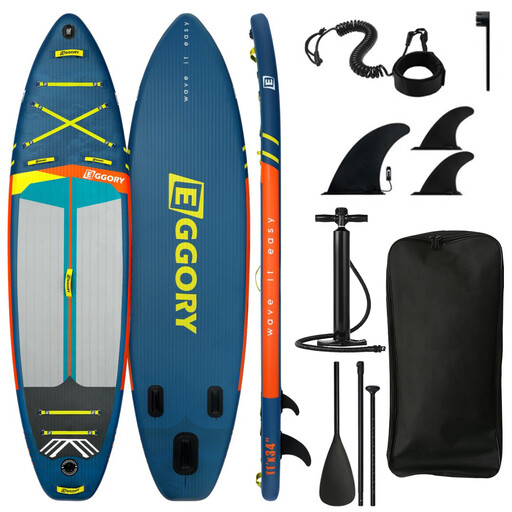
Why This Fits Their Persona: This board has a unique combination: extremely wide (86.4 cm) for maximum stability, but slightly thinner (12 cm). This makes it an interesting option for lighter individuals on calm water (like a canal or small pond) who want a very stable platform and a closer feel to the water.
Although it is 12 cm thick (a potential pitfall), its extreme width compensates for this for lighter users on flat water. It's a deliberate design choice, not a cost-cutting measure, aimed at a specific target audience.
Exceptionally stable due to its 86.4 cm width. The lower profile provides a more direct connection to the water.
We have compiled a complete, up-to-date list of products that meet these strict selection criteria.
The recommended air pressure (expressed in PSI) is almost always printed on or near the board's valve. For most all-around boards, this is 12 to 15 PSI. It is crucial to reach this pressure for optimal rigidity. A good pump with a pressure gauge, often included in a SUP board set, is essential for this. Never inflate the board beyond the maximum recommended pressure.
The lifespan heavily depends on use and maintenance. A quality inflatable SUP board made of double-layer PVC can last for many years with proper care. Key tips: rinse the board with fresh water after use (especially after use in salt water), let it dry completely before storing, and do not store it in direct sunlight.
Yes, you certainly can. In that case, choose a wide and stable board with a high weight capacity. A deck pad that covers a large portion of the board will give the dog more grip. Pay attention to the dog's nails; although most boards are made of sturdy PVC, it's wise to keep sharp nails trimmed to prevent scratches or damage.
