
Vandaag of morgen in huis

Kwaliteit gegarandeerd

Welkomstaanbiedingen ontgrendelen: GRATIS bezorging | Tot 80% korting | Gratis 30 dagen JoyPlus-proefperiode
Download de app
Buying an induction frying pan seems straightforward until you have to choose between stainless steel, aluminium, ceramic coating, cast iron or a hybrid surface. Marketing terms such as “rapid heat-up”, “indestructible non-stick coating” and “suitable for all hobs” only mean something once you have checked the technical details.
For UK households, three pitfalls are particularly important:
An induction pan must have a magnetic base. Check the product specifications to see whether the pan is suitable for induction, gas, electric and ceramic hobs. Also pay attention to the base dimensions. A 24 cm frying pan is practical for one to three people, while a 26 cm frying pan offers more space for a family.
The overall size is not always the same as the heated surface. For example, the Naturepan 24 cm frying pan has a listed base diameter of 17.4 cm. This is relevant information if your induction zone is approximately the same size.
A stainless steel frying pan is suitable for searing, meat, fish and dishes where you want to build up a crust. Stainless steel does not have a conventional non-stick coating. Warm the pan gradually, add enough fat and wait until the food naturally releases more easily.
A non-stick frying pan is more convenient for eggs, pancakes and delicate fish. Use low to medium heat and preferably wooden, silicone or nylon utensils when specified in the product information. With ceramic or hybrid coatings, it is often recommended that you avoid heating the pan empty for prolonged periods and prevent sudden cooling.
A multi-layer construction, such as stainless steel-aluminium-stainless steel, can distribute heat through the pan more quickly. That does not automatically mean every dish will turn out perfectly without adjustments: the correct cooking zone, temperature and quantity of food remain important.
A frying pan with a lid or deep sauté pan is practical for simmering, reducing sauces and preparing one-pan dishes. A lid helps retain heat and moisture, but always check whether it is suitable for oven use and whether it needs to be removed before placing the pan in the oven.
For everyday frying, an open 24 cm frying pan is often easier to handle. For families, a 26 or 28 cm model with a lid can offer greater flexibility. If you mainly prepare stir-fries, you could also consider an induction sauté pan, wok or braising pan. Pay particular attention to the weight and contact between the base and hob.
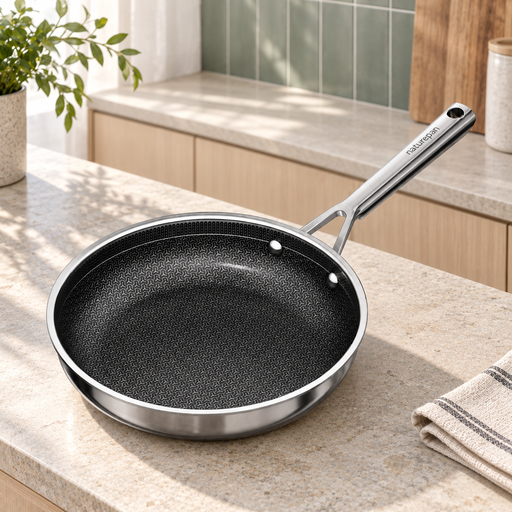
Why it suits this profile: The size is aimed at everyday meals for one to three people, and according to the product description, the pan is suitable for induction, gas, electric and ceramic hobs.
The induction compatibility, 17.4 cm base diameter and care instructions are clearly stated. This means you do not have to rely solely on general marketing claims.
Hybrid ceramic coating, suitable for several types of hob and, according to the description, dishwasher-safe. Hand washing is recommended to protect the coating.
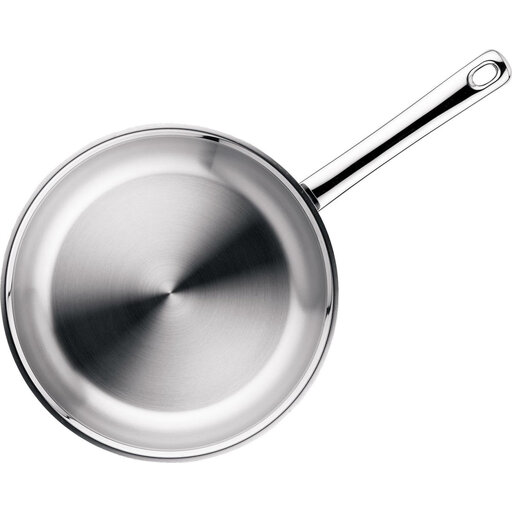
Why it suits this profile: This pan uses Cromargan 18/10 stainless steel and a TransTherm base. It is a good choice for anyone deliberately looking for a coating-free pan for searing and everyday cooking.
The product information explicitly mentions induction compatibility, oven use up to 250 °C and dishwasher safety. The pan has no conventional non-stick coating that can wear away.
24 cm size, TransTherm base and stainless steel handle. According to the product information, the pan is suitable for all heat sources.
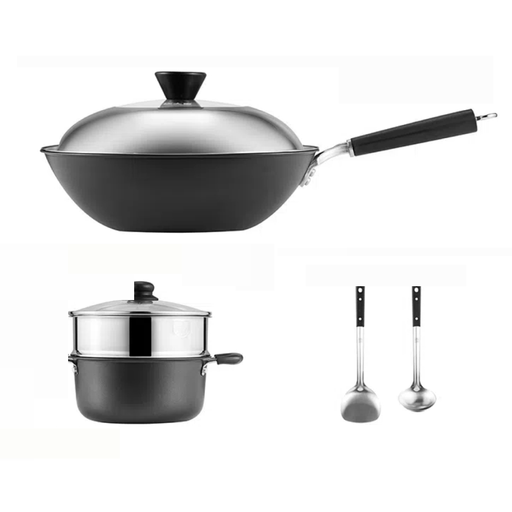
Why it suits this profile: The set is designed for stir-frying, steaming and making soup. The 32 cm wok, made from nitrided pure iron, has a capacity of 4.5 litres and comes with additional cooking utensils.
The set clearly states the materials, capacity and care requirements. Bear in mind that the iron wok needs seasoning, hand washing and immediate drying. Before buying, check that your induction zone is large enough.
4.5-litre wok, 3-litre aluminium stockpot, 304 stainless steel steamer, spatula and soup ladle in one set. Suitable for several cooking techniques.
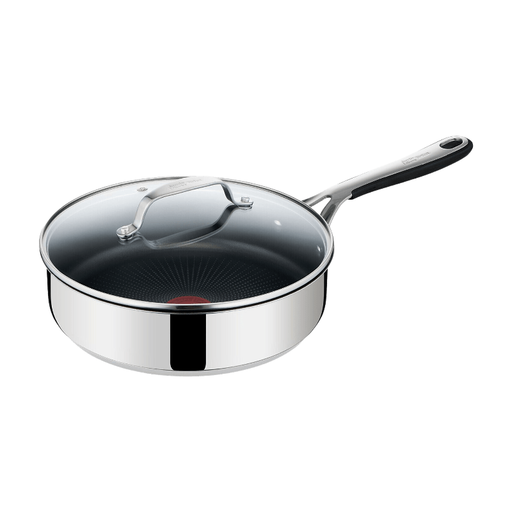
Why it suits this profile: The 3.2-litre pan combines frying, stewing and braising. The glass lid is useful when you want to retain moisture without repeatedly opening the pan.
The product description states the hob compatibility, oven suitability and dishwasher safety. However, check the maximum temperature and use oven gloves when the handle is hot.
25 cm diameter, 3.2-litre capacity, titanium-reinforced non-stick coating and glass lid. According to the product information, it is suitable for induction, gas, electric and ceramic hobs.
Lifespan depends largely on the material and how the pan is used. A stainless steel frying pan can generally be used at higher temperatures, but avoid heating it empty for prolonged periods. A coated pan requires greater care:
We have put together a complete, up-to-date list of products that fully meet these strict selection criteria and the applicable European safety regulations.
A 24 cm frying pan is often suitable for meals for one to three people. For families, 26 cm or 28 cm is more practical. Always check the base diameter and compare it with the induction zone.
Yes, a stainless steel frying pan can be suitable for everyday frying, searing and browning. However, you need to preheat the pan properly and use enough fat. For eggs or pancakes, a non-stick frying pan is often easier to use.
This varies depending on the material, coating and care. A coating-free stainless steel pan does not have a non-stick layer that can peel away, whereas a coated pan needs extra protection from high heat, scratches and sudden changes in temperature. Check the pan regularly for damage and follow the manufacturer’s care instructions.
