
Vandaag of morgen in huis

Kwaliteit gegarandeerd

Welkomstaanbiedingen ontgrendelen: GRATIS bezorging | Tot 80% korting | Gratis 30 dagen JoyPlus-proefperiode
Download de app
Choosing a new pan for induction seems straightforward, until you discover that not every pan works well with your hob. The base may be too small, the coating may be less suitable for your cooking style, and a lid is sometimes missing when you regularly make stews.
With this guide, you can choose the right induction pans for everyday cooking, wok dishes, sauces, soup and hotpot meals. The recommendations are based on verifiable product specifications, including material, diameter, capacity, heat-source compatibility and care requirements.
Induction works through magnetism. A pan therefore needs a magnetically compatible base, usually made from stainless steel or fitted with a special induction disc. Also check the base diameter. For example, a 28 cm pan may have a smaller effective contact area. Always place the pan in the centre of the cooking zone and check that the diameter is suitable.
The terms non-stick pan, Teflon-free and PFAS-free pan are not always used in the same way. Check the exact material and coating description. A pan without Teflon is not automatically completely free from all PFAS. Conversely, a product may explicitly state that it has a PFAS-free ceramic coating. According to Brabantia’s product information, the Onyx wok has a ceramic coating described as 100% PFAS-free.
A larger pan is not always more practical. A 30 or 32 cm wok provides plenty of space for stir-fries, but it also takes up more room on the hob and in the dishwasher. For sauces and small portions, a 16 to 18 cm induction saucepan is often more convenient. For a family, an induction cooking pot of around 4 to 6 litres or a pan with a lid is more suitable.
A stainless steel pan is generally suitable for intensive use and does not need a non-stick coating. On some models, a multi-layer base helps distribute heat evenly. A stainless steel wok does require the right technique: heat the pan, then add the oil and generally cook over a medium heat.
Aluminium heats up relatively quickly, but on induction it relies on a magnetic base. With a non-stick pan, it is important to check the coating description and care instructions. Do not use sharp metal utensils if the manufacturer advises against them.
Enamelled cast iron retains heat for a long time, but is heavier. This can be useful for slow cooking, but less practical if you need to move the pan frequently.
Use these guidelines as a starting point:
Do not look only at the total capacity. A pan that can be filled to the rim is not always safe or practical during cooking. Follow the manufacturer’s instructions and avoid overfilling pans.
A glass lid allows you to monitor the cooking process without repeatedly opening the pan. A pan with a lid is particularly useful for soup, rice and stews. Check whether the lid is oven-safe; this is not automatically the case simply because the pan itself is oven-safe.
Also consider the handle. Stainless steel handles can become hot during prolonged cooking. Wooden components are often less suitable for the dishwasher. A dishwasher-safe pan is convenient, but according to the product information, washing by hand with a soft sponge may help keep the finish looking good for longer.
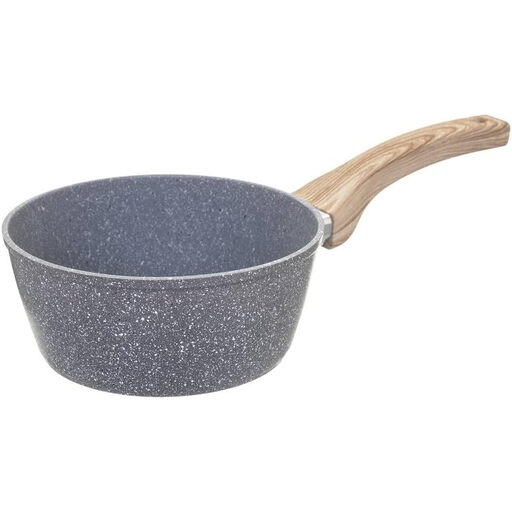
Why it suits this profile: This compact induction saucepan has a capacity of 2.5 litres and, according to the product information, is suitable for gas, induction, ceramic and electric hobs. This makes it useful for sauces, vegetables and small portions.
Induction compatibility is stated explicitly. Before buying, however, check your cooking zone and the current dishwasher instructions, as the product information is not entirely consistent on this point.
18 cm diameter, 2.5-litre capacity, aluminium pan with a stainless steel induction disc and compatibility with several heat sources.
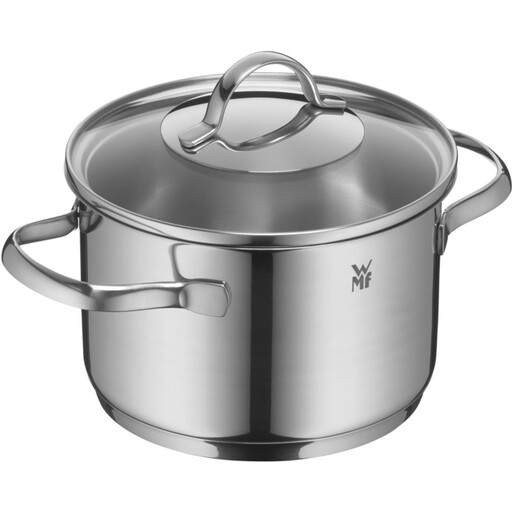
Why it suits this profile: This 16 cm stainless steel pan with a glass lid is suitable for sauces, soup and small portions. According to the product information, it works on induction, gas, electric, ceramic and halogen hobs.
The 1.9-litre capacity and 16 cm diameter are clearly specified. This makes it easier to judge whether the pan suits your cooking zone and portion sizes.
18/10 stainless steel, glass lid, 1.9-litre capacity and, according to the product information, dishwasher-safe and oven-safe without the lid up to 250 °C.
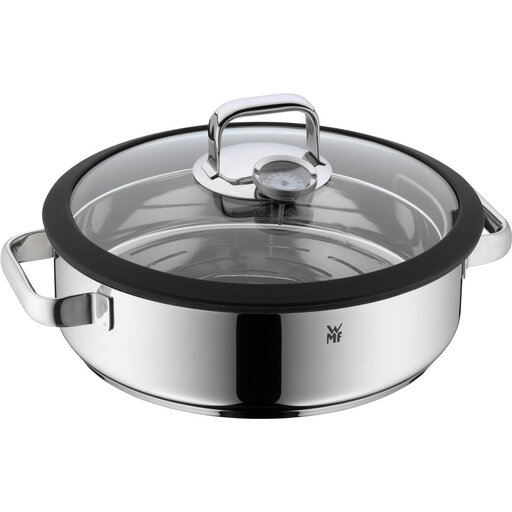
Why it suits this profile: According to the product specifications, this steamer has a diameter of 28 cm, a capacity of approximately 5 litres, a steaming insert and a lid with a thermometer. It is designed for steaming, roasting and cooking on several heat sources.
The steaming insert and capacity are clearly specified in advance. Note that, according to the product information, the thermometer must not be placed in the dishwasher.
5-litre capacity, stainless steel construction, steaming insert, glass lid and compatibility with induction and other heat sources.
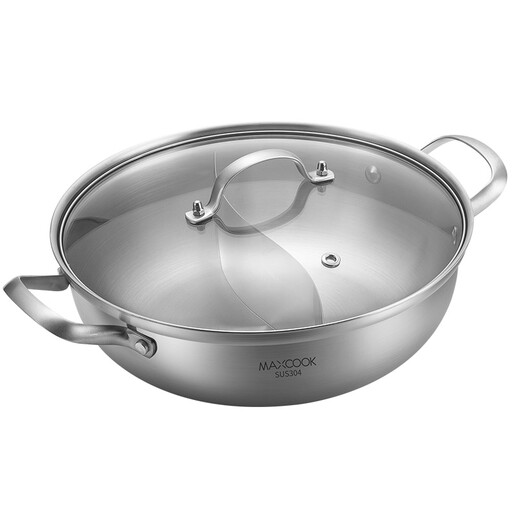
Why it suits this profile: According to the product information, this divided hotpot is made from 304 stainless steel, has two cooking compartments and is suitable for induction, gas, electric and ceramic hobs. It is ideal when diners want different broths.
The pan has no non-stick coating, so you do not have to rely on general coating claims. Do check the weight, the available cooking zone and the space in your dishwasher.
30 cm diameter, two cooking compartments, 304 stainless steel, double handles and, according to the product information, dishwasher-safe.
We have put together a complete, up-to-date list of products that fully meet these strict selection criteria and the applicable European safety regulations.
No. Stainless steel is not automatically magnetically compatible. Always check whether the manufacturer states that it is suitable for induction, or test the base with a magnet. A pan with a special induction base may also be suitable when the body of the pan is made from a different material.
For everyday cooking, many households choose a combination of a 16 to 18 cm saucepan, a 20 to 24 cm cooking pot with lid and a 28 to 32 cm wok. Pay particular attention to the capacity, handle, base diameter and cleaning method.
Energy consumption depends on the cooking time, the heat setting, the capacity and how well the pan matches the cooking zone. A suitable base and a lid can help you use heat more efficiently. Place the pan in the centre of the zone and use a suitably sized pan.
