
Vandaag of morgen in huis

Kwaliteit gegarandeerd

Welkomstaanbiedingen ontgrendelen: GRATIS bezorging | Tot 80% korting | Gratis 30 dagen JoyPlus-proefperiode
Download de app
Switching to induction or is your current cookware set due for an upgrade? You'll quickly notice the selection is overwhelming, and the promises are even bigger. But a pan that seems perfect on paper can be a major disappointment in practice. As a Joybuy Product Recommendation Officer, I'm here to help you cut through the marketing jargon. We'll focus on what truly matters, so you can buy a pan you'll enjoy for years to come.
Before you start shopping for pans, it's wise to know the most common pitfalls:
To avoid a bad purchase, focus on a few concrete specifications. These are the factors that make the difference between a pan that frustrates and one that performs.
For induction, a magnetisable base is an absolute must. You can easily test this at home with a refrigerator magnet: if it sticks to the bottom, the pan is theoretically compatible.
But quality runs deeper. A good induction pan has a thick, multi-layered base, often called a sandwich base or tri-ply construction. This involves a layer of aluminium (an excellent heat conductor) sandwiched between layers of stainless steel. This ensures:
The choice of material depends on your cooking style and priorities.
A complete cookware set is a great start, but make sure its contents match what you cook. A basic setup usually includes:
Based on objective specifications, we have highlighted several products that suit different types of home chefs.
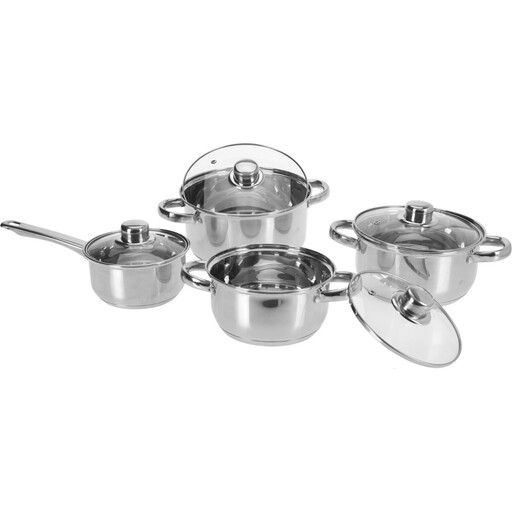
Why This Fits Their Persona: Ideal for those putting together their first home or looking for a complete basic set all at once. This cookware set offers the most commonly used sizes, so you can get started on your new induction cooktop right away.
This set of stainless steel pans is a no-nonsense choice. You avoid the uncertainty of a fast-wearing non-stick coating and opt for durable and versatile cookware.
Complete 8-piece set with glass lids. Suitable for all heat sources, including induction, and dishwasher-safe for easy maintenance.
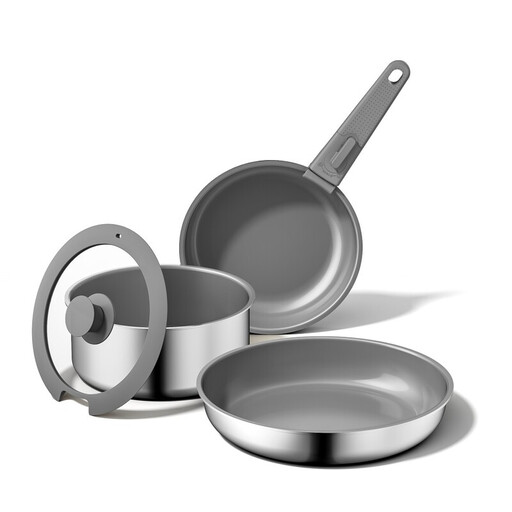
Why This Fits Their Persona: Perfect for those living in an apartment, studio, or camper. This set is designed for maximum stackability, saving you precious cabinet space. The PFAS-free coating is a bonus for the health-conscious cook.
This cookware set with a detachable handle directly tackles the problem of impractical storage. You'll no longer be bothered by protruding handles that disrupt your cabinet layout.
According to the manufacturer, the design saves up to 75% storage space. The ceramic pans have a stainless steel exterior for good heat conduction on induction.
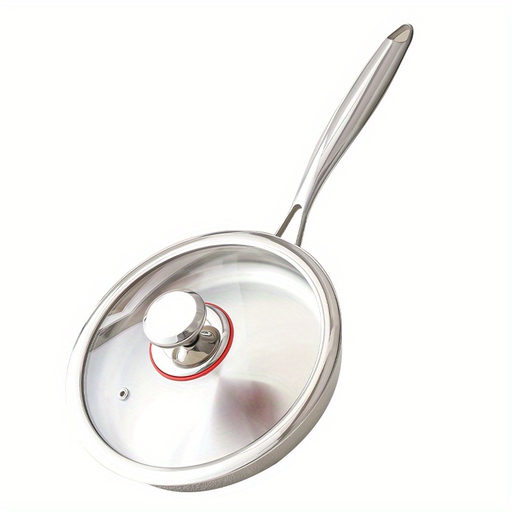
Why This Fits Their Persona: For those who take cooking seriously and invest in equipment that lasts and performs predictably. This 28 cm frying pan is an all-rounder for daily use, from flipping a pancake to searing a steak.
The tri-ply construction (stainless steel-aluminium-stainless steel) tackles the core problem: poor heat distribution and warping. This is a pan built for performance, not marketing claims.
Fast and extremely even heating for precise temperature control. The pan is scratch-resistant, tolerates metal utensils, and has no coating that can wear off.
This is just a selection. We have a complete overview of products that meet strict selection criteria and are suited for the modern kitchen.
The simplest method is the magnet test. Take any magnet (like one from your fridge) and hold it against the bottom of the pan. If the magnet sticks firmly, the base is magnetisable, and the pan should work on an induction cooktop. A pan made of aluminium, copper, or glass will not work unless it has a special magnetisable base incorporated into it.
Sticking in a stainless steel pan without a coating is often a matter of technique. The key is the right temperature. First, preheat the pan over medium-high heat. Do the water test: sprinkle a few drops of water into the pan. If the drops sizzle and evaporate, the pan isn't hot enough yet. If the drops dance around the pan like mercury-like beads, the temperature is perfect. Only then should you add your oil, let it heat up briefly, and then place your ingredients in the pan.
Yes, absolutely. A pan with a thick, flat base that makes perfect contact with the cooktop converts magnetic energy into heat much more efficiently. A thin or warped base loses energy, heats up more slowly, and leads to an uneven cooking result. Investing in a pan with a high-quality base can therefore save you money on your energy bill in the long run.
