
Vandaag of morgen in huis

Kwaliteit gegarandeerd

Welkomstaanbiedingen ontgrendelen: GRATIS bezorging | Tot 80% korting | Gratis 30 dagen JoyPlus-proefperiode
Download de app
Buying a new pan seems straightforward until you discover that the base does not work properly on your hob, the diameter does not match the cooking zone or the non-stick coating becomes damaged quickly. With pans for induction in particular, terms such as “suitable for all hobs”, “rapid heat distribution” and “durable coating” are not always used consistently.
Use these practical checks to compare an induction saucepan, induction frying pan, wok or pan set based on verifiable information.
A pan may be suitable for gas, electric and ceramic cooking, yet still not work on induction. Always check whether induction is explicitly mentioned in the product specifications. For example, the Tefal Easy Cook & Clean 32 cm frying pan is suitable for gas, electric and ceramic cooking, but according to the product description it is not suitable for induction.
A magnetic base or a statement such as “induction compatible” is a more important check than the series name alone.
A non-stick pan is practical for eggs, pancakes and dishes requiring little fat, but the coating is not immune to misuse. Metal utensils, heating an empty pan at a high temperature and abrasive sponges can damage the coating.
According to the product information for the Naturepan set, the use of silicone, wooden or plastic utensils is recommended. The manufacturer also states that the pans are dishwasher-safe, but washing them by hand with a soft sponge can help keep the coating in good condition for longer.
A pan set may seem good value when you need several sizes. Even so, it is worth checking the contents. A set with small saucepans, a milk pan and a frying pan suits a household that often prepares several dishes at the same time. If you mainly stir-fry, you may get more use from a separate wok or sauté pan.
Pay attention to the lids as well. A pan with a lid is useful for stewing and simmering, but it takes up additional cupboard space.
Induction works using a magnetic field. The base of the pan must therefore contain magnetic material and sit flat against the cooking zone. A thick or multi-layer base can distribute heat more evenly, but you should also consider the size. A 28 cm pan will not automatically heat evenly if the induction zone is much smaller.
For households with several types of hob, pans suitable for all hobs are practical. According to the product description, the PURECOOK Tri-Ply 304 stainless steel 28 cm frying pan is suitable for gas, induction, electric ceramic, halogen and oven use. When using it in the oven, always check the stated temperature and whether the handle and lid are suitable.
A stainless steel pan is generally resistant to warping and able to withstand intensive daily use. Stainless steel on its own conducts heat less quickly than aluminium. That is why some models use an aluminium core or sandwich base. According to the product specifications, the PURECOOK Tri-Ply models are made from stainless steel with an aluminium core.
An aluminium pan is often lightweight and heats up quickly. For induction, it will usually need an integrated stainless steel induction disc. This applies, for example, to the 5five aluminium saucepans. The 18 cm version has a stated capacity of 2.5 litres; the 16 cm version has a capacity of 1.5 litres.
Choose the size based on your household and cooking habits:
Also check whether the pan is dishwasher-safe. A wooden handle, as found on some saucepans with a steamer insert, may require hand washing. An ovenproof pan should also have a stated maximum temperature; “ovenproof” without a temperature specification does not provide enough information.
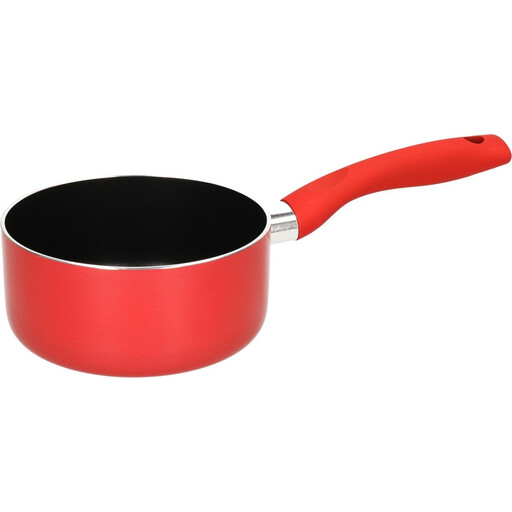
Why it suits this profile: This compact saucepan is designed for small portions, sauces and porridge. Its stated capacity of 1.5 litres makes it a good choice for a smaller kitchen or a household that wants to build up its collection of pans gradually.
The product information explicitly mentions induction and also lists gas, electric, ceramic and halogen as suitable heat sources.
Aluminium pan with a stainless steel induction disc, a 16 cm diameter and a low weight of approximately 500 grams.

Why it suits this profile: The combination of 304 stainless steel, an aluminium core, a 28 cm size and a glass lid is well suited to everyday family meals and dishes that need to reduce.
The product page specifies compatibility with several types of hob, including induction, and also mentions oven use up to 220 °F. Check the temperature before using the pan in the oven.
Tri-ply construction, a glass lid and, according to the product description, dishwasher-safe.
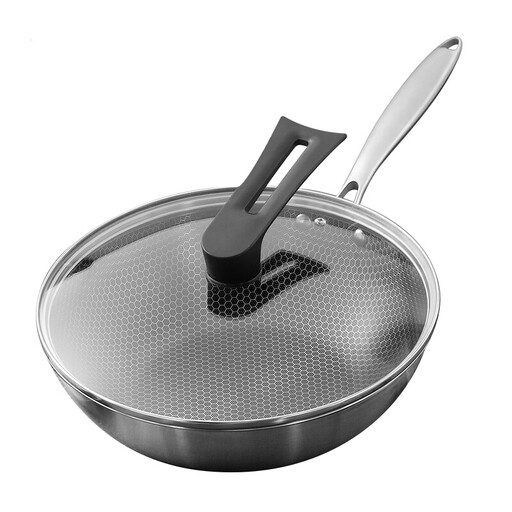
Why it suits this profile: This spacious wok is designed for stir-frying, sautéing and deep-frying. Its size provides room for several ingredients or a meal for multiple people.
The specifications list gas, induction and electric hobs. This makes hob compatibility clearer than a general claim without further explanation.
Stainless steel construction, a 30 cm diameter and a matching lid.
We have compiled a complete, up-to-date list of products that fully meet these strict selection criteria and the applicable European safety regulations.
Check the product listing for an explicit reference to induction. You can also test the base with a magnet: if it sticks firmly, the base probably contains magnetic material. This test does not replace the product specifications, particularly when the pan has a composite base.
For one person, 20 to 24 cm is often sufficient. For a family or larger portions, 26 to 32 cm is usually more suitable. Also consider the diameter of the induction zone. An oversized pan may extend beyond the heated area, resulting in less even cooking.
Their lifespan depends on the material, base construction and care. An uncoated stainless steel pan can withstand different types of use from a non-stick pan. Heat pans gradually, avoid heating them empty for prolonged periods and follow the cleaning instructions. With a pan set, it is best to care for each item according to its material and any coating.
