
Cooking small portions of spices
You toast whole spices in a small pan and want to control the heat carefully. Milieu Centraal recommends checking that the pan base is magnetic; Inventum lists a suitable pan diameter of 15–20 cm for the KI120T.


For small portions of spices alongside other cooking, a separate single-zone hob may be all you need. If you also use other pans while batch cooking, consider a hob with several independently controlled zones. Before buying, check that your spice pan’s base and size are suitable, and that the low heat settings, total power and electrical connection meet your needs.
You toast whole spices in a small pan and want to control the heat carefully. Milieu Centraal recommends checking that the pan base is magnetic; Inventum lists a suitable pan diameter of 15–20 cm for the KI120T.
You cook larger quantities and want to use your spice pan alongside other pans. Compare the number of independently controlled zones with the total connected load, rather than just counting the zones.
You want to use induction without overlooking an unsuitable pan or electrical connection. First decide whether a portable hob will work or whether you need to replace your main hob. For higher-power connections, the Consumentenbond outlines additional connection requirements.
Choose this if: you want a separate space to toast small portions one after another, without replacing your built-in hob.
Consider: you can use one pan at a time. The number of heat settings alone doesn’t show how evenly a dry pan heats on a low setting.
Choose this if: you want to use your spice pan alongside other pans while batch cooking, and a portable set-up suits your kitchen.
Consider: the Consumentenbond notes that portable hobs with a power rating of around 3500 W can have limitations when several zones are used at high settings at the same time. This doesn’t rule out using multiple zones on a low setting.
Choose this if: you’re replacing your main hob and need several zones for other cooking too.
Consider: check the cut-out dimensions, electrical connection and installation requirements. According to the Consumentenbond, a connected load above 3.65 kW requires a higher-capacity connection and a five-pin Perilex socket.
| What to consider | What to check before buying | Who should consider this? |
|---|---|---|
| Steady heat on a low setting | Check how each zone is controlled and, where possible, look for test results on low settings. A simmering test with oil isn’t a direct test of toasting spices. | If I’m dry-toasting small portions, I want to adjust the heat gently and avoid burning them; around 33% of consumers prioritise controlled toasting. |
| Using several pans at once | Check how many zones can be controlled independently and the total connected load. | If you want to use your spice pan alongside other pans while batch cooking, pay particular attention to the space available for simultaneous cooking; around 27% of consumers prioritise this. |
| A suitable spice pan | Check the pan base with a magnet and compare its diameter with the specified size range for the zone. | If I want to keep using my small pan, I need to know whether its base will work and whether it’s the right size; around 20% of consumers prioritise pan compatibility. |
| Connection and installation | Check the connected load, plug, circuit and available space. Have the installation requirements for a built-in model assessed. | If you want to install a hob in an existing kitchen, you’ll want to know in advance whether the connection and space are suitable; around 20% of consumers prioritise connection and installation. |
Whole spices can burn in a dry pan. The Consumentenbond tests simmering with oil, not toasting spices directly, so this isn’t direct evidence of how well a hob will toast them.
Compare the controls on low settings, and don’t treat maximum power or a boost function as proof of gentle, steady heat control.
Milieu Centraal recommends using a pan with a magnetic base on an induction hob. Models may also specify a suitable range of pan diameters.
Test the base with a magnet and compare your pan’s base diameter with the suitable sizes for the exact model. For example, Inventum lists 15–20 cm for the KI120T; that size range won’t necessarily apply to other hobs.
If your pan isn’t suitable or falls outside the specified size range, you may need a different pan that fits.
The Consumentenbond notes that portable hobs with a power rating of around 3500 W can have limitations when several zones are used at a high setting at the same time.
Compare the total power and the conditions for using zones simultaneously with what you need when batch cooking.
A powerful built-in hob may have different connection requirements from a portable one. For connected loads above 3.65 kW, the Consumentenbond specifies a higher-capacity connection and a five-pin Perilex socket.
Have the cut-out dimensions and existing connection checked before buying. You may need changes to the connection or kitchen, as well as professional installation.
For its portable KI120T hob, Inventum lists one zone, 2000 W, ten heat settings and a suitable pan diameter of 15–20 cm.
Severin specifies two induction zones and a total power of 3400 W for the DK 1031.
Tristar lists eight power levels and a maximum of 2000 W for the IK-6178CH.
Bosch lists DirectSelect controls on the PIE631HC1M, letting you choose a cooking zone and power level.
The KIV264RVS is an example of a portable hob with several zones: ETNA lists four zones, individual sliders and an earthed 230V plug for this model.
This selection includes built-in hobs and portable induction hobs with one or two zones, for toasting spices alongside other cooking.
 No image available
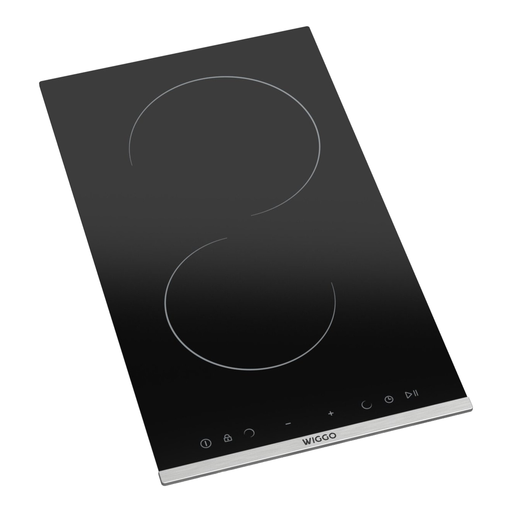
Two zones and separate timers make this a good fit for cooking with a spice pan alongside another pan.
The product name lists touch controls, 1-phase Plug & Play and a black finish.
 No image available
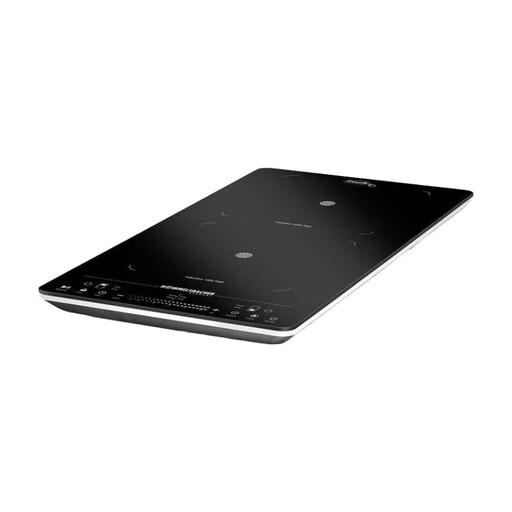
This portable hob has two zones and is designed for cooking with several pans at once.
The description lists 10 power levels, 10 temperature settings and a zone range of 120–260 mm. The pan needs a flat, magnetic base and must fall within the specified range.
 No image available
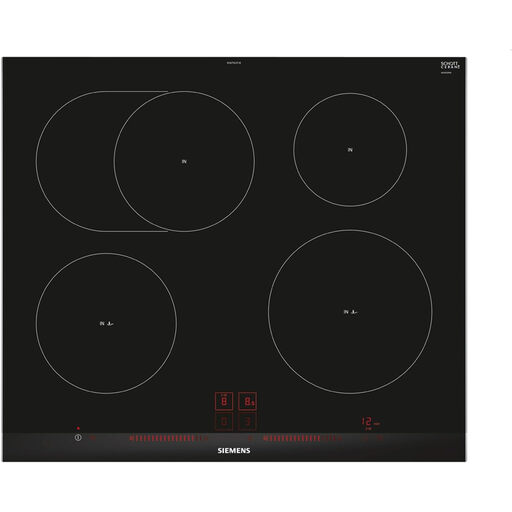
Four zones give you room for several pans when cooking larger quantities.
The description lists power levels 1–9, pan temperature control, a timer with automatic shut-off and a connected load of 7400 W. For this model, it specifies a fixed electrical connection and installation by a qualified electrician.
 No image available
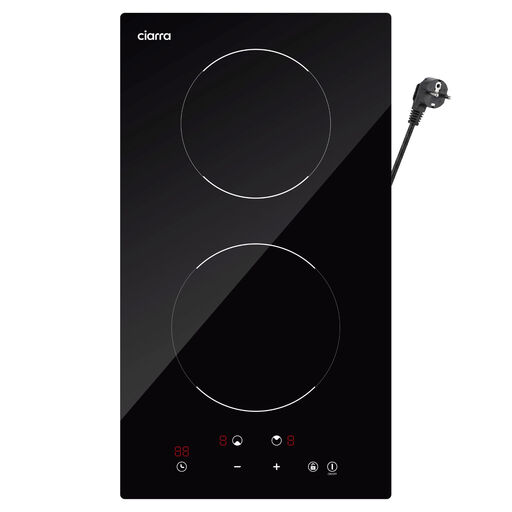
Two zones and separate timers are designed for cooking with several pans at the same time.
The description lists 9 power levels and pan size ranges of 120–260 mm and 120–200 mm for each zone. For built-in installation, it specifies a cut-out of 270 × 490 mm, a 16 A fuse and installation by a qualified electrician.
 No image available
This portable single-zone hob suits anyone looking for a separate zone for one spice pan; there’s no second zone for cooking at the same time.
The description lists 10 power levels, temperature settings from 60–240 °C and a zone range of 12–23 cm. The pan needs a ferromagnetic base, and a plug is included.
Use a small pan over a medium-low heat and shake it from time to time. The Kitchn recommends this as a way to help prevent burning; it isn’t a guaranteed setting for every induction hob.
The pan base needs to be magnetic. Milieu Centraal recommends checking it with a magnet. Also compare the base diameter with the size range for your chosen cooking zone.
It depends on the exact model and the connection in your kitchen. Inventum describes the KI120T as suitable for an earthed Dutch socket. For built-in hobs above 3.65 kW, the Consumentenbond specifies a higher-capacity connection and a five-pin Perilex socket. Have the requirements for your kitchen assessed.
Milieu Centraal recommends using a cloth with washing-up liquid. Lift a pan when moving it rather than sliding it across the glass; ETNA recommends this to help prevent scratches.