
Workshop leader using two pans
You want to cook the sauce and, for example, pasta at the same time. So consider both the number of zones and the total connected load; Consumentenbond and ETNA explain why both figures matter.


For a sauce cooked in a single pan, a portable single-zone hob is a good fit for a temporary cooking space. If you need to cook the sauce and a second dish at the same time, compare portable hobs with two zones. A built-in hob is better suited to a permanent cooking space, but requires preparation for installation and connection. For every model, check the pan size, available power supply and operating instructions: the number of zones does not tell you how much power they can deliver at the same time.
You want to cook the sauce and, for example, pasta at the same time. So consider both the number of zones and the total connected load; Consumentenbond and ETNA explain why both figures matter.
You’re making lentil bolognese in one pan and want to be able to adjust the heat while it simmers. Inventum lists ten settings for the KI120T; ETNA explains that cooking zones can switch on and off while heating.
You’re setting up a space for the workshop and need to check that the hob, pan, surface and electrical connection are all suitable. For example, the Inventum KI120T manual specifies a flat, heat-resistant surface; always follow the instructions for the model you choose.
A good fit when: you’re using one suitable sauce pan in a temporary space and can prepare a second dish afterwards.
Trade-off: you don’t have a second zone, so you can’t heat a second pan on the same hob at the same time.
A good fit when: you need to cook the sauce and a second dish at the same time, and the workspace and connection are suitable for the specific model.
Trade-off: you’ll need more space; the power ratings for each zone don’t mean both can run at maximum power at the same time.
A good fit when: the workshop has a permanent cooking space and the cut-out size and electrical installation are suitable.
Trade-off: installation and connection require more preparation than simply setting up a portable hob.
| What to consider | What should you check? | Who is this important for? |
|---|---|---|
| Cooking at the same time | Count the pans that need heat at the same time and compare the total connected load with the zone specifications for the exact model. | If I want to cook the sauce and a second dish at the same time during the workshop, I need enough zones and available power. Around 33% of consumers say simultaneous cooking is their main consideration. |
| Simmering and adjusting the heat | Compare the controls and adjustable settings for the exact model; keep an eye on the sauce as it cooks. | For a single pan of sauce, I want to be able to adjust the heat without needing extra zones. Around 25% of consumers prioritise settings for gentle simmering. |
| Electrical connection | Check the connected load, plug type and which other appliances will be used on the circuit. | At a temporary workshop venue, I want to know in advance whether the available power supply is suitable for the chosen hob and other appliances. Around 25% of consumers focus mainly on the available connection. |
| Pan size and available space | Check that the pan base is magnetic, measure it and follow the positioning instructions for the model you choose. | I want to use my own sauce pan and set up the hob in the available space according to the manual. Around 17% of consumers focus mainly on whether their pan and setup will fit. |
Consumentenbond describes the limitations of freestanding hobs with a connected load of around 3500 W when several zones are used at a high setting at the same time.
Compare the total connected load with the specifications for each zone, and check what the manual says about using them simultaneously.
If you need both pans on a high setting at the same time, you may need a different cooking setup or more time to prepare everything.
If the pan base doesn’t match the stated size, or the space doesn’t meet the positioning instructions, a portable hob may not be suitable.
Measure the pan base and the full setup area, and consult the manual for the model you choose.
You may need a different pan or another place to set up the hob.
A built-in hob requires a suitable cut-out and connection; this involves different preparation from placing a portable hob on a worktop.
First decide whether you need a temporary or permanent cooking space. For a built-in model, have the required dimensions and connection checked.
The KI120T is a portable, single-zone induction hob and an example of a model for a demonstration using one pan.
The KIV12ZIL is a portable hob with two zones, for a workspace where you may need to use two pans at the same time.
The DK 1031 is an example of a portable hob with two zones.
The PIE661BB5E is an example of a built-in hob, not a portable hob for a temporary workspace.
This selection includes portable induction hobs for one or two pans, as well as built-in hobs for a permanent cooking space.
 No image available
The two independently controlled zones are a good fit if you want to use two pans at the same time.
Two zones; five temperature settings; individual zone ratings of 1500 W and 1000 W.
 No image available
This portable single-zone model is a good fit for a temporary cooking space where you’ll be using one pan.
One cooking zone; five power settings; 1000 W.
 No image available
This portable single-zone model is a good fit for a temporary cooking space where you’ll be using one pan.
The product title lists 220 V/240 V/2100; check the exact specifications and connection requirements for your venue.
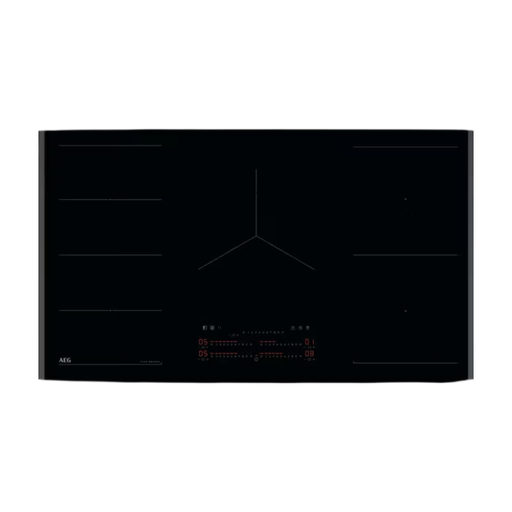 No image available
This built-in model is designed for a permanent cooking space where you may need to use several pans at the same time.
Four cooking zones; touch controls; PowerSlide; an individual timer for each zone; Bridge function for combining cooking zones. The installation must suit the cooking space.
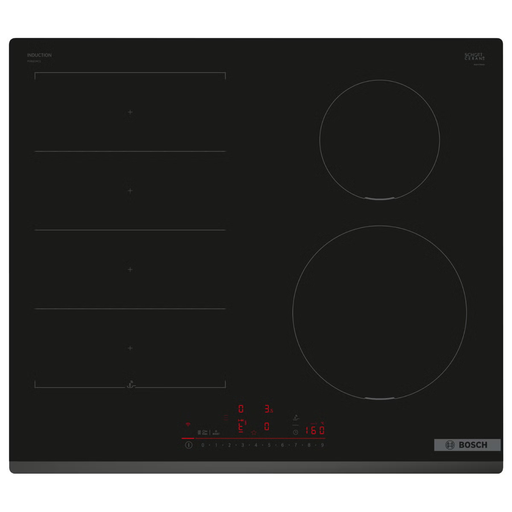 No image available
This built-in model is a good fit for a permanent cooking space where you may need to use several pans at the same time.
Four cooking zones; DirectSelect controls; FlexInduction for a larger cooking area. The installation must suit the cooking space.
Check that the pan base is magnetic and compare its size with the specifications for the exact model. For example, Inventum lists a pan size of 15–20 cm for the KI120T; this size doesn’t automatically apply to other induction hobs.
The Brandweer recommends plugging high-power appliances directly into a wall socket rather than using an extension lead or cable reel. Also check the load on the circuit and the manual for the hob you choose; this advice does not, by itself, establish a general legal ban on using extension leads.
Follow the manual for the exact model. The manual for the Inventum KI120T specifies a flat, heat-resistant surface and at least 10 cm of clear space at the sides and rear. Don’t automatically apply this distance to other models.
Not necessarily if you’re buying as a consumer. ACM ConsuWijzer explains that your statutory guarantee depends on what you could reasonably expect from the product under normal use. If a business or workshop organisation is making the purchase, check which terms and rights apply to that transaction.
According to the NVWA, electrical products must carry the CE marking. If the organiser prepares, handles or sells food as a business, the NVWA says they must work with an HACCP food safety plan or applicable hygiene code. The term ‘cooking workshop’ alone doesn’t determine whether this business requirement applies.