
The cook who wants to simmer gravy precisely
You want to adjust the heat quickly if the gravy is boiling too vigorously. Milieu Centraal describes induction as an option if your pan base is compatible.


If you want to adjust the heat quickly while reducing gravy, a portable induction hob is an obvious choice, provided your pan is compatible. If you want to keep using your current pan, compare it with a conventional hotplate; these take longer to respond to adjustments and stay warm after use. Choose one or two zones depending on how many things need to cook at the same time.
You want to adjust the heat quickly if the gravy is boiling too vigorously. Milieu Centraal describes induction as an option if your pan base is compatible.
You want to know whether your trusty pan will work on the hob; the pan base could determine whether you choose induction or a conventional hotplate. Milieu Centraal explains how to check if a pan is suitable for induction.
You’re making gravy while another dish needs heat, and want to know whether one extra cooking zone will be enough. Inventum and Tristar’s product information describes models with one and two zones respectively.
| What to consider | What to look for | Who is this important to? |
|---|---|---|
| Adjusting the heat | Compare the settings available on the exact model; keeping food warm isn’t the same as controlling the heat while reducing gravy. | If I want to respond when the gravy is boiling too vigorously, I look at the standard cooking settings. Around 36% of consumers prioritise being able to adjust the heat. |
| Using your current pan | For induction, check that the base is magnetic and compare the pan size with the model’s compatible range. The Inventum KI120T is specified for pans measuring 15–20 cm. | If I want to keep using my trusted saucepan, I first check whether it’s compatible with the hob. Around 29% of consumers prioritise pan compatibility. |
| Cooking zones and worktop space | Count how many pans need heat at the same time and measure the space available. Also follow the placement and ventilation instructions for your chosen model. | If another pan needs to be on the hob as well as the gravy, one zone may not be enough; two zones need more space. Around 21% of consumers prioritise having space to cook more than one thing at a time. |
| Connection and cost | Check the plug, power rating and simultaneous use requirements for the model and your home. Don’t assume that portable and built-in hobs have the same connection requirements. | If I want to know in advance whether the hob will work with my kitchen’s connection and whether I’ll need another pan, I check these details for each model. Around 14% of consumers prioritise connection requirements and additional costs. |
Keeping food warm isn’t the same as adjusting the heat to reduce gravy to your preferred consistency. According to Inventum, the keep-warm temperature on the Inventum KI120T can’t be adjusted.
Compare the standard cooking settings and adjust the heat while the gravy reduces.
A double hotplate needs more worktop space than a single hotplate. Two zones are most useful when two pans need heat at the same time during lunch.
First count the pans you need on the hob at the same time, then measure the space available.
Induction requires a compatible pan base. A portable hotplate’s connection requirements may also differ from those of a built-in model.
Check the pan base, pan size and connection information for the specific model before choosing.
Depending on the hotplate you choose, you may need another pan or an adjustment to your installation; check what applies to your situation.
For comparison if you’re considering a portable single-zone induction hob: the Inventum KI120T reviewed here.
For comparison if you’re considering a conventional portable single hotplate: the Severin KP 1091 reviewed here.
For comparison if two pans need heat at the same time during lunch: the Tristar KP-6245 reviewed here.
This selection includes portable single-zone induction hobs and conventional electric hotplates with one or two zones.
 No image available
A portable single-zone induction hob for anyone who wants an extra place to reduce gravy.
The product information lists 10 power or temperature settings, an adjustable range of 60–240 °C, 8 programmes and a timer. Suitable for induction pans only.
The product information lists a single-phase connection and a Europlug; check that these are suitable for your situation.
 No image available
This portable induction hob could be a good fit if you’re looking for one extra zone for gravy and your pan is within the specified size range.
The product information lists 2.000 W, 10 power settings, a timer and a cooking zone for pans with a diameter of 12–26 cm.
Use only induction-compatible pans with a flat, magnetic base and a diameter of 12–26 cm.
 No image available
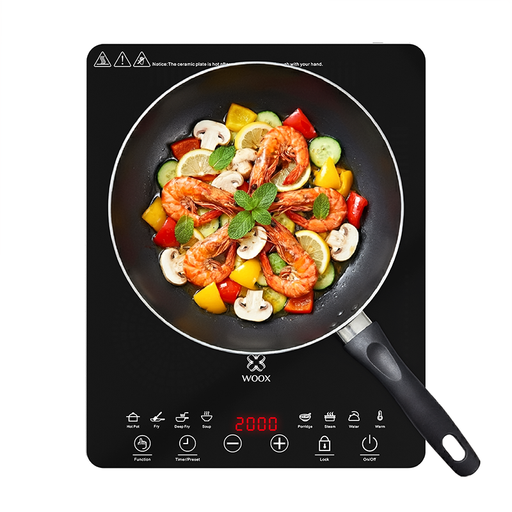
A portable induction hob for anyone who wants to make gravy on one extra cooking zone and has a compatible pan.
The product information lists 2.000 W, 8 adjustable temperature and power settings, pan detection and a timer. A child lock and automatic shut-off are also mentioned.
Use only pans that are suitable for induction.
 No image available
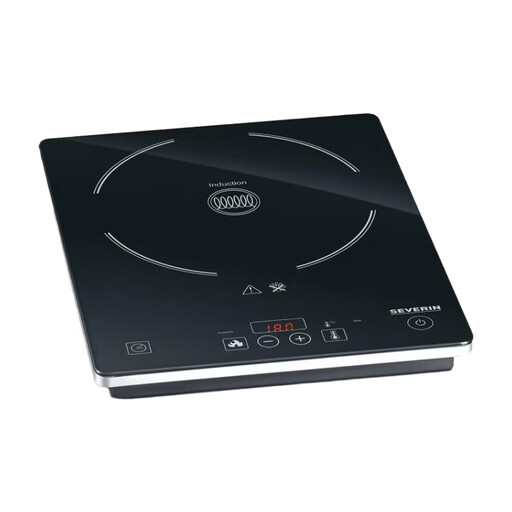
A conventional single-zone hotplate to compare if you want to keep using your current pan.
The product information lists 2.000 W, a ceramic glass surface and stepless heat control.
The surface can get very hot during use and stays warm for a while afterwards.
 No image available
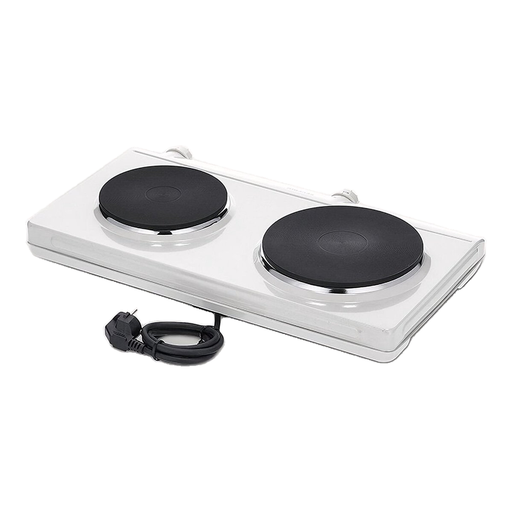
This conventional double hotplate could be a good fit if you want to heat another pan at the same time as the gravy during lunch.
The product information lists two independently controlled zones, separate temperature dials and a total power rating of 2.500 W.
The surfaces can get very hot during use. Check that you have enough worktop space and bear the stated power rating in mind.
Adjust the heat as the gravy reduces, and check the consistency in the pan until it reaches your liking. Milieu Centraal describes induction as quick to respond to adjustments; the product specifications don’t guarantee a particular temperature or cooking time for your gravy. Stay nearby while cooking, as advised by Brandweer Twente.
No, it depends on the model. Inventum describes the KI120T as suitable for a Dutch earthed socket without requiring any changes to the meter cupboard. Don’t assume this applies to another model or a built-in hob; check its manual and connection information.
Stay by the hotplate, keep flammable items away and follow the model’s manual. For the Inventum KI120T, the manual specifies a flat, heat-resistant surface and at least 10 cm of ventilation space at the sides and back. These clearances don’t automatically apply to other hotplates.
According to ACM ConsuWijzer, if a product is faulty despite being used normally, the seller must offer an appropriate solution; a manufacturer’s warranty doesn’t replace this right. For online and other distance purchases, there’s usually a 14-day cooling-off period, with some exceptions, according to the Dutch government.
The Dutch government states that electronic devices in the EU must carry a CE mark and that the manual must include safety warnings. Check the marking and instructions on the actual item being offered; a product listing alone can’t confirm whether a specific delivery meets the requirements.