
Chutney maker with limited worktop space
You need one cooking zone, but also have to allow space for the pan and ventilation, and make sure the cable has a safe route.


First, choose a hob that fits on your worktop with the required ventilation clearance, and has a cooking zone that suits the base of your chutney pan. A portable induction hob is an option if your pan is induction-compatible. An electric hotplate with a heating element may suit you if you want to keep using your existing pan, but the cooking zone gets hot and needs extra care if anything spills.
You need one cooking zone, but also have to allow space for the pan and ventilation, and make sure the cable has a safe route.
Once the mixture has come to the boil, you want to be able to adjust the heat and check whether the timer or automatic shut-off suits the way you cook.
Your choice largely depends on whether your pan base is suitable for induction, or whether a hotplate with an electric heating element is a better match for your existing pan.
Choose this option if: your pan is induction-compatible, its base is within the hob’s supported size range, and you can position the hob as instructed in the manual.
Bear in mind: you’ll need a suitable pan; the power settings or timer don’t show how evenly your chutney will simmer.
Choose this option if: your pan isn’t suitable for induction and you’re looking for a separate cooking zone with a heating element.
Bear in mind: the cooking zone gets hot, so check that its diameter suits your pan base.
Choose this option if: you want a flat glass cooking surface and the appliance will fit on your worktop.
Bear in mind: the glass and cooking zone heat up and need time to cool down; spills can burn on.
Measure not just the hotplate, but also the space needed for your pan and cable, as well as the model-specific ventilation requirements. The percentages below show which buying concerns consumers prioritise for this cooking task.
| What to consider | What should you check? | Who should give this more weight? |
|---|---|---|
| Safe positioning | Measure the available space and check the dimensions, ventilation clearance, surface requirements and cable route in the manual for the exact model. | If every centimetre counts, I also want to leave room for my pan and cable and follow the positioning instructions. Around 31% of consumers say safe positioning is their main buying concern. |
| Adjusting the heat | Compare the model’s heat settings, timer and automatic shut-off with the time you’ll need to cook the chutney down. | When reducing the chutney, I want to be able to adjust the heat and keep an eye on the pan. Around 31% of consumers put heat adjustment first. |
| Using an existing pan | Check whether the pan is suitable for induction and compare its base diameter with the hob’s supported range. | If I want to keep using my current chutney pan, the hob needs to suit it. For around 25% of consumers, pan compatibility is their main buying concern. |
| Power connection and additional costs | Check the type of connection and read the manual. If you’ll be using other appliances at the same time, consider what else is connected to the same circuit. | I want to know whether the hotplate will work with my kitchen’s electrical installation and whether I can keep using my pan. Around 13% of consumers focus mainly on the power connection and additional costs. |
Your pan may need extra space, and the manual may specify a clear area for ventilation. The Inventum KI120T manual requires at least 10 cm of clearance at the sides and back, and warns against using the appliance in small spaces. This requirement applies to that model.
Measure the entire space where you plan to set it up, and follow the manual for the model you’re considering.
Induction only works with suitable pans, and the permitted base size varies by model.
Check your pan’s material and base diameter against the specifications of the hob you’ve chosen. If your pan isn’t suitable, you may need a different one.
A setting or display won’t tell you what temperature a particular quantity of chutney reaches in your pan.
Use the settings to control the heat, and keep an eye on the chutney as it cooks down. Stir it and adjust the heat if needed.
Connection requirements and options for using other appliances at the same time can vary between models and kitchens. The Consumentenbond notes that some more powerful freestanding induction hobs require a Perilex connection.
Check the connection for the exact model and find out which other appliances are on the same circuit. Brandweer Nederland advises connecting high-power appliances directly to a wall socket wherever possible, rather than using a multi-socket adaptor or cable reel.
The KI120T is a single-zone induction hob with a timer. Assess whether it suits your pan and the space where you plan to use it.
The IK-6178 is an induction option, while the KP-6185 is a cast-iron electric hotplate for a different pan and cooking-zone set-up.
The KP 1032 and KP 1091 are examples of an induction hob and a hotplate with an electric heating element, respectively.
The S-Line 2100 is a single-zone induction hob with several settings. Check that it suits your pan and fits on your worktop.
The Joybuy products below are portable induction hobs for use with one pan. Choose this option only if your pan base and set-up are suitable for the model you select.
 No image available
An option if you want to use one pan on a portable induction hob. First check that your pan is suitable and fits the hob.
The product name lists 2000 W, 10 power levels, 8 programmes and a timer.
 No image available
An option if your induction pan’s base is within the stated size range. Check that range against your current pan.
The product name lists 2000 W, 8 power settings, temperature control from 60–270 °C, a 3-hour timer and suitable cookware measuring 12–26 cm.
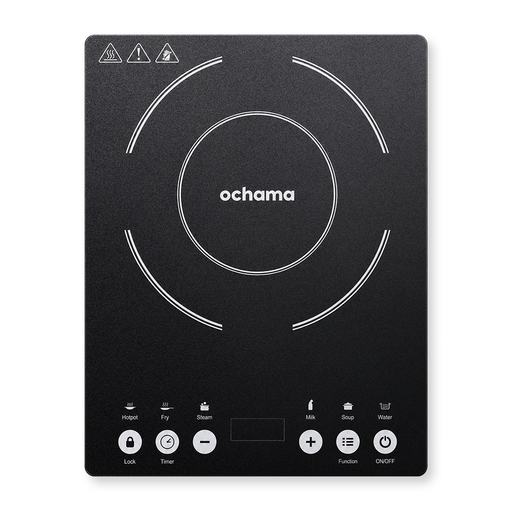 No image available
An option for cooking with one induction pan. Follow the instructions for the ventilation openings and don’t move the hob while it’s in use.
The product name lists 2000 W, 10 power settings and 6 functions.
 No image available
An option if you want to use one induction pan. Check that the cooking zone suits the base of your chutney pan.
The product name lists 2000 W, a Ø 26 cm cooking zone and 10 power settings.
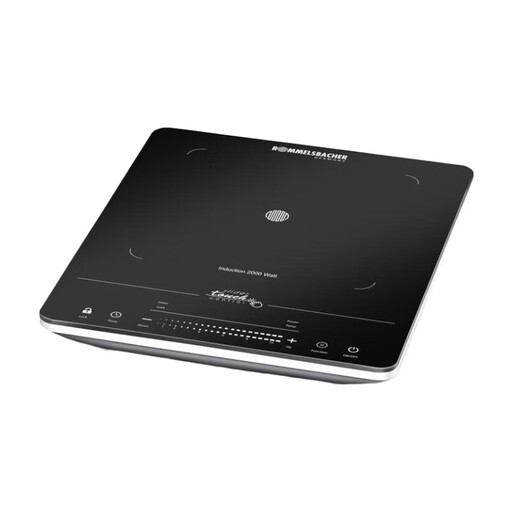 No image available
An option if your chutney pan is induction-compatible. Check this model’s instructions and make sure the pan base fits.
Only if the pan is suitable for induction and its base size falls within the range supported by the model you choose. For example, Inventum specifies 15–20 cm for the KI120T; that range doesn’t automatically apply to other hobs.
Check the manual for the exact model. The Inventum KI120T manual requires at least 10 cm of ventilation clearance at the sides and back, and warns against using the appliance in small spaces. This isn’t a general requirement for every hob.
Brandweer Nederland advises connecting high-power appliances directly to a wall socket wherever possible, rather than using a multi-socket adaptor or cable reel. Also check your hob’s instructions and the load on the circuit.
No. Don’t assume it will keep based on the hob you used or simply because the chutney has been cooked. Voedingscentrum advises against home-canning vegetables because of the risk of botulism. The recipe, ingredients and storage method also affect how long it will keep.
Ondernemersplein, part of the Dutch government, explains that electrical appliances meeting the applicable requirements must carry a CE marking, and that the manufacturer must draw up an EU Declaration of Conformity. Check the information for the exact model; don’t assume that a brand name alone is evidence that a particular model meets the requirements.