
Cook with an existing tagine
Wants to find out whether their tagine can be used directly on an induction hob, or whether they need a different pan.


Start by checking the base of your tagine or casserole: only cookware suitable for induction will work directly on the hob. A portable hob is a good fit for one pan or an extra cooking space without needing a cut-out. If you want to cook a tagine and a side dish at the same time, compare multi-zone hobs based on your available electrical connection and installation requirements. A timer or simmer setting can be useful, but features vary by model, and the pan size needs to match the cooking zone.
Wants to find out whether their tagine can be used directly on an induction hob, or whether they need a different pan.
Wants to cook a tagine and perhaps a side dish without choosing a hob that isn’t compatible with their electrical connection.
Wants easy-to-use controls, suitable cooking zones and perhaps a timer or simmer setting for long, gentle cooking.
First, check that your pan is suitable for induction. Then decide how many pans you want to use at once and whether a portable or built-in hob will suit your kitchen and electrical connection.
| What to consider | What should you check? | Who is this important for? |
|---|---|---|
| Pan and base | Check the manufacturer’s guidance for your tagine and make sure the base size suits the cooking zone. If it has a metal base, a magnet can help you check whether it’s suitable. | I want to keep my existing tagine and first find out whether it will work directly; around 36% of consumers prioritise the compatibility of their tagine and pan base. |
| Gentle simmering | Compare the power settings, timer and any simmer function on the exact model. | If I want to let the dish cook gently after heating it up, I focus on the controls; around 21% of consumers make controlled simmering their top priority. |
| Electrical connection and multiple pans | Check the connection rating, plug type and instructions for using zones at the same time. Have any required electrical or installation work assessed. | I want to use another pan alongside the tagine and need to know what my electrical connection can handle; around 29% of consumers prioritise the connection and cooking with multiple pans at once. |
| Space and positioning | Measure the worktop space or cut-out and check the model’s installation instructions. | If my cooking space is small or I want to put the hob away after use, flexibility matters; around 14% of consumers give space and positioning top priority. |
Suitability depends on the design of the base, not just the material or the fact that it’s called a tagine.
Before choosing a hob, check whether the manufacturer confirms that your exact tagine is suitable for induction.
Portable models vary in their connection requirements. Some multi-zone hobs share the available power between the zones in use.
Read the connection instructions for the exact model and check how the zones operate when used at the same time.
A built-in hob may require work to the worktop or electrical connection.
Measure the cut-out and have the installation requirements for your kitchen and chosen model assessed before you buy.
The TILLREDA 805.901.55 is a portable, single-zone induction hob for a small kitchen or as an extra cooking space.
The freestanding VKI6010ZIL has four zones and doesn’t need a built-in cut-out.
The built-in KIF6472ZT is worth considering if you’re looking for multiple zones and a dedicated simmer control.
The built-in PUE611BB5D is worth comparing for its zone controls, boost function and switch-off timer.
The built-in EX875LYE3E is designed for use with multiple, adjustable cooking zones.
This selection ranges from portable single-zone hobs to a built-in four-zone hob. Compare the options based on your pan, the cooking space you need and your electrical connection.
 No image available
A single-zone hob for cooking one tagine or casserole at a time.
The product listing specifies 10 power levels, 8 programmes, boost, pan detection, a timer and a temperature range of 60–240 °C.
Check that your exact pan is suitable for induction and fits the cooking zone.
 No image available
An option to compare if you want to use a second pan alongside your tagine.
The product information lists two independently controlled zones rated at 1500 W and 1000 W, plus five temperature settings.
The title lists settings for keeping food warm, simmering and slow cooking on a low heat. Check the connection instructions for the model.
 No image available
A compact single-zone option if you need a portable cooking space and use one pan at a time.
The product title lists five power levels and tabletop use.
Check pan compatibility and the model’s positioning instructions.
 No image available
A portable single-zone hob to consider if you need an extra cooking space for one tagine or pan.
The product information lists 2100 W, automatic pan detection and multiple power levels.
Check that your exact pan is suitable for induction and follow the model’s connection instructions.
 No image available
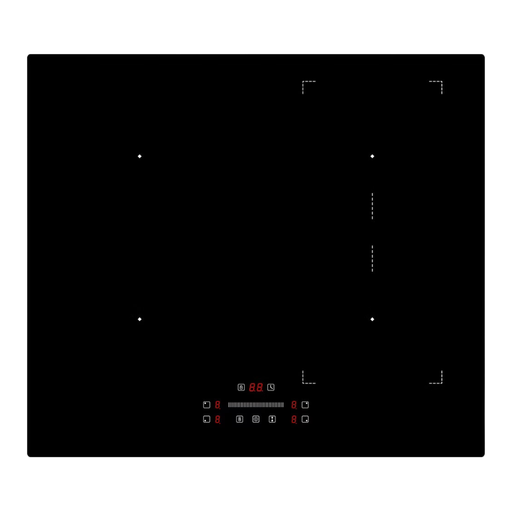
A multi-zone built-in hob to compare if you want to use your tagine alongside other pans.
The product information lists four zones, nine settings, a timer and a bridge function for linking zones.
This hob is designed for built-in installation. The cable is supplied without a plug; check the connection instructions and have any required work assessed.
It depends on the exact tagine; earthenware alone doesn’t make a pan suitable for induction. Check the manufacturer’s guidance. If it has a metal base, a magnet can help you check whether it’s magnetic.
No, there are portable multi-zone hobs too, such as the four-zone Inventum VKI6010ZIL. Portable doesn’t automatically mean that a model will work from a standard socket, so check the connection requirements for the exact hob.
Check the connection rating, plug type and installation instructions for the exact model. Before choosing, have any required changes to the electrical connection or built-in installation assessed.
Not necessarily: a simmer programme is a model-specific control feature, not a substitute for a suitable pan and cooking zone. Compare the settings and timer on your chosen model with the way you want to cook.
Electrical equipment covered by EU low-voltage rules must meet the relevant safety requirements; CE marking is mandatory for the product groups to which this requirement applies. The European Commission explains the scope of the Low Voltage Directive, while the Netherlands Enterprise Agency provides details about product groups that require CE marking. A statement alone doesn’t prove that an individual product meets all applicable rules.