
Cooking with a large stockpot
You cook several portions at once and want the base of your pan to match the cooking zone.


Choose based on the size of your pan base, how many pans need to be on the hob at once, and the connection in your kitchen. A freestanding hob may suit you if you do not want a built-in model, but the available power may be limited when cooking with several pans at once. A built-in hob needs a suitable cut-out size and electrical connection. Before buying, also check the CE marking on the specific appliance: the NVWA says this is mandatory for electrical products placed on the market in the Netherlands.
You cook several portions at once and want the base of your pan to match the cooking zone.
You want to leave the soup simmering while other pans are on the hob at the same time.
You are looking for a freestanding hob and need to consider pan size, worktop space and the load on the socket.
Start with the pan base and the space available for all your pans, then check that the connection is suitable for the model. The Consumentenbond recommends comparing your pan size with the cooking zone and points out that cooking on high settings at the same time may be limited with some connections.
Suitable for: using one stockpot and being able to put the hob away after cooking. Inventum specifies a pan range of 15–20 cm for the KI120T, so measure the base of your pan.
Bear in mind: you cannot use a second pan on it at the same time.
Suitable for: those who do not want a built-in hob but would like to cook soup and other dishes at the same time, provided the pans and connection are suitable.
Bear in mind: Inventum says the VKI6010ZIL distributes power across the zones in use. So, having multiple zones does not mean each one receives maximum power at the same time.
Suitable for: a fitted kitchen with space for several pans, provided the cut-out and electrical connection are suitable for the specific model.
Bear in mind: ETNA specifies a two-phase connection for the KI1160ZT and KIF562ZT. A flex zone is not necessarily suitable for every round pan, so compare the usable zone with the pan base.
| Point to consider | What should you look for? | Who should pay extra attention? |
|---|---|---|
| Pan base and cooking zone | Measure the diameter of the pan base and compare it with the size and shape of the zone and the specified pan range. | I want to use a large stockpot, so I’ll check that its base matches the cooking zone. Around 31% of consumers put pan size at the top of their list. |
| Using several pans at once | Compare the pan sizes with the zone layout and check how power is distributed when several zones are on. | If I’m cooking soup and side dishes at the same time, I need enough space and power for different pans. Around 25% of consumers prioritise this combination. |
| Connection and installation | Check the connection requirements, the load on the circuit and, for a built-in model, the full cut-out dimensions specified for it. | I want to be able to use the hob in the available space without an unsuitable connection or cut-out. Around 25% of consumers let their existing kitchen facilities guide their choice. |
| Gentle simmering | Compare simmering tests where available and check the controls at low settings; a boost function alone says nothing about simmering. | I want to be able to adjust the heat while my soup simmers. Around 19% of consumers prioritise this control at low heat. |
The size of the pan base is what matters when matching it to the cooking zone. A significant mismatch may affect heating.
Measure the base and compare it with the zone and the pan range for the specific model. If the base is not suitable, you may need a different pan.
Some hobs distribute power across the zones in use. So the number of zones alone does not tell you how much power will remain available when several pans are cooking at once.
Check how power is distributed and the load on the circuit for the way you plan to use the hob.
Built-in dimensions and electrical requirements vary by model. For example, according to ETNA, the ETNA hobs mentioned require a two-phase connection.
Compare the installation requirements with your kitchen before choosing a model. Modifications or professional installation may involve extra work and costs.
These examples give you an idea of different zone layouts and connection requirements; the product features mentioned are not independent cooking performance test results.
Inventum offers, among other models, a freestanding hob with one zone and a freestanding hob with four zones.
According to ETNA, the built-in KI1160ZT has fixed zones, including a 21 cm zone, while the KIF562ZT has connectable zones.
Bosch describes the built-in PIE661BB5E as a hob approximately 60 cm wide, with four zones.
This selection focuses on freestanding and built-in induction hobs with multiple zones, for cooking soup and using other pans at the same time. Before buying, check the connection and installation requirements for your chosen model, as well as the CE marking on the specific appliance; the NVWA says this is mandatory for electrical products placed on the market in the Netherlands.
 Image unavailable
Could suit you if you want to cook soup and use a second pan at the same time, and are looking for a freestanding hob.
The product description lists two independently controlled zones: one 7-inch zone at 1500 W and one 6-inch zone at 1000 W. The title specifies five temperature settings.
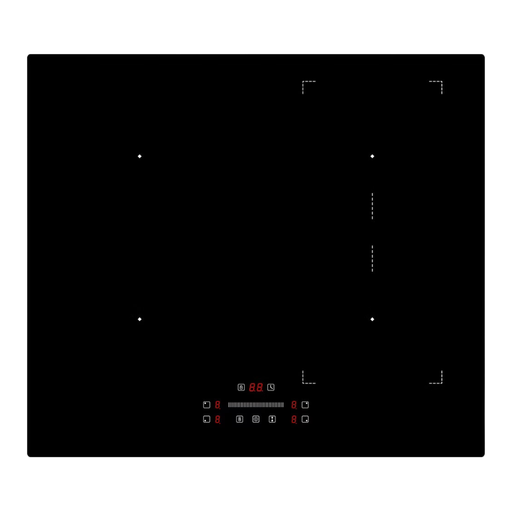 Image unavailable
Could suit a fitted kitchen with several pans, provided the cut-out and connection are suitable.
The product description lists four zones, a bridge function and nine settings. This is a built-in model; the cable described is supplied without a plug.
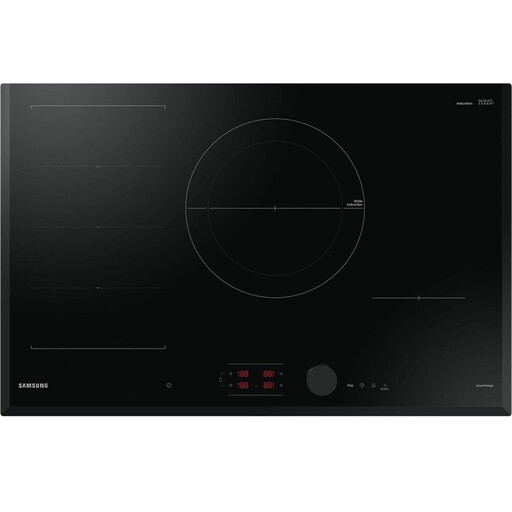 Image unavailable
Could suit you if you want to use several pans and your kitchen can accommodate a wide built-in hob.
The product information lists four zones and Flex Zone Plus. According to the product description, installation must be carried out by a qualified electrician and the cut-out must be suitable.
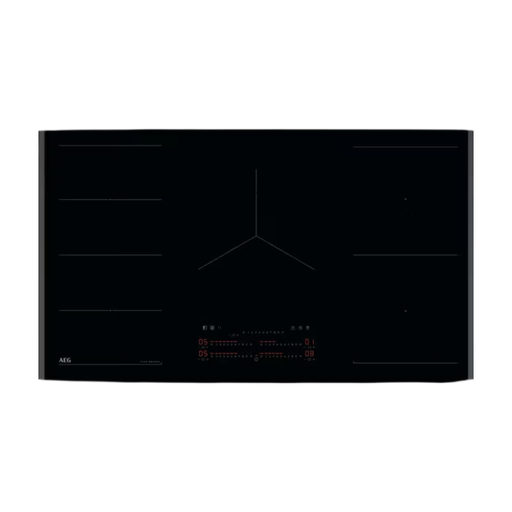 Image unavailable
Could suit a built-in kitchen setup where you want to prepare several dishes at once.
The product information lists four zones, Flex Bridge, PowerSlide and a timer for each zone. Check that your kitchen setup is suitable for this built-in hob.
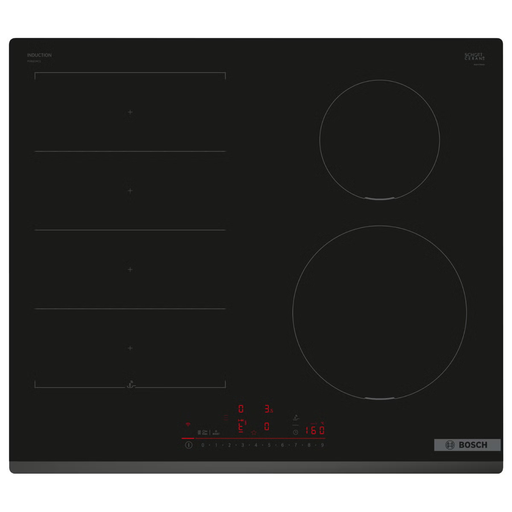 Image unavailable
Could suit a built-in setup for several pans, provided the available cut-out and electrical installation meet the specifications.
The product description lists four zones, FlexInduction and a connected load of 7400 W. Check the specified built-in dimensions and connection for your kitchen.
Check whether the base of the pan is magnetic and compare its size with the cooking zone. Milieu Centraal suggests using a magnet as a simple first check; the Consumentenbond warns that a significant difference in pan size may affect heating. Also check the pan range for the specific appliance.
Only if the specific model is designed for this and the earthed socket and circuit can handle the load. The Consumentenbond points out that cooking on high settings at the same time may be limited, so a 1-phase connection on its own does not confirm that your installation is suitable.
Yes. The NVWA says CE marking is mandatory for electrical products placed on the Dutch market. Check the marking on the specific appliance; a CE marking is not an independent test result for cooking performance.
Let the cooking zone cool down safely and use a non-scratch cloth with a mild soapy solution. The Consumentenbond advises against abrasive cleaners and scouring sponges. Also follow the model’s instructions.
Milieu Centraal recommends asking your pacemaker technician or cardiologist before use. This advice applies to the individual user and is not a general reason to rule out induction hobs.