Choose an induction hob with a cooking zone that suits the base of your stew pot, and check how the model performs on a low setting. A large number of settings or a boost function alone is no guarantee that a hob will maintain a steady simmer. A portable single-phase hob is suitable if you don’t want a built-in model, but it limits the high power available when using several zones at once. A more powerful built-in hob may leave you more capacity for side dishes, provided your connection and worktop are suitable.
Who is this relevant to?
Cooking a stew in a large pot
You’re preparing a meal to share in one large pot and want to simmer it gently for a long time. Make sure the base of your pot is suitable for induction and matches the cooking zone. Milieu Centraal explains how to check whether the base is magnetic.
Cooking with several pans
You want to leave your stew to simmer while preparing side dishes, and need to know how much power will remain available for other zones. The Consumentenbond notes that you can’t cook on several zones at high power at the same time on a single-phase hob.
Cooking without a kitchen refit
You’re looking for a hob that doesn’t need to be fitted and want to know whether it will work with your socket and cooking habits. Check the requirements for the specific model: some portable single-phase hobs are designed for a suitable standard socket, while more powerful models may need a different connection.
What should you look for when buying?
Start with the base of your pan and how the hob performs at low temperatures. Then decide whether you want to use other pans at high power while your stew simmers. The Consumentenbond describes a simmering test in which oil is measured for 30 minutes on the lowest setting. This gives an indication of low-temperature performance, but it isn’t a test using a lentil and vegetable stew.
Portable single-phase hob
Choose this if: you want to cook without a worktop cut-out and usually use the stew pot as your main pan.
The trade-off: when several zones are used at high power at the same time, the available capacity may be shared between them. The Consumentenbond points out that low-power portable hobs generally take longer to bring water to the boil than more powerful built-in hobs.
Built-in hob with limited connection capacity
Choose this if: you want a fixed hob and don’t usually use several pans at high power at the same time.
The trade-off: the fitting dimensions and connection must suit your kitchen. Check how much capacity will be left for other pans.
More powerful built-in hob
Choose this if: you regularly prepare several side dishes at once and the required installation is feasible.
The trade-off: the connection and possibly the worktop need extra consideration. A bridging function can combine zones, but it doesn’t prove that a round stew pot will simmer more effectively.
| What to consider |
What to look for |
Who is this important to? |
| Gentle simmering |
Look for an assessment of how the specific model performs on its lowest setting. A large number of settings or a boost function is no proof of this. |
If I want to cook lentils slowly, I want the contents to simmer gently. That’s why around 36% of consumers put simmer control first. |
| Zone for the stew pot |
Measure the base of your pan, compare it with the zone dimensions and check that the pan is suitable for induction. |
When I’m cooking a meal to share, I want to use a large pot without losing sight of the size of the cooking zone. Around 29% of consumers focus mainly on the fit between the stew pot and cooking zone. |
| Connection and installation |
Compare the connection rating and required connection with your kitchen. For a built-in hob, check the cut-out and external dimensions too. |
If I don’t want to make changes to my kitchen, the existing connection and avoiding installation work are important factors. Around 21% of consumers say ease of installation is their main concern. |
| Preparing side dishes at the same time |
Check the connection rating and the information about using several zones at once. The number of zones alone doesn’t tell you how much power will be available. |
While the stew is cooking, I also want to be able to use other pans, without judging the hob by its number of zones alone. Around 14% of consumers give priority to cooking several things at once. |
Common buying mistakes
-
Assuming lots of cooking settings mean good simmering
For a stew, performance on a low setting is what matters. The number of settings alone doesn’t tell you how low and steady the temperature will be.
Look for information about simmering for the exact model, and treat the number of settings as a product specification, not proof of its simmering performance.
-
Comparing only the width of the hob
The external dimensions, the worktop cut-out and the connection rating are all different things. A hob may fit the available width but still not be compatible with your existing kitchen.
Check all the dimensions and the connection before you buy. If you’re unsure, ask a qualified professional to assess your existing installation.
-
Assuming four zones mean four pans can run at full power
On hobs with limited total power, capacity may be shared between the zones in use. This matters particularly when your stew is simmering and you need to heat other pans quickly at the same time.
Choose based on how many pans you actually use at once and compare the connection rating, not just the number of zones.
Brands to consider
Inventum
The freestanding VKI6010ZIL is an example of a single-phase hob with four zones that doesn’t need a worktop cut-out.
- Inventum says this model has nine settings and a timer for each zone.
- Power is shared between the zones in use. These features don’t establish how steadily the model simmers a stew.
ETNA
The built-in KI2160ZT is an example for a suitable two-phase connection and a round pan base that fits the cooking zone.
- ETNA lists a 21 cm zone, ten settings and a timer for each zone.
- The manufacturer describes simmering as one of its uses, but this isn’t an independent test of how it cooks this stew. Check the fitting dimensions too.
AEG
The built-in V64IOB00FB is an example of a hob with four zones and a bridging function for larger cookware that fits the zones.
- AEG lists a connection rating of 7200 W and a bridging function.
- Check the connection and pan shape. The bridging function doesn’t prove that a round stew pot will simmer better.
Siemens
The built-in EH631BEB6E is an example for anyone looking for four separate zones and a switch-off timer.
- Siemens lists a connection rating of 7400 W, four zones and a timer that switches off the selected zone.
- According to Siemens, a plug isn’t supplied as standard. The stated features aren’t a model-specific test of simmering performance.
Products at Joybuy
This selection includes portable induction hobs for cooking without a built-in model, as well as a built-in hob. For each model, compare the number of zones, stated power and required connection with your pan and cooking habits.
 No image available
MELISSA induction hob, 2000 W
The single cooking zone suits cooking where the stew pot is your main pan and you don’t want a built-in hob.
The description lists 10 settings, an adjustable range of 60–240 °C and a single-phase connection. The title also mentions a timer and overheating protection.
Joybuy
 No image available
Induction hob with two cooking zones
Two separate zones give you space for a stew pot and a second pan. Check your pan sizes and the connection requirements.
The title lists five temperature settings and mentions simmering and slow cooking as uses. This isn’t a model-specific measurement of simmering performance.
Joybuy
 No image available
Portable induction hob, 1000 W
This portable single-zone hob is designed for a separate cooking space. Check that the base of your pan fits the zone.
The title lists 1000 W and five heat settings. The product name mentions use at home, on campsites and in motorhomes.
Joybuy
 No image available
Joyami JCL02M induction cooker
The description presents this portable model as suitable for small spaces or as an additional cooking appliance.
The product title lists 220V/240V/2100. Before buying, check which connection and pan size you’ll need for your intended use.
Joybuy
 No image available
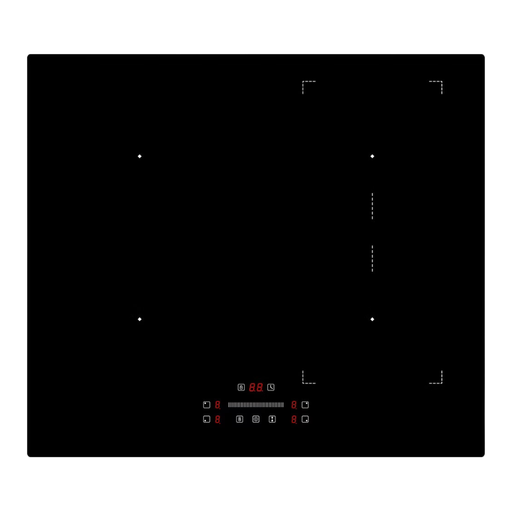
Exquisit EKI624-30 built-in induction hob
This built-in hob may suit you if you’re looking for a fixed hob with several zones. Compare the fitting dimensions and connection with your kitchen.
The description lists four zones, nine settings, a timer and a bridging function. According to the description, it can be connected to one phase up to 3,7 kW or two phases up to 7,6 kW. The cable is supplied without a plug and must be connected directly.
Joybuy
Frequently asked questions
Can I use my existing stew pot on an induction hob?
Check whether the base of your pan has a magnetic layer and compare its size with the cooking zone. You can test whether it’s magnetic with a small magnet, for example. If you’re buying a new pan, the induction symbol is another indication.
How should I use the hob once the lentil stew has come to the boil?
Turn the hob down to a low setting and use a lid where appropriate. Check how the stew simmers in your own pan: a test that measures oil on the lowest setting won’t predict exactly how your dish will behave.
Can any induction hob be plugged into a standard socket?
No, it depends on the model and your existing connection. Some portable single-phase models are designed for a suitable standard socket; more powerful built-in hobs may need a different connection and professional installation. Follow the model’s connection instructions and have the installation assessed if anything is unclear.
Who can help if the hob breaks down too soon during normal use?
According to ACM ConsuWijzer, the retailer is responsible for the statutory guarantee if a product is faulty. Depending on the circumstances, the retailer must repair or replace the product free of charge, or refund the purchase price. A manufacturer’s warranty doesn’t replace this statutory right.
What product rules apply to an induction hob in the Netherlands?
The European Low Voltage Directive applies to electrical equipment within the specified voltage range, including household appliances. For products covered by applicable harmonised EU rules, the CE marking is the manufacturer’s declaration that those rules have been met. A CE marking shown in a product listing is not, in itself, an independent conformity test.


