
Soup-maker who simmers for a long time
You make soup in one large pan and want to keep the heat low and easy to control. Compare simmering test results and how well the pan fits the cooking zone, rather than looking only at booster functions.


Start by checking whether the base of your soup pan is suitable for the cooking zone. If you plan to simmer for a long time, look for an independent test of the exact model on its lowest setting. A booster or a large number of heat settings alone is no proof that a pan will simmer evenly. If you also cook side dishes, compare the usable zones and available power, and check that the hob will fit your worktop and electrical connection.
You make soup in one large pan and want to keep the heat low and easy to control. Compare simmering test results and how well the pan fits the cooking zone, rather than looking only at booster functions.
You want to use other pans alongside the soup. In that case, both the number of usable zones and the available power when cooking several dishes at once matter.
You’re looking for a freestanding hob or need to work with your existing connection. Check the available space, plug and combined power requirements in advance.
| What to consider | What to look for | Who is this most relevant to? |
|---|---|---|
| Controlled simmering | Look for an independent simmering test of the exact model and check how its lowest setting is adjusted. | If I’m simmering soup for a long time, I want to be able to control the lowest setting properly. Around 36% of consumers say gentle simmering is their main reason for buying. |
| Cooking soup and side dishes at the same time | Compare the zone layout and available power when several pans are in use at once. | When sharing a meal, I want to be able to cook soup and side dishes at the same time, without judging a hob on the number of zones alone. Around 29% of consumers prioritise cooking several dishes at once. |
| Pan, worktop and connection | Use a magnet to check whether the pan base is magnetic. Also measure the base of the pan and the available space, and check the connection requirements for the exact model. | I want to know in advance whether my soup pan and kitchen are suitable for the hob, so I can use it where I intend to. Around 21% of consumers focus mainly on pan compatibility, positioning and connection requirements. |
| Controls and care | Check for timers for each zone, the operating instructions and the recommended cleaning method. | If I use several pans, I want the controls and cleaning to fit easily into my cooking routine. Around 14% of consumers say ease of use, maintenance and installation are their main buying considerations. |
A feature description doesn’t tell you how steadily a pan will stay at a low temperature. The Consumentenbond tests simmering separately by measuring the temperature of oil on the lowest setting over 30 minutes; this is not a test using soup.
Look for an independent simmering assessment of the exact model. Treat the manufacturer’s description as information about its features, not as a test result.
According to the Consumentenbond, you can’t use several zones at a high setting at the same time on low-power freestanding hobs.
Compare the total available power with the way you plan to cook soup and side dishes at the same time.
Not every pan works on induction, and a built-in hob may require changes to the connection or worktop.
Check the pan base, measure the available space and read the installation instructions for the exact model before making your choice.
You may also need a suitable pan, changes to the electrical connection or installation work.
The VKI3020ZWA is a freestanding two-zone option if you don’t want a built-in hob.
The KI1160ZT is a four-zone built-in option for cooking soup and side dishes.
The PXV875DC1E is a wider built-in hob with five zones and a flex zone.
The 59 cm MATMÄSSIG is a built-in hob with straightforward controls and individual timers.
According to Siemens, the EX675HEC1E features flexInduction and touchSlider on a 60 cm built-in hob.
This selection focuses on induction hobs with four cooking zones, for anyone who wants to cook soup alongside other dishes. The models vary in width, flexible zone layouts and controls. Check the connection requirements for the model you’re considering, too.
 No image available
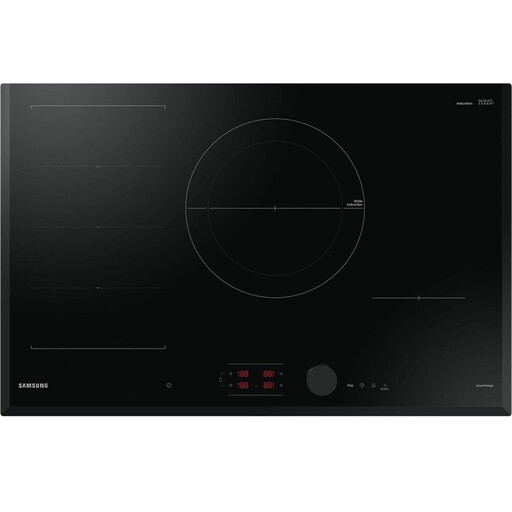
The four zones and Flex Zone Plus are described as offering different pan layouts, such as cooking soup alongside side dishes.
The product description lists 15 power settings plus boost, and a removable control knob. These features are not an independent simmering test.
According to the product description, installation must be carried out by a qualified electrician.
 No image available
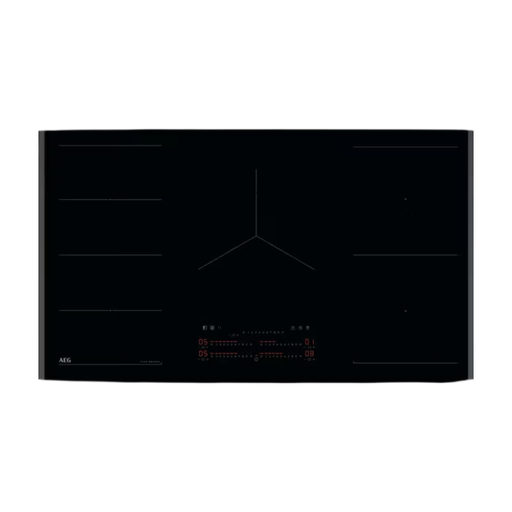
Flex Bridge is described as allowing you to combine cooking zones for larger pans or several dishes.
The product description lists PowerSlide, which lets you move a pan between higher and lower heat settings, and an individual timer for each cooking zone. This doesn’t prove how evenly soup will simmer.
 No image available
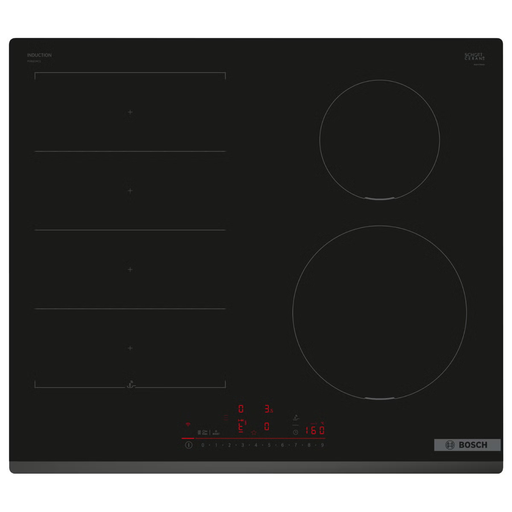
The product description lists FlexInduction for larger pans, which could be useful if you’re using a large soup pan.
DirectSelect controls and a timer for each cooking zone are also listed. These features alone don’t tell you how well the temperature is maintained during a long simmer.
 No image available
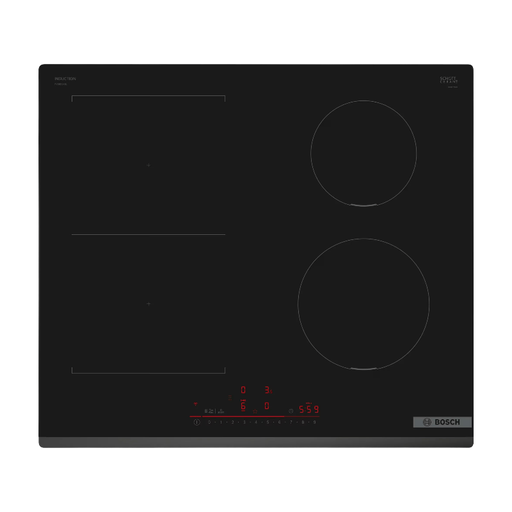
With four zones, there’s room for soup and other pans. Check that the zone layout suits your pans.
The product description lists TouchSlider, a connected load of 6900 W and a single-phase connection. Before buying, check that these are compatible with your kitchen’s installation.
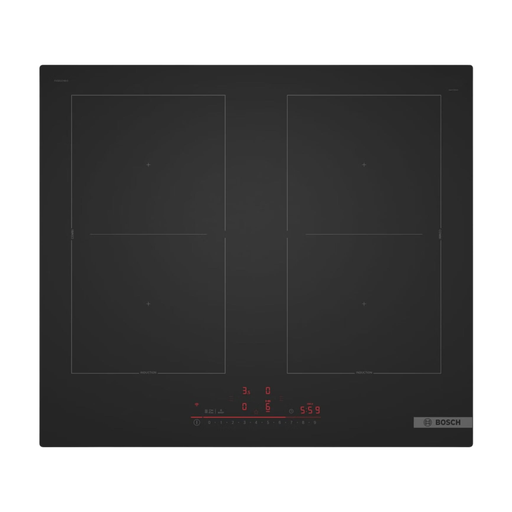 No image available
The product description lists CombiZone, which combines two zones, for example to accommodate a larger pan.
DirectSelect, 17 power settings, a timer with automatic shut-off and a child lock are also listed. These are product features, not an independent simmering assessment.
Use a small magnet to check whether the base has a magnetic steel layer. Then compare the diameter of the pan base with the cooking zone on the model you’re considering.
No, connection requirements vary by model. According to Inventum, the Inventum VKI3020ZWA is designed for an earthed socket in the Netherlands, while ETNA says the KI1160ZT requires a two-phase connection. Follow the installation instructions for the model you choose, and have any built-in work assessed if necessary.
No, a timer is no substitute for keeping an eye on your cooking. It can switch a cooking zone off automatically, but the Fire Brigade advises staying near the hob while cooking.
Contact the seller to claim your statutory guarantee. According to ACM ConsuWijzer, there’s no fixed duration for this guarantee in the Netherlands: what you can reasonably expect in terms of a product’s lifespan depends, among other things, on the type of product, its price and the brand. A manufacturer’s guarantee is separate.
No, the ISDE scheme described by the Netherlands Enterprise Agency is only available to homeowners who meet the conditions. These include connecting the home to a heat network and having the natural gas meter removed. Check the current conditions and deadlines before applying.