
A soup-maker looking for a gentle heat
You want your soup to simmer gently, so you’re looking beyond boost power and the number of settings. The Consumentenbond describes simmering tests carried out on the lowest setting.


For leek and potato soup, precise control on the lowest setting matters more than a high boost power rating alone. The Consumentenbond tests simmering on the lowest setting and notes that not every hob can keep a pan at the same low temperature for an extended period. A portable hob is a good choice if you want to cook without installing one; a built-in hob may offer space for several pans, but you’ll need to check the cut-out dimensions and electrical connection.
You want your soup to simmer gently, so you’re looking beyond boost power and the number of settings. The Consumentenbond describes simmering tests carried out on the lowest setting.
You’re looking for a portable hob and want to know whether the available connection and space will suit your soup pan. The Consumentenbond points out that the total power of portable hobs can limit the use of several zones at once.
You want to prepare something else while the soup simmers, so you’re weighing up the number of zones and the total power available. Inventum and ETNA’s product specifications show that connections and power ratings vary by model.
Best for: mainly using one soup pan or adding extra cooking space without cutting into your worktop.
Trade-off: there’s no second zone on the hob for cooking another dish at the same time.
Best for: simmering soup while preparing another part of lunch on the same hob.
Trade-off: on some plug-in models, the available power is shared between the zones in use.
Best for: a permanent kitchen setup with several cooking zones, provided the cut-out and connection are suitable.
Trade-off: installation and connection requirements vary by model, so check them in advance.
For gentle simmering, performance on the lowest setting matters more than maximum power. The percentages below show which buying priorities may matter most to consumers preparing this soup.
| What to consider | What should you check? | Who might find this important? |
|---|---|---|
| Gentle simmering | Look for a test of the specific model on its lowest setting; don’t focus solely on boost power or the number of settings. | If I want to cook soup gently for a longer time, I want to know how the hob performs on its lowest setting. Around 33% of consumers prioritise controllable low heat for soup. |
| Connection and installation | Check the connection requirements for the exact model and, for a built-in hob, the cut-out dimensions. | If my existing kitchen installation is a deciding factor, I want to know in advance whether the hob can be connected to it. Around 27% of consumers make the connection and installation their main buying consideration. |
| Using several pans | Compare the number and size of the zones, as well as the total connection power. | If I want to prepare other lunch dishes alongside the soup, I need enough usable cooking space. Around 20% of consumers prioritise cooking with several pans at once. |
| Soup pan compatibility | Check that the base of the pan is magnetic and that its size suits the cooking zone. | If I want to keep using my current soup pan, I want to know in advance whether it’s suitable for induction and the zone I’ve chosen. Around 20% of consumers prioritise being able to use their existing pan. |
Boost is designed to heat quickly; gentle simmering calls for controlled heat on a low setting.
Where possible, look for a simmering test of the specific model and don’t base your choice only on peak power or the number of cooking settings.
Plug-in models may have limited total power, or share it between the zones in use.
Check the connection rating and how power is distributed if you want to use another pan while the soup simmers.
Your pan needs to be suitable for induction, and a built-in hob needs to fit the cut-out and electrical connection.
Check the pan base, cut-out dimensions and connection requirements before choosing a model.
A built-in hob may also require work on the worktop or electrical connection, so check this in advance.
Options to consider if you’re looking for a portable hob with two or four cooking zones.
The KI1160ZT is an example of a built-in hob with four zones.
The PIE661BB5E is an example of a built-in hob with a timer for each cooking zone.
The 303010 is an example of a portable hob with one cooking zone.
This selection includes portable hobs for one pan or several zones, plus a built-in model for anyone who wants to use more pans while preparing lunch.
 No image available
A portable single-zone hob for anyone who uses one pan at a time; check that the cooking zone and low setting suit your soup pan.
The Joybuy product listing gives a power rating of 2000 W, 10 power levels, 8 presets and a timer.
 No image available
The two zones give you space for soup and another dish; check how the hob distributes power when both zones are in use.
The Joybuy product listing specifies individually controlled zones and five temperature settings. It also describes the hob as suitable for simmering and slow cooking at low heat; check the low setting with your own pan.
 No image available
A portable single-zone cooking option if you’re not looking for a built-in hob; bear in mind that there’s room for just one pan on this hob.
The Joybuy product listing specifies five power levels and a power rating of 1000 W.
 No image available
A compact, portable single-burner induction cooker for one pan; check the connection and make sure your soup pan fits the cooking area.
The Joybuy product listing describes this model as portable and specifies one induction burner.
 No image available
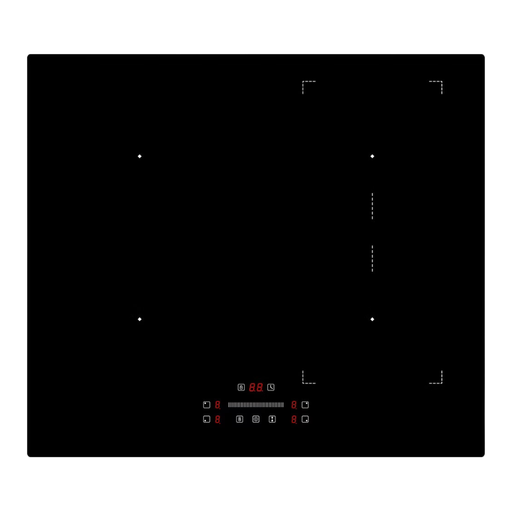
A built-in model for anyone who wants to use several pans at once; check the cut-out and required electrical connection before choosing.
The Joybuy product listing specifies four cooking zones, a bridge zone, nine settings and a timer. The model comes with a cable but no plug; have the connection assessed.
Check whether the base is magnetic, for example with a magnet, and compare its diameter with the pan sizes suitable for the cooking zone.
No, the connection varies by model. For example, Inventum lists portable hobs that run on a single phase, while ETNA specifies a two-phase connection for the KI1160ZT. Follow the instructions for the exact model and have any changes assessed.
No. On certain models, a timer can switch off the selected cooking zone when the time is up, but Brandweer Twente advises staying near the hob while cooking.
As the NVWA states, CE marking is mandatory for electrical consumer products sold on the Dutch market. A CE mark is not an independent assessment of a specific model’s simmering performance.
According to ACM ConsuWijzer, the seller must repair or replace a faulty product free of charge, or refund the purchase price, subject to the applicable conditions. There is no single fixed statutory warranty period for every appliance.