
Making soup with limited worktop space
You usually use one pan and want to be able to put the freestanding hob away after cooking. The Consumers' Association notes that being able to store it after use is a feature of a freestanding hob.


For making courgette soup in a small household, a freestanding single-zone induction hob is enough if you usually use one pan and want to put the hob away afterwards. Choose a two-zone hob if you often make a side dish as well. Compare the base of your pan with the cooking zone, and check the total connected load and electrical connection. The Consumers' Association points out that freestanding hobs with a limited connected load may not let you use several zones at a high setting at the same time. A compact built-in hob suits a permanent cooking space, but you’ll need a suitable cut-out and to check the installation.
You usually use one pan and want to be able to put the freestanding hob away after cooking. The Consumers' Association notes that being able to store it after use is a feature of a freestanding hob.
You often use two pans and want to know not only how many zones there are, but also whether your pans will fit and how much power is available when both zones are on.
You want a built-in hob, so you’ll need to check in advance that the cut-out, installation space and electrical connection are suitable for your chosen model. The Consumers' Association recommends getting professional help with hobs that require a high-voltage connection.
Start by deciding whether you’ll use one pan or want to heat two pans at the same time. Then compare the pan size and cooking zones, the total connected load and the space available.
Suitable for: usually using one soup pan and wanting to put the hob away after cooking.
Bear in mind: you can’t heat a second pan on its own zone at the same time, and the hob takes up worktop space while you cook.
Suitable for: regularly making soup and a side dish at the same time without having a hob built in.
Bear in mind: both pans need to fit, and limited total power may restrict using both zones at high settings at the same time.
Suitable for: a permanent cooking space with a suitable cut-out already in place or one that can be made.
Bear in mind: having a plug doesn’t make a built-in model freestanding; the cut-out and installation still need careful consideration.
| What to consider | What should you check? | Who is this important for? |
|---|---|---|
| Worktop space and storage | Measure the hob and allow for the pan and handles while you’re cooking. | If I have limited worktop space and want to put the hob away after use, a freestanding model is a practical option to consider; around 33% of consumers prioritise this need for space. |
| Using two pans at once | Compare the diameter and spacing of the cooking zones with your pans. Also check the total power and any limits on using both zones at the same time. | If I use a second pan alongside the soup, I want to know whether both pans will fit and can be heated at the same time; around 25% of consumers prioritise this use. |
| Connection and installation | Check the connected load and installation instructions for the exact model. If you’re unsure, have the circuit and any built-in installation work assessed. | If I want to keep using my existing electrical connection, I’ll first check what the model requires; around 25% of consumers make the connection their main consideration. |
| Pan and heat control | Check that the pan is suitable for induction and compare the base diameter with the zone. Look at the settings and timer on your chosen model. | If my soup pan needs to fit and I want to adjust the heat while cooking, I’ll check the base and controls; around 17% of consumers prioritise these features. |
The Consumers' Association points out that hobs with a limited connected load may restrict cooking on high settings across multiple zones at the same time.
Compare the total connected load and the information about using zones simultaneously. Don’t look only at the number of zones or the highest setting for each one.
When cooking on multiple zones at once, limited power distribution may mean your food takes longer to cook.
A built-in model still needs a suitable cut-out and installation space, even if it has a plug.
First decide whether you want a freestanding model or a permanent cooking space. For a built-in hob, check the measurements and installation instructions for the exact model.
Built-in installation may involve extra practical work, such as making a cut-out, fitting the hob or adapting the connection.
With induction, the pan material and the size of its base in relation to the cooking zone also matter.
Check that the base is magnetic and measure its diameter before choosing a cooking zone.
If your pan isn’t suitable for the hob you choose, you may need another pan that’s compatible with induction.
The range includes freestanding induction hobs with one or two zones.
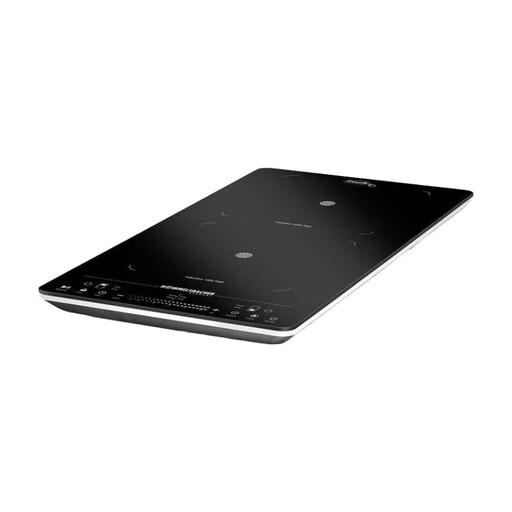
The VKI3010ZWA and VKI3020ZWA are examples of freestanding two-zone hobs.
The models mentioned include a freestanding two-zone hob and a compact built-in hob.
The freestanding models mentioned include a single-zone hob and a two-zone hob.
These Joybuy products are portable induction hobs with one or two zones, for making soup in one pan or cooking with a second pan as well.
 No image available
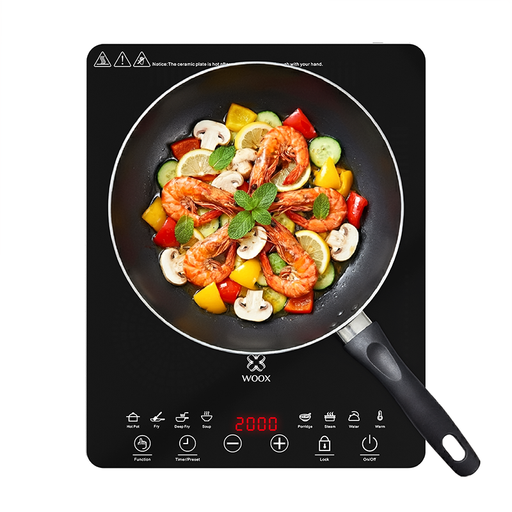
A portable single-zone hob for making soup in one pan.
2000 W, 10 power settings and 6 functions. The product description mentions a soup function.
Use cookware suitable for induction and don’t move the hob while it’s in use.
 No image available
A freestanding single-zone hob for making soup in one pan.
2000 W and 10 power settings. The product description specifies cookware with a diameter of 12–26 cm and a flat base.
 No image available
A freestanding single-zone hob for anyone who uses one pan at a time.
The product description lists 10 power settings, 10 temperature settings and a timer. The zone is specified as suitable for pans with a diameter of 12–23 cm.
Use pans with a ferromagnetic base.
 No image available
A portable two-zone induction hob for anyone who wants to use a second pan alongside their soup pan.
The product description lists 10 power settings, 10 temperature settings and a timer. The zones are specified as suitable for pans with a flat, magnetic base measuring 120–260 mm.
 No image available
A portable single-zone induction hob for cooking with one pan.
2000 W and 8 temperature and power settings. The product description also mentions a timer and automatic shut-off.
Use cookware suitable for induction and keep the ventilation openings clear.
Check whether a magnet sticks to the base of the pan, and compare the base diameter with the cooking zone. The Consumers' Association points out that a significant difference in base size can affect whether the pan is recognised or heated. Advice on how flat a pan base needs to be varies, so also follow the instructions from the pan and hob manufacturers.
That depends on the model’s requirements and your kitchen. The Consumers' Association recommends getting professional help to install and connect hobs that require a high-voltage connection. Check the cut-out, connected load and manual. If you’re unsure about a higher-capacity household connection, the Dutch government recommends having the existing connection checked and consulting a qualified installer.
According to the Consumers' Association, a cloth and warm, soapy water are usually enough. Avoid cleaning products and sponges that could damage the glass surface; edges and joins can be harder to clean.
No. ACM ConsuWijzer distinguishes between a manufacturer’s or seller’s warranty and your statutory rights. If a product breaks sooner than you could reasonably expect under normal use, the seller is responsible for providing an appropriate solution. There isn’t a fixed two-year statutory warranty period for every hob.
For a standard online purchase, ACM ConsuWijzer says you’ll usually have a statutory cooling-off period of up to 14 days after delivery. Before installation, check the terms for unpacking, trying out and returning the product.
This can’t be determined for everyone based on the hob model alone. Milieu Centraal advises people with a pacemaker to ask their pacemaker technician or cardiologist whether they can use induction cooking before doing so.