
Cooking with a large risotto pan
You’ll want to know whether the base fits a cooking zone well and whether there’s still room for pans of side dishes. The Dutch Consumers' Association recommends matching the pan base to the cooking zone.


First, choose a cooking zone that suits the base of your risotto pan, then work out how many other pans you’ll need to use at the same time. A built-in hob with bridge zones may suit larger cookware, provided the pan shape, available worktop space and electrical connection are right. A freestanding hob avoids built-in installation, but check how power is distributed when you use several zones at once.
You’ll want to know whether the base fits a cooking zone well and whether there’s still room for pans of side dishes. The Dutch Consumers' Association recommends matching the pan base to the cooking zone.
Before choosing, you’ll want to check whether a built-in hob and its electrical connection requirements suit your kitchen. The Dutch Consumers' Association explains that a built-in hob with a connected load above 3.65 kW requires a higher-capacity connection and a 5-pin Perilex socket.
You’ll want heat that stays manageable while you cook, rather than relying on a boost function alone. The Dutch Consumers' Association’s simmering test assesses how low and steady the temperature remains.
Start with the size and shape of your risotto pan, then check the electrical connection and work out how much room you need for your other pans. Assess the simmer control separately: a boost function alone doesn’t tell you how evenly a low setting performs.
| What to consider | What to look for | Who should pay particular attention? |
|---|---|---|
| Room for pans | Compare the pan base with the cooking zone and check whether other pans will fit alongside it. The Dutch Consumers' Association warns that a difference of more than 2 cm between pan and zone can affect pan detection or even heating. | If I’m cooking risotto and side dishes at the same time, I want my large pan on a suitable zone without getting in the way of the others. Around 33% of consumers put room for pans first. |
| Electrical connection | Check the connected load and connection type against your kitchen’s electrical installation. According to the Dutch Consumers' Association, a built-in hob above 3.65 kW requires a higher-capacity connection and a 5-pin Perilex socket. | If my existing kitchen connection is limited, I want to know before choosing whether a built-in hob can be connected without modifications. Around 27% of consumers say the electrical connection is the deciding factor. |
| Gentle simmering | Check the low settings and controls for each zone. If possible, look for a relevant simmering test rather than focusing only on boost power. | When making risotto, I want to be able to adjust the heat as I cook, not just heat things up quickly. Around 20% of consumers prioritise controllable simmering. |
| Flexible placement | Measure the available worktop space and check the plug, installation requirements and number of usable zones for each model. | If I don’t want a fixed built-in hob, I want to know whether a freestanding model will fit in the space available and offer enough room for the meal. Around 20% of consumers prioritise flexible placement. |
The pan base needs to suit the cooking zone. A bridge zone isn’t automatically the right shape for every round pan.
Compare the pan base with the zone dimensions and check how much room will be left alongside the pan.
On the freestanding Inventum VKI6010ZWA, the manufacturer automatically distributes power across the active zones.
Check how power is shared and whether the layout suits the pans you want to use at the same time. The number of zones shown doesn’t tell you this on its own.
A built-in model may require changes to the electrical connection or worktop. What’s needed depends on your existing kitchen.
Before buying, have the required installation and worktop work assessed.
Check the cut-out and electrical connection in advance, and have any necessary work assessed by a qualified professional.
The freestanding VKI6010ZWA is an example of a single-phase model with four zones for anyone who doesn’t want a built-in hob.
The built-in IKE64450FB is an example of a model with bridge zones for larger cookware that fits.
The KI2160ZT is an example of a four-zone built-in hob for a kitchen with a two-phase connection.
The Serie 4 PUE611BB5D is an example of a built-in hob with four separate ring zones.
The EH611BFB1E is an example of a built-in model with a roasting zone, but it’s not a current option to buy.
These Joybuy products are built-in induction hobs with bridge zones, for anyone who wants to use a large risotto pan alongside other pans on the same hob.
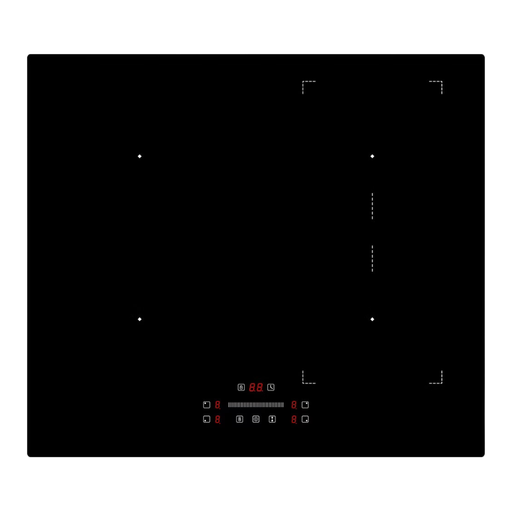 No image available
The product description says the bridge function links two zones for larger cookware.
Four cooking zones; nine settings; slider controls and timer.
The cable is supplied without a plug. The description lists a connection to one phase up to 3.7 kW or two phases up to 7.6 kW. Check that the connection suits your kitchen.
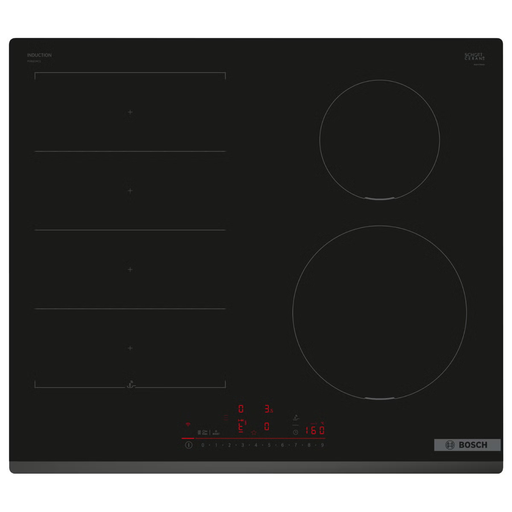 No image available
The product description mentions FlexInduction, which creates a larger cooking zone alongside other cooking tasks.
Four cooking zones; 60 cm wide; DirectSelect controls; connected load 7400 W.
According to the Dutch Consumers' Association, a connected load above 3.65 kW requires a higher-capacity connection and a 5-pin Perilex socket.
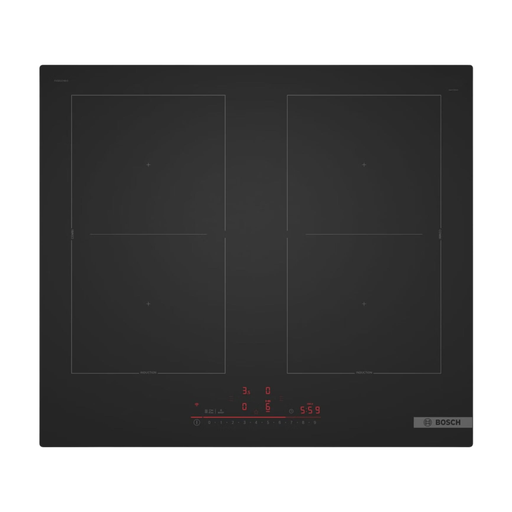 No image available
The product description mentions a FlexInduction zone that combines two zones for larger cookware.
Four cooking zones; 60 cm wide; TouchSlider controls; connected load 7.4 kW.
According to the Dutch Consumers' Association, a connected load above 3.65 kW requires a higher-capacity connection and a 5-pin Perilex socket.
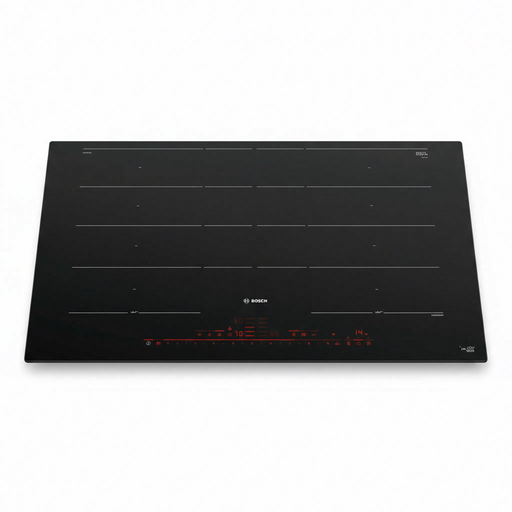 No image available
The product description mentions a flexible zone for several pans or larger cookware.
80 cm wide.
Bear the required installation space in mind.
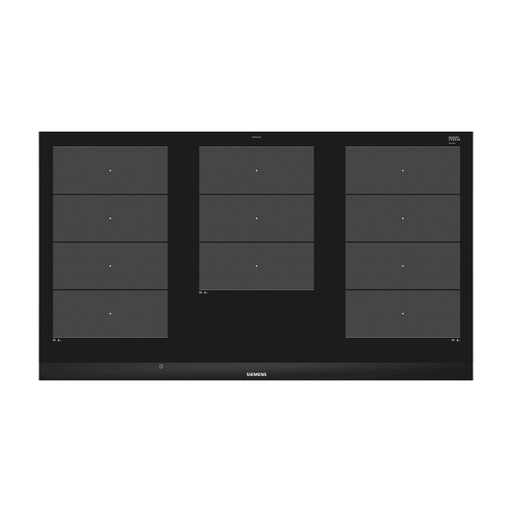 No image available
FlexInduction and five zones offer an option for larger cookware and several pans at once.
Three-phase connection; connected load 11.1 kW; appliance width 91.2 cm; cut-out 88 cm.
Check that your kitchen’s electrical installation and cut-out suit this model.
Check that the pan base is flat and magnetic, then compare its size with the cooking zone. The Dutch Consumers' Association warns that a difference of more than 2 cm can affect pan detection or even heating.
Have the connection required for your chosen model assessed, and get a qualified professional to install and connect the hob. According to the Dutch Consumers' Association, a built-in hob above 3.65 kW requires a higher-capacity supply and a 5-pin Perilex socket.
Check that the electrical connection and cut-out are suitable, and find out what work your existing kitchen needs. Changes to the consumer unit, wiring or worktop may mean extra installation work.
CE marking is required for electrical products placed on the Dutch market under the applicable rules, according to the Netherlands Food and Consumer Product Safety Authority. The mark isn’t an independent assessment of cooking performance.
Check the controls at low settings and look for a relevant simmering test. The Dutch Consumers' Association describes a 30-minute test assessing how low and steady the temperature remains; a boost function alone says nothing about the result.