
Everyday porridge makers
If you regularly make a small portion, compare how the hob performs on low settings separately from its maximum power. ETNA Service explains that induction zones may briefly switch their power on and off at low settings.


If you only need to cook one small pan of porridge and don’t want to alter your worktop, a portable single-zone hob is the obvious choice. Measure the space available, check that your pan will fit the cooking zone, and read the connection and placement instructions for the exact model. Two zones are useful if you often cook a second dish at the same time; a narrow built-in hob needs a suitable cut-out. Maximum power alone doesn’t tell you how gently a small portion will cook on a low setting.
If you regularly make a small portion, compare how the hob performs on low settings separately from its maximum power. ETNA Service explains that induction zones may briefly switch their power on and off at low settings.
Measure the space before choosing between a portable single-zone hob, a wider portable two-zone hob or a narrow built-in hob. The Consumentenbond notes that a portable hob doesn’t need a cut-out in the worktop, while a built-in model needs a suitably sized cut-out.
If you want to use your existing saucepan, check that it’s suitable for induction and that its base is the right size for the cooking zone. The Consumentenbond warns that a cooking zone may not detect a pan that’s too small.
Choose this if: one pan at a time is enough and you don’t want to cut into your worktop.
Consider: the cooking zone will be occupied while the porridge cooks; a timer doesn’t replace keeping an eye on it and stirring.
Choose this if: you often make porridge and a second dish at the same time, and you have room for the hob on your worktop.
Consider: a two-zone hob needs more uninterrupted worktop space.
Choose this if: you want two zones and can have a suitable cut-out made, or already have one.
Consider: although the hob is narrow, its cut-out dimensions and installation instructions determine whether it will fit.
| What to consider | What to check before buying | Who is this most important for? |
|---|---|---|
| Gentle cooking | Compare how the hob performs on low settings and check the pan base; stay nearby while cooking and stir when needed. | When I make a small portion, I want to control the heat gently rather than focus only on a high maximum power rating. Around 36% of consumers prioritise gentle cooking. |
| Space and installation | Measure the available width and depth, and read the ventilation and installation instructions for the exact model. | With a narrow worktop, I want to know whether the hob will fit and still have enough clearance around it. Around 29% of consumers give available space top priority. |
| Pan compatibility | Check that the base is induction-compatible and compare its diameter with the cooking zone’s size range for the exact model. | If I want to keep using my small saucepan, the hob needs to be able to detect it. Around 21% of consumers focus mainly on whether their existing pan will fit. |
| Connection and safe use | Check the connection rating and plug details, the available circuit and the instructions in the manual. | I want to know whether the model I choose is compatible with my kitchen’s connection and the instructions for safe installation. Around 14% of consumers prioritise the connection. |
A high maximum power rating doesn’t tell you how gently or evenly a hob heats. At low settings, induction power may pulse.
Compare the low-setting controls and pan compatibility separately from the heating specifications.
You also need to allow for the pan, controls and ventilation. A narrow built-in hob also needs a suitable cut-out.
Measure the entire space and read the installation instructions for the exact model before buying.
A pan that isn’t suitable for induction, or is too small for the zone, may not be detected.
Check that the base is compatible and compare its diameter with the model specifications.
If your existing pan isn’t suitable, you may need another pan for induction cooking.
Inventum describes the KI120T as a portable single-zone hob for pans measuring 15–20 cm, with a power rating of 2000 W, ten temperature settings and a timer of up to 180 minutes.
For its portable single-zone IK-6178, Tristar lists separately adjustable power and temperature, a maximum of 2000 W and a timer of up to 180 minutes.
ETNA describes both the freestanding two-zone KIV12ZIL and the 29 cm-wide built-in domino KI129ZT, which also has two zones.
The manufacturer describes the single-zone KP 1071 as a 2000 W model with pan detection, measuring 4,2 × 28,1 × 35 cm.
This selection includes portable single-zone induction hobs and a 30 cm-wide built-in model with two zones.
 No image available
The stated pan size range of 12–26 cm may be useful if you want to use a small induction-compatible pan.
2000 W; 8 power settings; temperature control from 60–270 °C; timer up to 3 hours; suitable cookware: 12–26 cm.
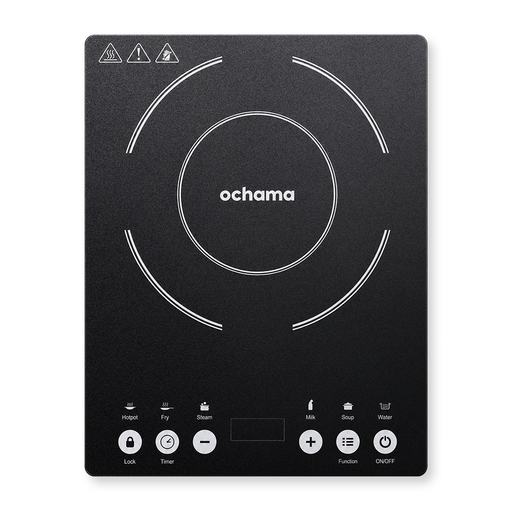 No image available
The listed power settings and cooking functions give you options for different types of cooking.
2000 W; 10 power settings; 6 functions; safety lock. According to the product information, a magnetic pan base is required.
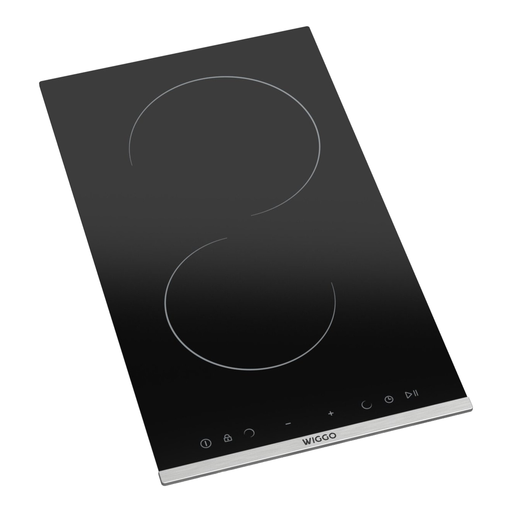 No image available
This model is an option if you’re looking for two zones in a narrow built-in hob and have a suitable cut-out.
30 cm wide; 2 cooking zones; single-phase plug according to the product name.
 No image available
The single cooking zone is suited to cooking with one pan at a time.
2000 W; 10 power settings; XL cooking zone, Ø 26 cm; timer.
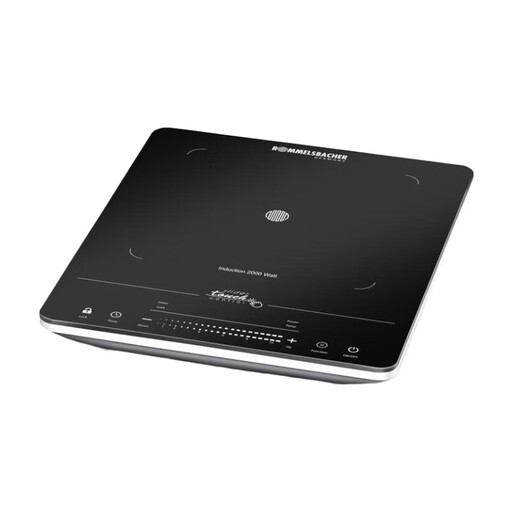 No image available
The single cooking zone is designed for anyone who wants to use one pan at a time.
Single-zone induction hob.
Only if its base is suitable for induction and the pan is the right size for the cooking zone. Compare the base diameter with the product specifications; for example, Inventum gives a range of 15–20 cm for the KI120T.
First, follow the manual for the exact model. For example, the Inventum KI120T manual specifies a flat, heat-resistant surface and at least 10 cm of ventilation space at the sides and rear. This clearance applies to this model and shouldn’t automatically be assumed for all hobs.
Use a suitable pan and a low setting you can control easily, stay by the hob and stir when needed. A timer can remind you or switch the hob off, but it can’t guarantee that the porridge won’t stick. Power may also pulse at low settings.
In the Netherlands, the seller must provide an appropriate solution if a product is faulty. According to the Dutch Government, there is no fixed statutory two-year guarantee period; a manufacturer’s guarantee is in addition to your statutory rights.
According to the Netherlands Food and Consumer Product Safety Authority, electrical products covered by the Dutch Commodities Act Decree on Electrical Equipment must carry a CE mark. This mark is a declaration by the manufacturer, not an independent cooking or safety test.