
Soup cook with one pan
You’re looking for a portable hob for your soup pan and want to check in advance that the pan base, space available and electrical connection are suitable.


A portable single-zone hob is a good fit if you usually use just one soup pan and don’t want to install a hob; a multi-zone hob is better if you want to use other pans at the same time and your electrical connection and installation are suitable. In either case, base your choice on the pan base, electrical connection and usable low settings: a timer or a particular number of settings doesn’t prove that a model will simmer evenly for a long time. Stay by the hob and stir the soup when the recipe calls for it.
You’re looking for a portable hob for your soup pan and want to check in advance that the pan base, space available and electrical connection are suitable.
You want to use other pans alongside the soup. In that case, the number of usable cooking zones and the electrical connection requirements both matter.
You’re looking for an adjustable low setting and perhaps a timer, but still want to check and stir the pan while it cooks.
Albert Heijn Allerhande’s pea soup recipe calls for a gentle simmer for 1½ hours, with occasional stirring. The Consumentenbond notes that not all the induction hobs it tested maintain the same low temperature for an extended period on their lowest setting.
A good fit if: you usually heat just the soup pan and don’t want to install a hob.
Bear in mind: one zone won’t give you space to cook another dish at the same time. Check the model’s pan size, available space and electrical connection requirements.
A good fit if: you want to cook soup and another dish separately, and the specific model and your installation support this connection.
Bear in mind: having several zones doesn’t automatically mean you can use all the pans on a high setting at the same time if the total power output is lower.
A good fit if: you have a suitable cut-out and electrical connection, or plan to have them installed, and regularly use a second pan.
Bear in mind: check the connection requirements and cut-out size for the exact model; ETNA says the KI2160ZT requires a two-phase connection.
| Buying concern | What to look for when buying | Who does this matter most to? |
|---|---|---|
| Controlled simmering | Look for a simmer test on the specific model. A low setting or timer alone doesn’t prove it maintains a steady temperature. | If you want to simmer soup gently after your class, you’ll need a usable low setting and time to check and stir it. Around 33% of consumers prioritise controlled simmering. |
| Electrical connection and installation | Check the connection requirements for the exact model. For a built-in hob, also measure the cut-out and follow the specified ventilation clearances. | If your kitchen or existing electrical connection determines your choice, you’ll want to know in advance whether the hob can be installed and connected there. Around 25% of consumers say connection and installation are their main concern. |
| Pan size and cooking zones | Use a magnet to check that the pan base is magnetic, then compare its diameter with the model’s stated range. If you’ll use several pans, check that they’ll all fit at once. | If your existing soup pan is large or you use a second pan at the same time, you’ll want to know whether the base and zones are a good match. Inventum lists a pan size range of 15–20 cm for the KI120T; around 25% of consumers prioritise pan size or cooking zones. |
| Controls and supervision | Check whether the timer switches off the cooking zone or simply gives a signal; a timer doesn’t replace supervision. | If you want to keep track of the cooking time after an evening class, a timer can help, but you’ll still need time to check the pan. Around 17% of consumers make controls and planning for supervision their main concern. |
The Consumentenbond reports that not all the hobs it tested maintain the same low temperature for an extended period on their lowest setting. The number of settings alone therefore doesn’t tell you how a model will perform when simmering.
Look for a test of the exact model, and don’t treat manufacturers’ claims as an independent simmer test.
Connection requirements vary by model. ETNA, for example, states that the KI2160ZT needs a two-phase connection.
Check the specifications for the exact model and, if necessary, have your existing installation assessed before arranging to have the hob fitted.
Induction requires a magnetic pan base, and the permitted pan size depends on the model. Inventum lists a range of 15–20 cm for the KI120T.
Test the base with a magnet and measure its diameter so you can compare it with the stated range.
Albert Heijn Allerhande’s pea soup recipe calls for occasional stirring. The Netherlands Fire Service advises staying close to the hob while cooking.
Use a timer only as a helpful extra, stay available to check the pan, and switch the hob off when you leave.
The KI120T is a reference point for a portable single-zone hob. Inventum lists one zone, 10 settings, a timer of up to 180 minutes and a pan size range of 15–20 cm.
ETNA describes the KI2160ZT as a 59 cm-wide built-in hob with four zones, 10 heat settings and a timer for each zone.
For the PUE611BB5D, Bosch lists Touch Select and a timer that switches off the selected zone after the set time.
Joybuy product picks for cooking pea soup on an induction hob.
 Image unavailable
A portable single-zone hob may suit you if you usually use just the soup pan.
The product name lists 2000 W and 10 power settings.
The product name mentions a timer function; check that it works for your preferred cooking time.
 Image unavailable
Two cooking zones may suit you if you want to use another pan alongside the soup.
The product name lists five temperature settings and mentions simmering and keeping warm as cooking modes; this doesn’t prove that it maintains a steady simmering temperature.
 Image unavailable
Before buying, check that the stated voltage is compatible with the connection you plan to use.
The product name lists 220V/240V.
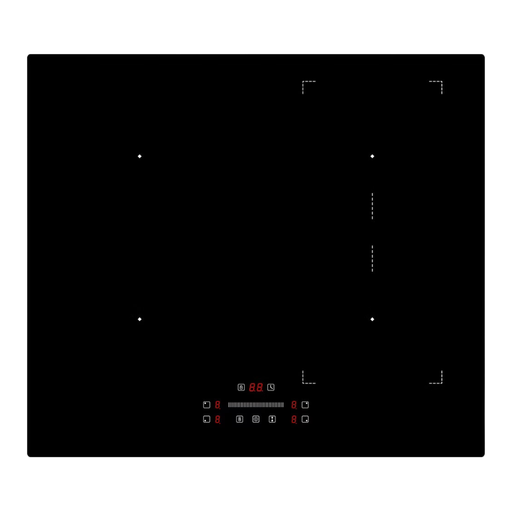 Image unavailable
A built-in hob with four zones may suit you if you want to use other pans alongside the soup.
The product name lists four cooking zones, touch controls, PowerBoost and a safety lock.
According to the product information, this built-in model has a cable without a plug and needs to be hardwired. Check that the connection and cut-out are suitable.
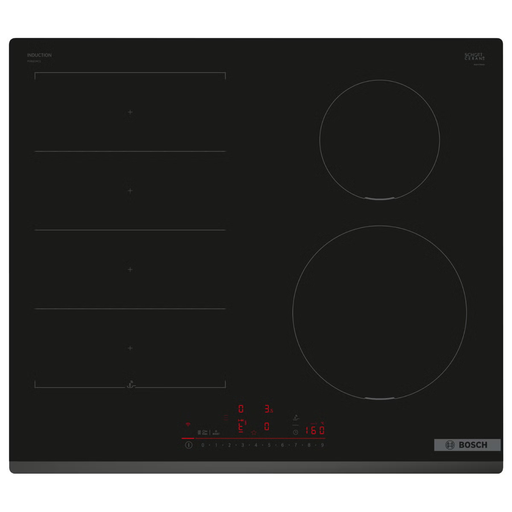 Image unavailable
Four cooking zones may suit you if you want to use other pans alongside the soup.
The product name lists a width of 60 cm, four cooking zones, DirectSelect controls and PowerBoost.
Only if the pan base is magnetic. Milieu Centraal recommends checking it with a magnet; then compare the base diameter with the range specified for your chosen model.
No. Don’t treat a timer as a substitute for supervision. The Netherlands Fire Service advises staying near the hob while cooking; Albert Heijn Allerhande’s pea soup recipe also calls for occasional stirring.
No, that isn’t automatically necessary. On 30 June 2026, the Dutch government reported that electric cooking is usually possible without a higher-capacity connection. Still, check your existing connection and the requirements for the specific model; the Dutch government recommends consulting a qualified installer if necessary.
Follow the model’s manual. According to the Consumentenbond, a cloth and warm soapy water are enough for the surface, but some cleaning products and sponges aren’t suitable.
No. A timer simply sets a time or, on some models, switches off a zone; it doesn’t prove that the soup will simmer evenly. Check how the lowest setting works on the exact model, and stay available to check and stir the pan.