For a large pan of pea soup, first check that its base is magnetic, that it matches the cooking zone and that the hob can maintain a low heat. A freestanding single-phase hob may suit you if you mainly use the soup pan. If you want to cook soup and side dishes at the same time, a larger built-in hob may be a better choice, provided the cut-out and electrical connection are suitable. The Consumentenbond tests simmering with oil, not pea soup, so its results can’t guarantee how your pan or recipe will perform.
Who is this buying guide for?
Cooking a large pan of thick pea soup
You want a zone that matches the base of your pan and can keep the soup cooking gently on a low setting. The Voedingscentrum recommends cooking pea soup at a low temperature; the Consumentenbond assesses low heat settings using an oil test.
Planning to cook side dishes too
As well as space for your soup pan, you need enough usable power for other pans. The Consumentenbond points out that having more zones doesn’t necessarily mean you can heat several pans at a high setting at once.
Factoring in your electrical connection
You’re comparing a freestanding hob with a suitable built-in model, taking into account your available worktop space and electrical connection. Milieu Centraal describes ways to cook electrically without a three-phase connection, but you should still check the requirements for the exact model.
What should you look for when buying?
Freestanding hob with a single-phase connection
Suitable for: anyone who doesn’t want a built-in cut-out and usually cooks with the soup pan.
Trade-off: Inventum says the VKI6010ZIL distributes power between the zones in use. The Consumentenbond reports that tested freestanding hobs with a lower total power rating take longer to bring water to the boil than built-in hobs rated at 7.000 W or more. This isn’t a simmering test of this Inventum model.
Built-in hob with a large zone
Suitable for: anyone who wants to cook a large pan of soup and other dishes at the same time, and has the right space and electrical connection for a built-in hob.
Trade-off: ETNA lists five zones for the KIF590ZT, including a 28 cm round central zone, and a two-phase connection. The required cut-out is 874 × 494 mm. These specifications don’t show how consistently the hob can simmer pea soup.
Built-in hob with a zone-switching function
Suitable for: anyone who regularly switches between higher heat and simmering while cooking, and has a suitable installation.
Trade-off: Bosch describes Move Mode on the PXY675DC1E, with a simmering zone at the back. This is the manufacturer’s description of a feature, not an independent test of simmering soup. Also check that there’s room for your other pans.
| What to consider |
What to look for when buying |
Who is this important for? |
| Gentle simmering |
Where possible, compare simmering test results for the exact model. In its simmering test, the Consumentenbond measures the temperature of oil on the largest and smallest zones over 30 minutes; this isn’t a test with soup. |
If I want to simmer a full pan of soup gently for a long time, I don’t want to keep adjusting the heat. Around 31% of consumers say gentle simmering is their top priority. |
| A zone that suits the soup pan |
Measure the magnetic base of your pan and compare it with the zone and the permitted pan sizes. Milieu Centraal recommends using a magnet to check the base. |
For my large soup pan, I want to know whether the base actually fits the zone, not just whether the rim is large enough. Around 25% of consumers say a suitable pan is their top priority. |
| Electrical connection and installation |
Check the manual, connection and cut-out dimensions for the exact model. ETNA says the KIF590ZT requires two phases and a cut-out measuring 874 × 494 mm. |
If I choose a hob, it needs to fit my kitchen and work with the connection already in place. Around 25% of consumers say the connection and installation are their top priority. |
| Using other pans at the same time |
Compare the zone layout and how power is shared with the pans you want to use at the same time. The Consumentenbond reports limitations when heating several pans at a high setting simultaneously on tested freestanding hobs with a lower total power rating. |
For a neighbourhood meal, I want to make side dishes as well as soup, without relying on the number of zones alone. Around 19% of consumers say cooking several dishes at once is their top priority. |
Common buying mistakes
-
Assuming a large pan rim means the base will fit the zone
Induction requires a magnetic pan base that suits the cooking zone. An elongated joined zone isn’t necessarily the right shape for a round soup pan.
Test the base with a magnet, measure its diameter and compare it with the specifications for the exact model.
If your existing pan isn’t suitable, you may need another pan that works with induction.
-
Assuming the number of zones means you can use maximum power on all of them at once
Some hobs share their available power between zones. So the number of zones alone doesn’t tell you how many pans you can heat at a high setting simultaneously.
Check the total connected load and how power is distributed. Think about which pans need to be heated strongly at the same time.
-
Taking a keep-warm setting or feature as proof of good simmering
Keeping food warm, boiling water and gently simmering thick soup for a long time are different tasks. A manufacturer’s feature isn’t an independent test of simmering pea soup.
Where available, look for an independent simmering assessment of the exact model, and keep an eye on thick soup and stir it across the base.
-
Buying a built-in hob before measuring your kitchen
A built-in model may require a specific cut-out and electrical connection. For example, the requirements for the ETNA KIF590ZT apply to that model and not automatically to other induction hobs.
Compare the manual and dimensions with your kitchen. If you’re not sure the connection is suitable, ask a qualified installer to assess your options.
Choosing a different hob may mean making changes to your installation.
Brands to consider
Inventum
The range includes both freestanding and built-in induction hobs, with models offering different connection options.
- Inventum lists four zones, a timer for each zone and automatic power distribution for the VKI6010ZIL.
- The brand doesn’t list joinable zones for the VKI6010ZIL. Inventum says the IKI6035 does have a bridge function, but that doesn’t prove how well either model simmers.
ETNA
The built-in KIF590ZT is one example, with a round central zone and several cooking zones.
- ETNA specifies five zones for this model, including a 28 cm central zone.
- ETNA says the model requires a two-phase connection and a cut-out measuring 874 × 494 mm. A listed keep-warm temperature of 72 °C isn’t a measured simmering result for pea soup.
Bosch
The PXY675DC1E is a built-in model with a function Bosch describes as letting you move between cooking settings.
- Bosch lists Move Mode and four zones on a hob that’s 60 cm wide.
- The simmering setting is a model specification, not the result of an independent test. Also check that your pan and other pans will fit in the available space.
Siemens
The EX97BNVV6E is a 90 cm-wide built-in hob with room for larger pans.
- Siemens specifies five zones for this model, including an expandable ring zone up to 32 cm.
- Check that the hob and zone suit your kitchen and pan. The listed frying sensor doesn’t provide evidence of how well it simmers soup.
AEG
AEG describes joinable zones on certain models; features vary from model to model.
- According to AEG, Bridge and FlexBridge can link zones on certain models.
- AEG’s SenseBoil function is designed to bring water to boiling point. It doesn’t confirm that a particular model can simmer thick soup at a consistent temperature for a long time.
Induction hobs at Joybuy
This selection at Joybuy includes induction hobs for a large soup pan, with both freestanding and built-in models offering different numbers of zones.
 No image available
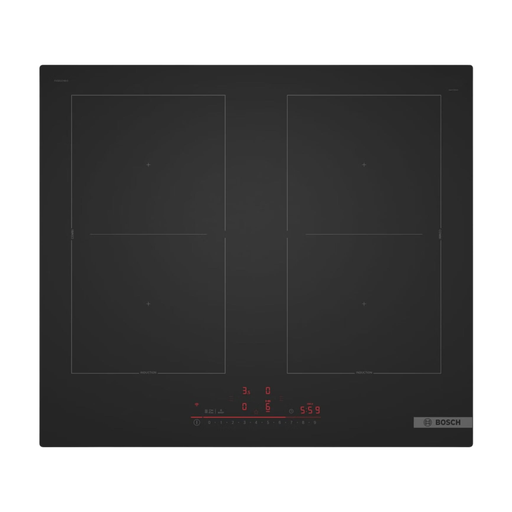
Bosch PVQ61CHB1E induction hob
For anyone who wants to cook soup and side dishes on a built-in hob; the product information lists four zones and a CombiZone.
60 cm wide; 17 power settings; connected load of 7,4 kW. Check the installation dimensions and that it’s suitable for your kitchen.
View at Joybuy
 No image available
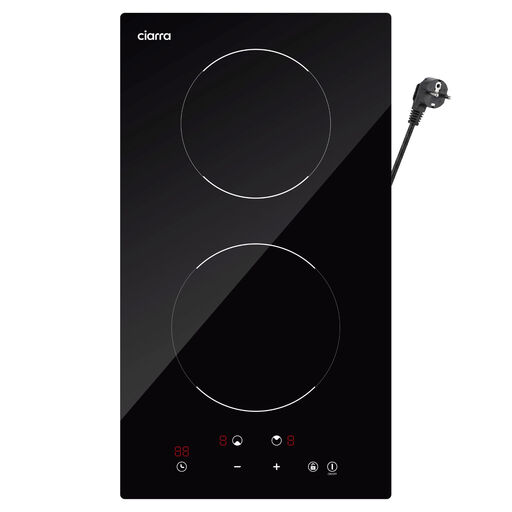
Ciarra CRGDBIH2 built-in induction hob
For anyone who wants to cook soup and another dish on the same hob; the product information lists two zones with separate timers.
3.000 W; nine power settings; pan size of 120–260 mm for one zone. The cut-out measures 270 × 490 mm and the specified fuse rating is 16 A.
View at Joybuy
 No image available
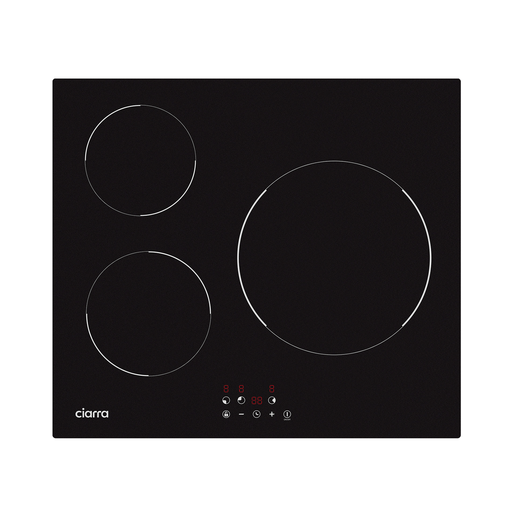
Ciarra CRGBIH3 induction hob
For anyone who wants to cook other dishes as well as using a larger pan; the product information lists three zones, one of which is larger.
5.600 W; three cooking zones; nine power settings. The diameter of the larger zone isn’t listed in the product name.
View at Joybuy
 No image available
Fritel IP 1266 induction hob
For anyone who mainly uses one large pan and wants a portable hob; this model has one cooking zone, so you can’t cook another dish on the same hob at the same time.
2.000 W; 26 cm XL zone; ten power settings; temperature range of 60–240 °C and a timer of up to three hours.
View at Joybuy
Frequently asked questions
Does your pan need to be new to work on an induction hob?
Not necessarily. Use a magnet to check whether the pan base is magnetic, and measure it. Compare its size with the zone and the hob’s instructions.
How can you stop pea soup catching while it simmers?
Cook the soup at a low temperature and stir it across the base from time to time, as recommended by the Voedingscentrum. A timer or simmering function can’t do this for you.
Do you always need a three-phase connection for an induction hob?
No, some hobs can also be plugged into a standard socket. Whether the connection is suitable for a more powerful model and for using it at the same time as other large appliances depends on your home and the hob you choose. Check the model’s manual and, if you’re unsure, ask a qualified installer for advice.
How can you tell whether you can cook side dishes as well as soup?
Check how many pans will fit on the hob at once, and look at the zone layout and power distribution. The number of zones alone doesn’t tell you whether several pans can be used at a high setting at the same time.
How should you store soup cooked ahead for a neighbourhood meal?
Cool leftovers quickly and put them in the fridge or freezer in a well-sealed container within two hours. For thick soup with meat and vegetables, the Voedingscentrum recommends keeping it in the fridge for no more than two days.


