
Workshop cook making a long-simmered dish
You’re keeping a pan of pea soup at a gentle simmer for a long time and want to turn the heat down without the soup sticking quickly. Stay by the hob during demonstrations, too.


First, choose a hob that can accommodate the magnetisable base of your full soup pan and is suitable for the connection available at your workshop venue. Then check that its low setting is suitable for a long, gentle simmer: a high maximum power rating or a timer alone doesn’t prove that a hob will simmer evenly. One zone is enough for one pan; two zones are useful if you’re using a second pan at the same time, but the available power is shared.
You’re keeping a pan of pea soup at a gentle simmer for a long time and want to turn the heat down without the soup sticking quickly. Stay by the hob during demonstrations, too.
You’re making several portions in one full pan. Compare the magnetisable base size and the total weight with the limits for the specific model.
You’re setting up a temporary cooking station and deciding whether one zone is enough or whether a second pan needs to fit on a suitable connection at the same time.
A good fit if: you’re using one soup pan and its base is within the selected hob’s size range.
Bear in mind: you can’t heat a second pan on the hob at the same time.
A good fit if: you’re actually using a second pan at the same time as the soup.
Bear in mind: the zones share the available power. The Consumentenbond notes that a hob with a low connection rating can’t run multiple zones at a high setting simultaneously.
A good fit if: your full pan’s base size or weight exceeds the limits of more compact models.
Bear in mind: check the connection and space available; a manufacturer’s claim about low, continuous heat isn’t an independent test of simmering performance.
A good fit if: the workshop has a permanent kitchen space and you can arrange the required connection and installation.
Bear in mind: this isn’t a portable cooking station; more powerful models may need an adapted connection and professional installation.
Albert Heijn Allerhande’s pea soup recipe simmers gently for 1½ hours, with occasional stirring. So assess the low setting and timer for the whole cooking process, not just the stated maximum power.
| Consideration | What to look for | Who this matters to |
|---|---|---|
| Gentle simmering | Check the lowest setting and timer, and look for a simmering test for the exact model, if available. | If I want to keep a pan of soup gently simmering for a long time during a workshop, a steady low setting matters more to me than a high peak power rating alone. That’s why around 25% of consumers put gentle simmering first. |
| Pan size and weight | Measure the flat, magnetisable pan base and compare it with the stated range; check the weight of the pan and its contents too, if necessary. | When using a large, full soup pan, I want to know whether the base will fit and if the hob can support the total weight. Around 25% of consumers make pan size and weight capacity their top priority. |
| Flexible cooking space | Check the model’s manual, plug, available circuit and specified ventilation clearance. | If I’m cooking in a temporary space, the hob needs to stand safely there and be compatible with the available connection. Around 20% of consumers put flexible positioning and connection options first. |
| Using a second pan at the same time | Decide whether you really will use two pans at once, then compare the pan sizes and total connection rating. | If I want to make soup and a second dish at the same time, I need two suitable cooking zones. Around 15% of consumers give cooking simultaneously top priority. |
| Safe operation | Follow the model-specific safety instructions, keep the ventilation openings clear and stay by the hob while cooking. | At a workshop with participants nearby, I want to be able to set up the hob securely and keep it easy to monitor. Around 15% of consumers put safe operation during the workshop first. |
A high maximum power rating doesn’t tell you whether the lowest setting will heat steadily for long enough to keep pea soup gently simmering.
Check the low settings and, if available, a simmering test for the exact model. Treat a manufacturer’s statement about continuous heat as a manufacturer claim, not an independent measurement.
The Consumentenbond points out that an oversized pan base may only be heated in the centre. The hob’s maximum load may also matter when using a full pan.
Measure the flat, magnetisable base and compare it with the model’s stated range. For a heavy pan, check the weight of the pan and its contents too.
On a hob with a low connection rating, shared power can limit how high multiple zones can be set at the same time.
First decide whether the second pan needs heat at the same time. Then check the total connection rating and the available circuit.
A matching number isn’t enough if the controls or product description differ from the manufacturer’s information.
Before buying, check the full model number and relevant product features. Don’t base your decision on an unclear similarity between models.
Portable single- and double-zone models for an extra or temporary cooking station.
Portable hobs with stated pan size and load limits, including models for larger, full pans.
Freestanding single-zone hobs for a separate cooking station.
Portable induction models, including the KP 1071.
The Joybuy products below have one, two or three cooking zones. Choose according to how many pans you’ll use at once, and check that each model’s pan size and connection suit your set-up.
 Image unavailable
For a workshop where you want to put a pan of soup and a second pan on the hob at the same time.
Two individually controlled cooking zones and five temperature settings; the product title also mentions simmering and slow cooking on a low heat.
 Image unavailable
An option for one soup pan in a compact cooking space.
One cooking zone, 1000 W and five heat settings.
 Image unavailable
For one pan at a flexible cooking station.
One cooking zone, 220–240 V and 2100 W. The product description mentions automatic pan detection and a child lock.
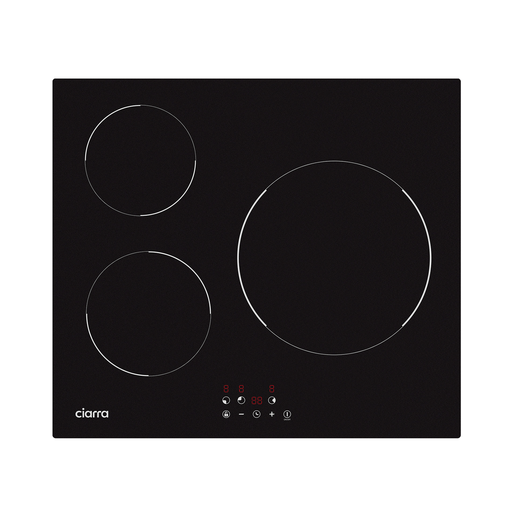 Image unavailable
For a set-up where you want to use several pans on separate zones.
Three cooking zones, 5600 W and nine power levels. The product description also mentions a timer of up to 99 minutes, a child lock and pan detection.
 Image unavailable
For one pan in a compact cooking space when you want to be able to select a lower setting.
2000 W, ten power settings and six functions. The product title mentions a safety lock.
It depends on the pan base and the model you choose. Check that the flat base is magnetisable and compare its diameter with the stated range; the Consumentenbond warns that an oversized base may only be heated in the centre.
No, a timer is no substitute for supervision. The Fire Service advises you to stay by the hob; also check when the chosen model’s timer switches it off automatically.
That depends on the model and the cooking space. Check the manual, the connection and which other appliances are on the same circuit; more powerful built-in hobs may need an adapted connection and professional installation.
Follow the manual for the model you choose and keep the ventilation openings clear. The Inventum KI120T manual specifies a flat, heat-resistant surface and at least 10 cm of clearance at the sides and back; don’t automatically apply this distance to other models.
Check the applicable conformity information for the specific product listing. Business.gov.nl and the European Commission describe the applicable European requirements for electrical equipment, including CE marking and an EU declaration of conformity; this marking isn’t an independent assessment of simmering performance.