
For cooks who like to simmer sauce gently
If you make small portions, compare how you can adjust the heat once the pan has warmed up. Look at the controls and the combination of pan base and cooking zone, not just the maximum power.


If you usually make one small portion of sauce, choose a cooking zone that recognises the base of your induction-compatible pan, with controls that let you turn the heat down once it’s warmed up. A portable single-zone hob takes up little space; extra zones are most useful if you want to cook pasta or a side dish at the same time. If you’re considering a hob with multiple zones, also check the available power and the required electrical connection. Power settings or a set temperature alone don’t guarantee that your sauce will simmer gently and evenly.
If you make small portions, compare how you can adjust the heat once the pan has warmed up. Look at the controls and the combination of pan base and cooking zone, not just the maximum power.
Check that the magnetic base of your existing pan is compatible with the cooking zone. A portable hob may be easy to store, but it also needs enough space around it for use and ventilation while cooking.
Using several pans calls for more than one cooking zone. Check how the model distributes its available power and what electrical connection it requires.
Choose this if: you usually use one saucepan and want to put the hob away after cooking.
Consider: you can’t use a second pan on it at the same time; power settings and a timer don’t guarantee an even simmer.
Choose this if: you want to cook pasta as well as sauce and don’t need a fixed built-in hob.
Consider: this hob needs more worktop space; the available power may depend on the selected power setting.
Choose this if: you want a permanent cooking space and regularly use several pans at once.
Consider: the cut-out, zones and electrical connection must suit the specific hob and your kitchen.
| What to consider | What to look for when buying | Who is this important for? |
|---|---|---|
| Ability to simmer gently | Check how you set the power or temperature, and what the manual says about the timer. | If I want to let sauce cook gently after warming it up, I need to be able to turn the heat down. Around 33% of consumers prioritise adjustable simmering. |
| Pan recognition | Measure the diameter of the magnetic pan base and compare it with the zone or the stated pan-size range. Consumentenbond warns of recognition or heating problems when the pan and zone differ in diameter by more than 2 cm. | If you want to check first whether your small saucepan will be recognised, pay attention to both the base size and the zone; around 27% of consumers say this is their main consideration. |
| Using two pans at once | Check the number and size of the zones, the total connected load and any power limit. | If I’m making sauce and pasta at the same time, I want to know how much space and power both pans will have. Around 20% of consumers prioritise cooking with multiple pans at once. |
| Positioning and connection | Check the required ventilation clearance, the space or cut-out available and the connection specified for the exact model. | For consumers who first need to assess the available space and connection, these practical requirements matter most; around 20% name them as their top priority. |
The hob responds to the base of the pan. Even a magnetic pan may be too small for the selected zone and might not be recognised.
Check that the base is magnetic and compare its diameter with the range specified for the exact model. Milieu Centraal suggests using a magnet as a simple way to check whether a pan is magnetic.
If your existing pan isn’t suitable or isn’t recognised, you may need another induction-compatible pan.
A setting doesn’t tell you how evenly the sauce will heat in your pan. A timer is no substitute for checking and stirring.
Choose controls that let you turn the heat down once the pan has warmed up, and keep checking and stirring the sauce.
On some models, the zones share the available power. So, having more places for pans doesn’t automatically mean every zone can run at full power at the same time.
Compare the model’s total power, power settings and specified electrical connection.
The clearance required varies from hob to hob. For the KI120T, Inventum specifies at least 10 cm of space at the sides and rear.
Measure the space with the pan on the hob and follow the model’s positioning instructions in the manual.
The features mentioned apply to the specific models and product ranges below; they aren’t an assessment of the brand as a whole.
The KI120T is a portable single-zone hob for one saucepan, with a stated pan-size range of 15–20 cm.
The TILLREDA range includes portable hobs with one or two zones, suitable for a small kitchen or an extra cooking space.
The IK-6178 is a portable single-zone hob with adjustable controls.
The TIH6001B is a built-in hob with four zones for a permanent cooking space.
The KP 1071 is a portable single-zone induction hob that’s worth comparing with other models.
This selection includes portable induction hobs with one or two zones, as well as built-in models. Compare them by pan size, adjustability, available space and whether they let you use multiple pans at once.
 No image available
With two cooking zones, this model is designed for anyone who wants to use a sauce pan and a second pan at the same time.
The product title lists 5 temperature settings.
 No image available
This portable single-zone hob suits anyone who uses one pan at a time and wants to keep their cooking space compact.
The product title lists 5 power settings and 1000 W.
 No image available
This single-zone model is an option if you want to compare its controls and stated pan-size range with your saucepan.
The title lists 2000 W, 8 power settings, temperature control from 60–270 °C and a 3-hour timer. The product information specifies cookware with a flat base measuring 12–26 cm.
 No image available
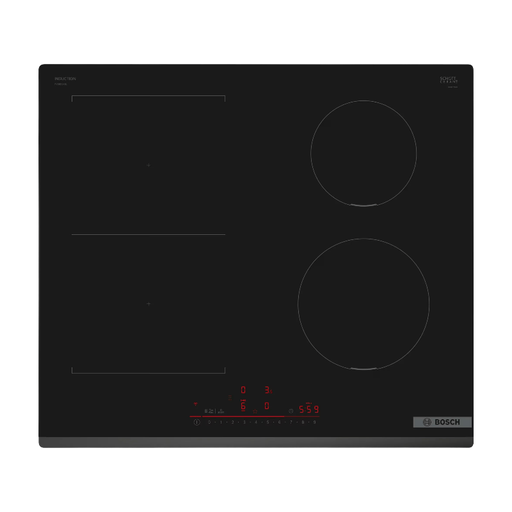
This built-in hob is designed for anyone looking for a permanent cooking space with multiple zones; check that your cut-out and connection are suitable.
The product title lists a width of 60 cm, four zones, TouchSlider and the ReStart function.
 No image available
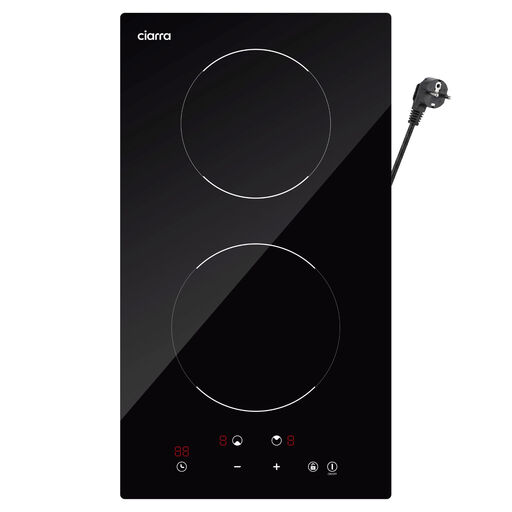
This two-zone built-in model could suit you if you want a permanent cooking space for two pans; the cut-out and installation must be suitable.
The product title lists 9 power settings, touch controls and a timer. The product information says that a suitable built-in space and professional electrical installation are required.
It depends on the base of the pan and the cooking zone. Milieu Centraal advises checking whether the base is magnetic; then compare its diameter with the range for the chosen zone. Consumentenbond warns that a large difference between the pan and zone can cause problems with recognition or heating.
No, that doesn’t apply to every model. Inventum specifies an earthed connection for the KI120T, while Consumentenbond points out that portable hobs may require a Perilex connection and suitable installation. Follow the manual for the exact model and, if in doubt, ask someone to check the connection.
Let the hob cool down and follow the model’s manual. For the TILLREDA, IKEA advises removing food residue with a damp cloth and mild detergent, then drying the hob with a soft cloth; don’t use abrasive or sharp materials.
According to ACM ConsuWijzer, in the Netherlands the seller is responsible for providing an appropriate solution free of charge if the product doesn’t meet what you could reasonably expect. This is separate from any manufacturer’s warranty; there isn’t one fixed statutory warranty period for all hobs.
Milieu Centraal advises discussing this with your pacemaker technician or cardiologist. Don’t assume that your situation is the same as that of other users without first getting personal advice.