
Someone who already has a pancake pan
You want to know whether the flat base of your existing pan will fit a compact cooking zone. The base measurement matters more than the diameter of the rim.


First, compare the flat, magnetic base of your pancake pan with the diameter of the cooking zone. The overall width of a compact hob won’t tell you whether your pan will fit properly. The Consumentenbond warns that a difference of more than 2 cm between the pan base and the cooking zone can cause problems. Then choose between a portable single-zone hob that you can put away, a two-zone hob or a built-in model. Check the space required, the electrical connection and the instructions for the specific product.
You want to know whether the flat base of your existing pan will fit a compact cooking zone. The base measurement matters more than the diameter of the rim.
You want to clear the worktop again after cooking and need a portable hob that doesn’t require a cut-out in the worktop.
You’d like to use a second pan alongside your pancake pan, for example, but only have room for a narrow setup.
Start by checking the pan base and cooking zone. Then work out how much worktop space, how many cooking zones and how much electrical capacity you need.
| What to consider | What should you check? | Who is this important for? |
|---|---|---|
| Matching the heat to the pan | Measure the flat, magnetic base of the pan and compare it with the diameter of the cooking zone. The Consumentenbond warns that a difference of more than 2 cm can cause problems. | If I want to keep using my existing pancake pan, I’d rather check the base than just the rim. Around 33% of consumers put a well-matched pan size first. |
| Worktop space and placement | Choose a portable or built-in model and measure both the width and depth. Also check the cut-out and the ventilation clearance specified for the model. | If my worktop is small, I want to know how much room the hob and the pan will take up while I’m cooking. Around 27% of consumers prioritise available worktop space and placement. |
| Connection and safe use | Check the connected load, the manual, and whether the socket and circuit are suitable for your intended setup. EU requirements for equipment within scope include CE marking. | If I want to use the hob without overloading my electrical system, I need to check the connection beforehand. Around 20% of consumers start by checking the connection and safe placement. |
| Cooking with one or two pans | Check the number of zones and the diameter of each one. Don’t assume the stated total power applies to each zone individually. | If I want to cook something else while making pancakes, I need two usable zones. Around 13% of consumers prioritise cooking on two zones at once. |
| Total costs | Include the cost of a different pan, if needed, and any worktop cut-out or installation in your comparison. | If I want to plan my spending in advance, I look at the hob and what my pan and kitchen setup will need. Around 7% of consumers put total costs first. |
It’s the flat base of the pan that you need to compare with the cooking zone. The Consumentenbond warns that a large difference can cause problems, so a narrow overall width doesn’t guarantee that the zone will fit your pan.
Measure the flat, magnetic base and check the diameter of the specific zone before choosing a hob.
The pan, the depth of the appliance and any ventilation clearance all take up space too. A built-in model also needs a suitable cut-out.
Measure the available width and depth, and follow the installation and ventilation instructions for your chosen model.
A plug alone doesn’t tell you whether the hob and other high-power appliances can be used on the same circuit at the same time. The Consumentenbond highlights this as something to consider with freestanding hobs.
Check the hob’s connected load and manual. If you’re unsure, ask someone to assess your electrical setup.
The details below relate to the models mentioned and the manufacturers’ documentation, not every product from each brand or independently tested cooking results.
The manufacturer describes the KI120T as a portable single-zone hob that you can put away after use.
The manufacturer describes the Princess 303015 as a two-zone hob with zones arranged one behind the other, suitable for freestanding or built-in use.
ETNA describes the KI129ZT as a slim, built-in two-zone hob.
Bosch describes the PIB375FB1E as a 30 cm-wide domino induction hob with two zones.
This selection includes portable single-zone hobs for compact cooking spaces and a slim built-in two-zone hob. For the version on offer, check the connection, the instructions and whether the pan base fits the cooking zone.
 No image available
A portable single-zone hob for cooking with one pan at a time.
The product information lists one cooking zone, 2000 W, 10 power levels, 8 presets and a timer.
 No image available
A portable single-zone hob for anyone looking for a compact cooking space.
The product information lists one cooking zone and 2100 W; the product name specifies 220 V/240 V.
 No image available
A portable hob for anyone who wants to use a flat-based pan; check the pan size before buying.
The product information lists cookware with a flat base measuring 12–26 cm, 8 power levels and a timer of up to 3 hours.
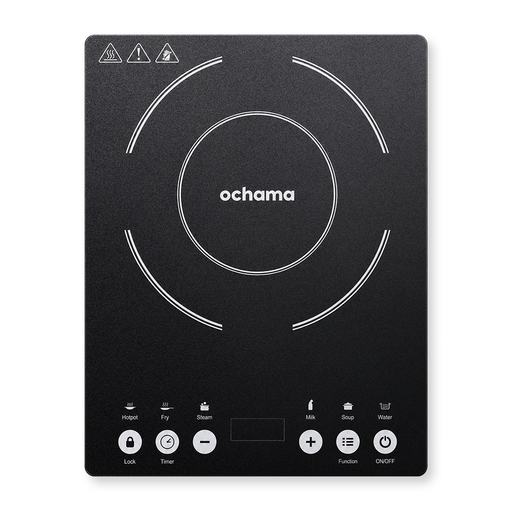 No image available
A portable hob for anyone looking for a separate cooking space in a compact kitchen.
The product information lists 10 heat settings and 6 preset functions.
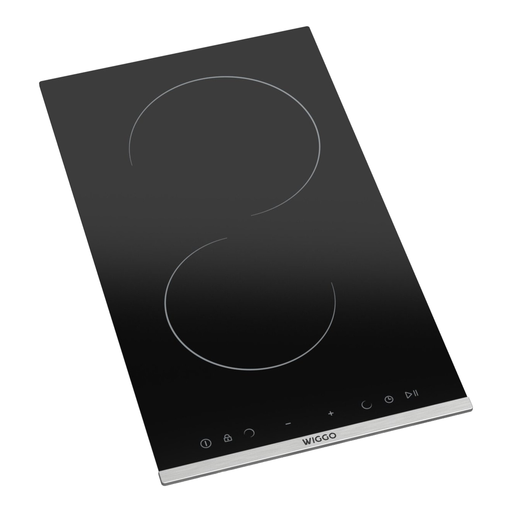 No image available
A built-in model with two zones for anyone who wants to use two pans while cooking; bear in mind that it needs a permanent built-in space.
The product information lists two zones with power ratings of 1400 W and 1800 W.
Compare the flat base of the pan with the diameter of the cooking zone, not just the rim. The Consumentenbond says a difference of more than 2 cm can cause problems; also check that the base is flat and magnetic.
No. Follow the instructions for the model you choose. For the Inventum KI120T, the manufacturer specifies a flat, heat-resistant surface and at least 10 cm of ventilation clearance at the sides and back. Don’t assume the same clearance applies to other models.
For an online purchase in the Netherlands, you generally have a statutory cooling-off period of up to 14 days after delivery, with some exceptions. A product must also meet what you could reasonably expect from it. If it’s faulty, the seller is responsible for providing a solution under the applicable conditions. ACM ConsuWijzer explains these rights; the outcome depends on your circumstances.
Electrical equipment covered by the EU Low Voltage Directive must meet requirements that include CE marking. This is a product requirement, not proof on its own that a particular item on offer complies with all the rules. Check the information for the specific version you’re buying.