
The sauce-maker who wants a gentle simmer
You fry the mushrooms, then want to turn the heat down. Don’t just look at the number of power levels: low temperatures and a steady simmer are separate things to consider.


If you usually make mushroom sauce in just one pan, a portable single-zone hob is a sensible place to start. If you want to cook pasta or vegetables at the same time, compare hobs with multiple zones. Before buying, check that your pan and cooking space are suitable, and that the connection is right. The number of power levels doesn’t prove that a hob will keep the sauce simmering evenly on a low setting.
You fry the mushrooms, then want to turn the heat down. Don’t just look at the number of power levels: low temperatures and a steady simmer are separate things to consider.
You’re looking for a portable hob and want to check in advance that your socket, pan size and available worktop space are suitable for the model you choose.
You want to cook pasta or vegetables alongside the sauce, for example. So compare the number of zones with the connection and the power available when they’re in use together.
Best for: one pan of sauce and limited worktop space.
Trade-off: you can’t use a second pan on the same hob at the same time.
Best for: cooking sauce and a side dish at the same time without choosing a built-in hob.
Trade-off: more zones don’t automatically mean they can all run at high power at the same time.
Best for: a permanent kitchen set-up and regularly cooking with several pans.
Trade-off: check the cut-out size and have a professional confirm that the connection is suitable for the exact model.
The table groups the options around four possible priorities and explains what you can check for each one.
| Concern | What to check before buying | Who this matters to |
|---|---|---|
| Turning down the heat | If possible, look for a simmering test of the exact model. Power levels alone don’t show how steadily it maintains a low heat. | Once I’ve fried the mushrooms, I want the sauce to thicken gently without having to keep adjusting the heat. Around 36% of consumers put temperature control first. |
| Connection and installation | Compare the plug type and connected load with your socket and circuit. Have any necessary changes assessed by a qualified professional. | If I don’t want or can’t connect a built-in hob, a suitable plug and straightforward set-up are important. Around 29% of consumers prioritise the connection and installation work. |
| Cooking at the same time | Count the pans you use at once, then check the number of zones and the total connected load. | If I’m making pasta or vegetables alongside the sauce, I need space for more than one pan. Around 21% of consumers give simultaneous cooking top priority. |
| Pan and cooking space | Check that the pan base is magnetic and suits the zone. Also follow the model’s placement instructions. | If I want to keep using my existing pan, I’ll first check the base diameter and the space available. Around 14% of consumers start by checking that the pan and cooking space are a good fit. |
The number of power levels doesn’t tell you whether a hob maintains an even temperature on a low setting. The Consumentenbond assesses simmering separately by measuring a pan of oil on the lowest setting for 30 minutes.
Where possible, look for a simmering result for the exact model, and don’t treat the manufacturer’s specifications as test results.
If the heat isn’t steady, the sauce may need extra attention and manual adjustments.
The connected load limits how much power a hob can draw at once. The Consumentenbond points out that you can’t cook on several zones at high power simultaneously on a hob with a single-phase connection.
Check the total connected load and the instructions for using the zones at the same time.
Your pan must be suitable for induction and fit the zone. A portable hob also needs enough space for safe positioning and ventilation; for a built-in hob, the cut-out size matters too.
Measure the base of your pan and your cooking space, then compare them with the specifications and manual for the exact model.
Depending on your set-up, you may need different cookware or changes to your kitchen layout.
Inventum offers examples of portable hobs for one or two pans.
The freestanding KIV164RVS is an example of a four-zone hob with an earthed 230V plug.
The built-in PVS631HC1M is an option to compare if you have a permanent kitchen set-up with several zones.
The built-in V64IOB00FB illustrates a four-zone hob with a bridging function, which can also be useful when considering larger cookware.
This selection includes induction hobs with two or more zones, including built-in models. Compare the pan space and installation requirements with what you need for the sauce and any side dishes.
 No image available
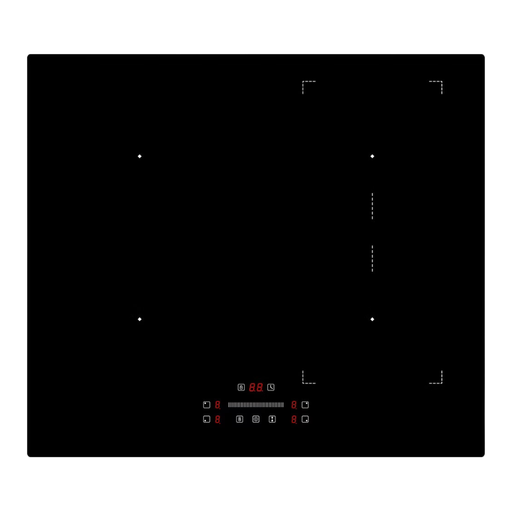
For anyone who wants to cook sauce and a side dish on the same hob. Check that the two zones suit your pans and cooking space.
The product name lists five temperature settings.
 No image available
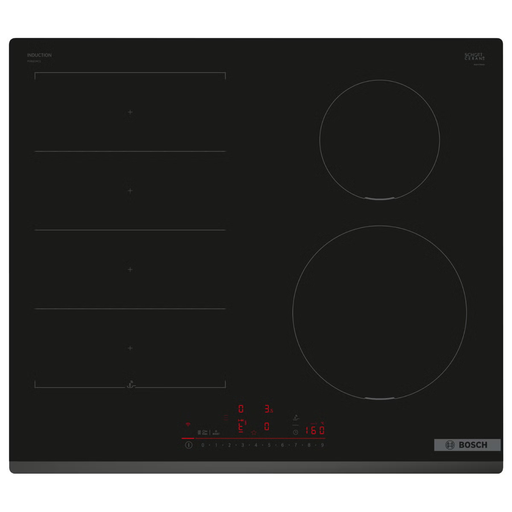
A built-in option for anyone who cooks with several pans. Check the connection and cut-out size for the exact model in advance.
The product name lists four cooking zones and touch controls.
The product information specifies a cable without a plug. Check what type of connection the installation requires.
 No image available
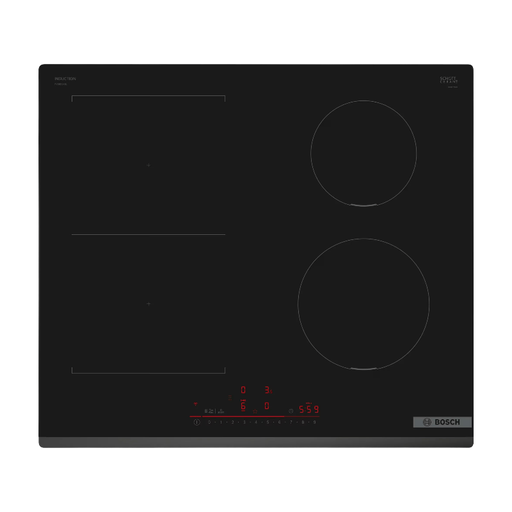
For anyone looking for a built-in hob with several zones. Check that its dimensions and connection suit your kitchen.
The product name lists a width of 60 cm and four cooking zones.
 No image available
For anyone looking for a built-in hob for cooking with several pans. Check the number of zones and connection details for the exact version.
The product name lists a width of 60 cm.
 No image available
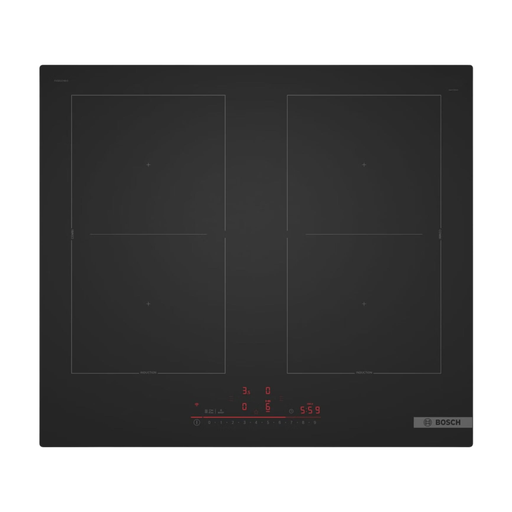
A built-in option for anyone using several pans or considering larger cookware. Check the built-in dimensions and connection details.
The product name lists four zones and a FlexInduction zone.
Check whether a magnet sticks to the base and whether the pan base is within the size range for the zone you’ve chosen. Milieu Centraal specifies a magnetisable steel layer; for the Inventum KI120T, a pan size of 15–20 cm is specifically listed.
No, that isn’t necessary for every hob. Some portable models are designed to use a standard earthed plug. For a built-in hob with a connected load above 3,65 kW, the Consumentenbond describes the need for a higher-capacity connection and a five-pin Perilex socket. Have a qualified professional assess your existing set-up and the exact model.
Follow the manual for the exact model. The Inventum KI120T manual specifies a flat, heat-resistant surface and at least 10 cm of ventilation space at the sides and rear. Follow the manufacturer’s care instructions for cleaning too.
No, your statutory guarantee doesn’t depend on paying for additional cover. According to the Rijksoverheid, the seller must offer a solution if a product is faulty. If you’re considering paid additional cover, compare the extra rights it provides.
The Dutch government sets out safety requirements for electrical equipment and explains the manufacturer’s responsibility for CE marking and an EU declaration of conformity. CE marking isn’t an independent assessment of cooking performance.