
Solo baker with a small pan
You make a small quantity of curd and want to know in advance whether the hob will recognise the base of your pan. The stated pan-size ranges vary from model to model.


For one pan of lemon curd, a portable single-zone hob may be enough, as long as it recognises the base of your small induction pan. Choose controls that let you turn the heat down, and don’t let the curd boil while you stir; cooking it in a bain-marie may take longer, but according to recipes from Rutger Bakt and Albert Heijn Allerhande, it reduces the risk of the curd getting too hot. A hob’s temperature setting is not the same as the temperature of the curd.
You make a small quantity of curd and want to know in advance whether the hob will recognise the base of your pan. The stated pan-size ranges vary from model to model.
You want to let the egg mixture thicken gently, turn the heat down when needed and use a bain-marie if necessary, without mistaking a hob setting for a measured food temperature.
You’re looking for a hob that can be put away after use, while allowing for the worktop space and ventilation it needs when you’re cooking.
Start by checking the base size of your pan, then look at the heat controls and the space or connection required by the exact model.
Choose this if: you use one pan at a time and want to put the hob away after cooking.
Bear in mind: the hob takes up worktop space while you’re cooking, and your pan must be within the stated size range.
Choose this if: you often cook other dishes at the same time as your curd.
Bear in mind: extra zones aren’t necessary just for making one batch of curd; if you’re choosing a built-in model, also check its electrical connection rating. Consumentenbond says that hobs above 3.65 kW require a higher-capacity connection and a five-pin Perilex socket.
Choose this if: you’d rather heat the bowl over a pan of hot water than make the curd directly in a saucepan.
Bear in mind: recipes from Rutger Bakt and Albert Heijn Allerhande describe this method as slower; you’ll need to keep stirring, and the induction hob must recognise the pan of water.
| What matters when buying? | What should you check? | Who is this important to? |
|---|---|---|
| Gentle thickening | Check that you can easily turn the heat down while stirring. Rutger Bakt advises not letting the curd boil; a hob setting doesn’t measure the temperature of the curd. | When I make lemon curd, I want to be able to adjust the heat while I keep stirring. For around 29% of consumers, gentle heating is their main concern when buying. |
| Recognising a small pan | Measure the magnetic base of your pan and compare it with the range for the exact model. CASO Design gives a range of 12–24 cm for the ProAdvanced E1; Inventum gives a range of 15–20 cm for the KI120T. | For a small batch, I want to be able to use my existing saucepan, provided the hob recognises its base. For around 29% of consumers, pan compatibility is the main priority. |
| Space and connection | Check the required clearance, plug and connection rating in the manual. The Inventum manual specifies at least 10 cm of space at the sides and back of the KI120T. | With limited worktop space, I need to be able to put the hob away after use while still giving it enough room when it’s in use. Space or connection requirements are the main buying concern for around 24% of consumers. |
| Controls and aftercare | Check the controls and cleaning instructions for the model. If there’s a fault, ask the seller how they can help; the Dutch government explains that there is no fixed statutory warranty period. | For a short cooking session, I want controls and care instructions I can follow, and to know who to contact if something goes wrong. Around 18% of consumers prioritise ease of use or aftercare. |
The diameter of a zone doesn’t automatically confirm that a small pan base will be recognised; manufacturers state different pan-size ranges for each model.
Measure the magnetic base of your pan and compare it with the range for the exact model. You may need a suitable induction pan if your current one falls outside that range.
A power or temperature setting doesn’t tell you the temperature of the curd itself. Recipes from Rutger Bakt and Albert Heijn Allerhande recommend heating gently, continuing to stir and not letting the curd boil.
Keep an eye on the curd as it thickens, turn the heat down if needed or use a bain-marie.
A built-in hob may have different installation requirements from a portable single-zone model. For hobs with a connection rating above 3.65 kW, Consumentenbond describes the need for a higher-capacity connection and a five-pin Perilex socket.
Check the connection rating and your existing connection before buying. If changes are needed, ask an installer for advice.
Changes may involve extra installation work; what’s needed will depend on your existing kitchen and connection.
The ProAdvanced E1 and Touch 2000 are single-zone models whose stated minimum pan-base size may matter if you’re using a small saucepan.
The portable KI120T may suit you if your pan base falls within its stated size range.
The TILLREDA is a portable single-zone hob that gives you an extra cooking spot and can be put away after use.
The freestanding Princess 303010 has separate temperature, wattage and timer settings.
The KP 1032 is a single-zone induction model with pan detection and a timer.
This selection includes portable single-zone hobs and multi-zone induction hobs that may suit cooking with one pan or preparing several things at once. Before buying, check that the pan base, controls and connection suit the way you plan to use it.
 Image unavailable
The product description lists two independently controlled zones and five temperature settings. This may be useful if you’re using a second pan alongside your curd.
 Image unavailable
The product title lists one cooking zone, five settings and 1000 W; check that your induction pan is compatible with this model.
 Image unavailable
The product description lists a single cooking zone, temperature control, multiple power settings and automatic pan detection. Check the pan size and settings to make sure they suit your needs.
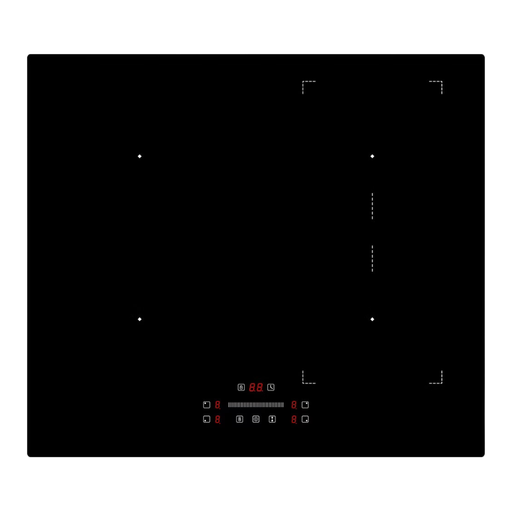 Image unavailable
According to the product information, this built-in model has four cooking zones and nine settings. The description specifies a cable without a plug and professional installation, so check the required installation space and connection.
 Image unavailable
The product title lists 2000 W, ten power settings, touch controls and a safety lock. Check that the exact model recognises your pan base.
Yes, as long as the induction hob recognises the base of your pan. Heat gently, keep stirring and don’t let the curd boil; Albert Heijn Allerhande’s basic recipe gives around 82 °C as the point at which the curd is ready, not as a guaranteed hob setting.
It depends on the exact model. IKEA lists a plug included and 2000 W for the TILLREDA. For induction hobs above 3.65 kW, Consumentenbond describes the need for a higher-capacity connection and a five-pin Perilex socket; follow the manual for the model you choose.
Follow the instructions for the exact model and only clean the hob when it’s safe to do so. For the TILLREDA, IKEA recommends using a damp cloth with a mild detergent and advises against scouring powder, steel wool and sharp objects.
According to the Netherlands Food and Consumer Product Safety Authority, CE marking is required for electrical products placed on the market in the Netherlands. The mark is the manufacturer’s declaration; it doesn’t automatically mean the appliance has been independently tested. The Dutch government says that, if a product is faulty, the seller is your point of contact for the statutory guarantee; in the Netherlands, there is no fixed statutory two-year period.
No. A timer can limit the cooking time, but it doesn’t replace gentle heating, continuous stirring and checking that the curd isn’t boiling.