
Careful curd maker
You want to heat the mixture gently while stirring continuously; a high maximum setting isn’t the priority. Albert Heijn Allerhande’s basic recipe calls for low heat and constant stirring.


Start with an induction hob that lets you cook on a low setting with a suitable pan. Then check that the connection and available space in the holiday cottage are suitable. A portable single-zone hob is a good choice if you only need to heat one pan at a time, but not if you need to heat a second pan on the hob at the same time. More settings or a higher maximum temperature won’t, by themselves, guarantee even heat for your curd.
You want to heat the mixture gently while stirring continuously; a high maximum setting isn’t the priority. Albert Heijn Allerhande’s basic recipe calls for low heat and constant stirring.
You want to check in advance that your pan, the earthed socket and the space available are suitable. The Consumentenbond explains what kind of pan base you need for induction; the Fire Service recommends plugging high-power appliances directly into a socket.
You want to know whether one cooking zone is enough, or whether you’ll need to heat a second pan while making curd. The Consumentenbond describes freestanding induction hobs as an option that can usually be plugged into an earthed socket; check the requirements for the exact model, though.
First, choose a hob to suit your pan and how you want to heat the curd. Then check that the socket and number of cooking zones suit the kitchen you’ll be using.
| What to consider | What should you check? | Who should pay particular attention? |
|---|---|---|
| Gentle heat | Check how to set and adjust a low heat; make sure you have room to keep stirring. | When I make curd, I want to be able to control the heat gently while I stir. Around 36% of consumers put heat control first. |
| A suitable pan | Check that the base is flat and suitable for induction, and compare its diameter with the model’s stated range. | If I’m bringing a pan from home, I want to know that the hob will recognise it. Around 29% of consumers give pan compatibility top priority. |
| Socket and space | Check the model specifications, the earthed wall socket and the clearance required; it’s best to plug a high-power appliance directly into a socket. | In an unfamiliar kitchen, I want to know where I can safely place the hob and how to connect it. Around 21% of consumers look at this first. |
| Number of cooking zones | Decide whether you really want to heat two pans at once while making curd; if so, check the available space and socket too. | If I need to heat another pan at the same time, I want to know whether one zone is enough. Around 14% of consumers say cooking space for simultaneous use is their top priority. |
Maximum power doesn’t tell you how the hob performs on a low setting. Albert Heijn Allerhande’s basic recipe calls for low heat and constant stirring.
Compare the options for adjusting low settings, and keep checking the mixture’s consistency against your recipe.
Induction requires a suitable, flat, magnetic pan base. If the base isn’t compatible with the hob’s stated range, the pan may not be suitable for that model.
Check the pan’s material, flatness and diameter against the specifications for the exact model. If it isn’t suitable, you may need a suitable induction pan.
The required connection and clearance vary by model and location. The Fire Service recommends plugging high-power appliances directly into a socket, not using a multi-plug adaptor or cable reel.
Read the manual and check the wall socket and available space before use.
The KI120T is a portable single-zone hob for pans with a diameter of 15–20 cm, according to Inventum.
The S-Line 2100 is a portable single-zone hob for induction pans with a diameter of 12–24 cm, according to CASO.
The IK-6178 is a freestanding single-zone hob with adjustable temperature and a timer.
The 303010 is a freestanding single-zone hob with digital controls.
This selection includes portable induction hobs for one pan, as well as a model with two cooking zones. For the specific model, check that it carries the required CE marking and that the pan, socket and available space suit your needs.
 No image available
A portable single-zone hob for heating one pan at a time.
The product name lists five power settings and 1000 W. Use a flat, magnetic pan base that’s suitable for induction.
 No image available
A compact single-zone option for heating one pan at a time.
The product name lists 220V/240V/2100. The product description mentions adjustable power levels and temperature control, pan detection and a child lock. Check that your pan is suitable for induction.
 No image available
A portable single-zone hob for comparing pan sizes and temperature settings before you buy.
The product name lists 2000 W, 8 power settings, temperature control from 60–270 °C, a timer, a child lock and a pan size range of 12–26 cm. Check that your pan has a flat, magnetic base and falls within that range.
 No image available
A portable single-zone hob for anyone looking for a model that’s easy to move and offers several settings.
The product name lists 2000 W, 10 power settings, 6 functions and a safety lock. Use a flat, magnetic pan base that’s suitable for induction.
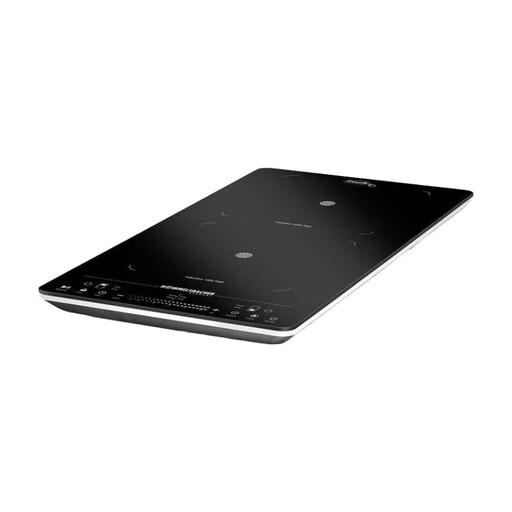 No image available
This model is designed for anyone who wants to heat a second pan at the same time as making curd; allow for the space and socket required.
The product description lists two cooking zones, 10 temperature settings and pans with a diameter of 120–260 mm. It also advises keeping pacemakers, credit cards, mobile phones and magnetic storage media at least 30 cm from the hob during use.
First check that the pan base is flat and suitable for induction, and that its diameter falls within the range for the model you’ve chosen. An induction symbol on the pan or its packaging can help you identify a suitable pan.
Not always: according to the Consumentenbond, freestanding induction hobs can usually be plugged into a standard earthed socket. This doesn’t apply automatically to every model, so check the manual and the socket in the holiday cottage.
Albert Heijn Allerhande’s basic recipe heats the mixture in a bain-marie over a low heat, with constant stirring until it reaches the desired consistency. Store the cooled curd in the fridge; the Netherlands Nutrition Centre recommends setting your fridge to 4 °C. Don’t assume that a storage period given in one recipe will also apply to a different method of preparation.
For online consumer purchases in the Netherlands, you generally have a 14-day cooling-off period after delivery, according to ACM ConsuWijzer. Your statutory guarantee is separate from any manufacturer’s warranty: if a product doesn’t do what you could reasonably expect under normal use, the seller is responsible for putting things right. There isn’t one fixed statutory guarantee period for every hob.
Electrical appliances sold in the EU must meet the applicable European safety requirements and carry a CE marking, according to the Dutch government. Check the marking and product information for the specific model before you buy.